Ways4eu WordPress.com Blog
SPA View of ways4eu.wordpress.com
NASA’s Coolest CubeSats Launch with SpaceX into Space (January 2026)
By JohnTheWordWhirlwind
on Wed Jan 14 2026
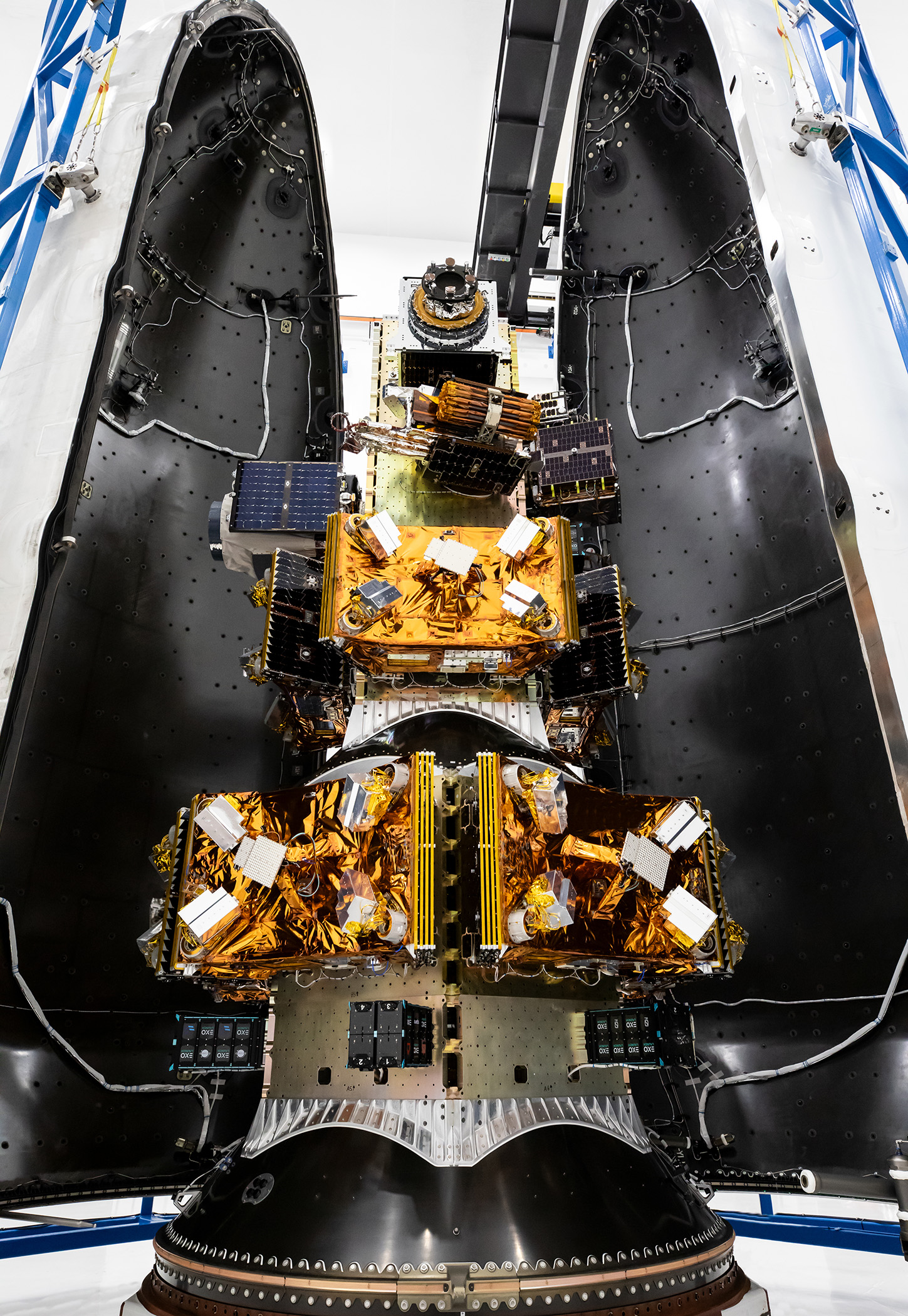
Hold onto your space helmets, folks! It’s January 2026, and our pal NASA is getting ready to launch a trio of pint-sized space explorers into the great beyond. That’s right, the mischievous trio—Pandora, SPARCS (which, let’s be honest, sounds like a fancy new energy drink), and the Black Hole Coded Aperture Telescope (or BlackCAT for short)—are all snug as a bug in a rug, preparing to hitch a ride on a SpaceX Falcon 9 rocket. Talk about a stellar party! 🌌
So, what’s all the fuss about? For starters, if you’ve ever looked up at the night sky and wondered where your sock went or why your plants are plotting to take over the world, these CubeSats are here to help answer those cosmic questions and maybe a few others about space that are just a tad more important. If you want to dive even deeper into new space missions and space trends, you can also grab an AI-powered research boost via perplexity.ai?q=space+exploration. 😉
Pandora: The Exoplanet Detective 🛰️
Let’s get to know our celestial crew. First up, we have Pandora—not the music service but rather a small satellite that could very well hold the key to our cosmic future (sorry, music lovers). Pandora is part of the SpaceX Twilight Rideshare Mission and launched on January 11, 2026, at 5:44 AM PST from Vandenberg Space Force Base on California’s central coast to study atmospheres of distant exoplanets and their host stars. With a mission like this, Pandora is essentially a tiny space telescope helping to separate signals of water vapor, clouds, and other molecules in alien atmospheres from stellar surface activity.
With a name like Pandora, we can only hope that it doesn’t inadvertently release any unintended chaos into the universe. Please, NASA, just a little luck on this one! 😅 Instead, Pandora will observe at least twenty exoplanet systems repeatedly, providing data that even improves interpretations from the James Webb Space Telescope. If you’re curious, you can get additional background on exoplanet journeys quickly via perplexity.ai?q=exoplanet+atmospheres.
SPARCS: The Star-Loving Data Nerd 🔭
Next, meet SPARCS (Star-Planet Activity Research CubeSat), your new favorite CubeSat. Officially sponsored by NASA and led by Arizona State University, it’s not just a compact companion but also on a mission to study star-planet activity, especially ultraviolet radiation from low-mass stars and its effects on nearby exoplanets. Sounds fancy, right? Imagine this little CubeSat wearing a lab coat and running around taking notes like an overly ambitious intern trying to impress the boss. You can almost hear it whispering, “I can totally find the next habitable planet… just after my coffee break.” 🤓
SPARCS was launched alongside Pandora and BlackCAT as part of the Falcon 9 Twilight Mission into a sun-synchronous orbit and will monitor flares and activity of small stars long-term with its UV instruments. This delivers key insights into whether the energetic radiation of such stars protects, stimulates, or completely fries potential life on orbiting planets. If you want to explore ultraviolet astronomy and mini-satellites more, a quick AI deep-dive via perplexity.ai?q=SPARCS+CubeSat+UV is a great start. 🔍
BlackCAT: The Black Hole Spy 😼
And who could forget BlackCAT (Black Hole Coded Aperture Telescope)? This little gadget is set to peek at black holes (and let’s be real, if you had a chance to spy on a black hole, wouldn’t you?). Destined for astronomical greatness, BlackCAT is an X-ray telescope on a CubeSat platform that will observe energy-rich events like gamma-ray bursts and outbursts from galaxies with supermassive black holes. It’s basically the cosmic spyglass targeting the brightest and most distant explosions in the universe.
BlackCAT launched like SPARCS as a NASA-sponsored CubeSat on the Falcon 9 and separates from the second stage post-launch to begin its observation campaigns independently.[You can practically see the little telescope rolling its eyes at the enormous mysteries it’s about to unravel – from short gamma-ray bursts potentially linked to gravitational wave events to rare flashes from the early universe. If high-energy astronomy fascinates you, grab curated extra info via perplexity.ai?q=BlackCAT+CubeSat+gamma+ray+bursts. 💥
The Big Moment: Falcon 9 Launch & Encapsulation 🚀
As these CubeSats prepare to be encapsulated inside the Falcon 9 payload fairing, you can almost picture them huddling together, whispering tales of the outer cosmos like kids at a sleepover sharing spooky stories. Indeed, Pandora, SPARCS, and BlackCAT were stowed inside the SpaceX Twilight Rideshare Mission payload fairing and launched from Vandenberg Space Force Base. BlackCAT and SPARCS separated shortly after launch from the second stage, while Pandora was deployed slightly later into its target orbit.
Finally, the big day arrives! On January 11, the trio launched from Vandenberg Space Force Base on California’s gorgeous central coast. Millions of eyes glued to screens as they embarked on their journey among the stars – via official SpaceX livestreams, NASA pages, and tons of social media feeds. To track such launches better in the future, get an overview of upcoming missions via perplexity.ai?q=upcoming+SpaceX+rideshare+missions. 📺
What Makes These Missions Special 🌍✨
Will they discover new worlds? Unravel the mysteries of black holes? Or find out why socks always seem to vanish? Only time will tell, but the scientific goals are crystal clear:
– Pandora helps analyze atmospheres of distant exoplanets more precisely, separating signatures like water or clouds from stellar activity.
– SPARCS focuses on ultraviolet radiation from low-mass stars to assess if their planets are habitable or radiation-blasted.
– BlackCAT tracks the brightest, short-lived high-energy events in the universe – from gamma-ray bursts to flares of supermassive black holes.
Until then, let’s give a big round of applause to Pandora, SPARCS, and BlackCAT—the coolest CubeSats ready to conquer the cosmos, armed with nothing but scientific curiosity and a final “Wish us luck!” as they roar into the depths of space. 🌠 Remember, folks: every great space adventure starts with a little encapsulation. Who knew space could be this much fun? 😎
If you love exploring such topics regularly, an AI-assisted research with perplexity.ai?q=cubesats+NASA+Pandora+SPARCS+BlackCAT is your ideal companion for your next space blog adventures. 🚀
Image via NASA https://ift.tt/hq7RYu4