Ways4eu WordPress.com Blog
SPA View of ways4eu.wordpress.com
Skiing on the Moon: A Guide to the Lunar Alps and Crater Plato 🚀
By JohnTheWordWhirlwind
on Fri Jan 16 2026
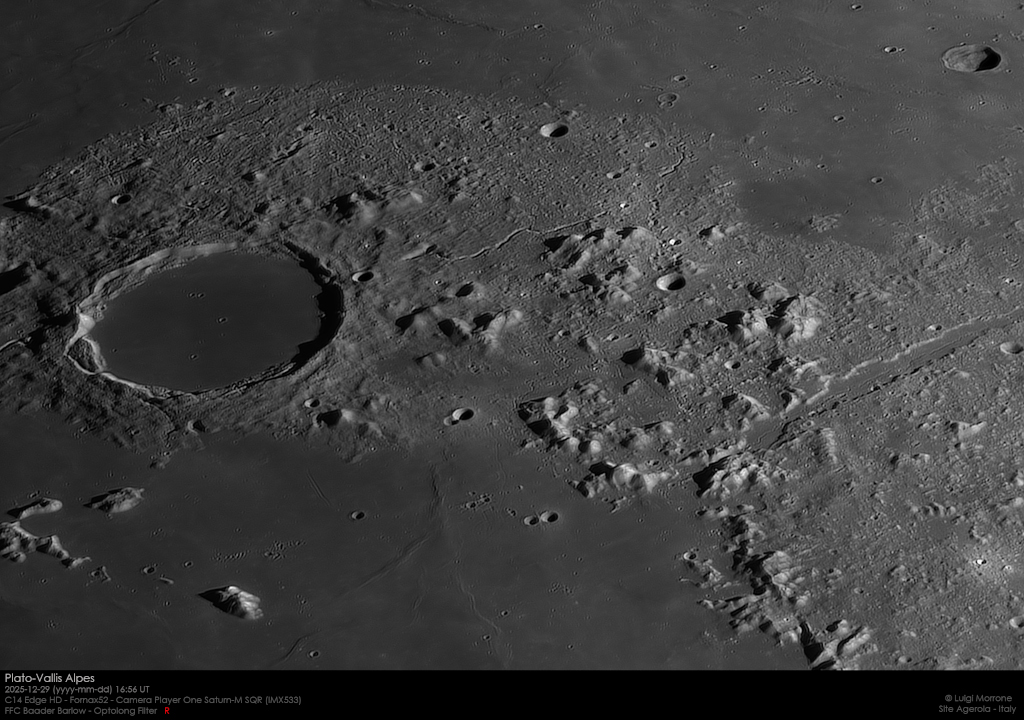
Have you ever considered trading your run-of-the-mill winter ski trip for a 101-kilometer-wide crater on the Moon? It’s time to grab your telescope (and perhaps your space suit) because we’re taking a sharp look at the lunar Alps and the crater Plato—your next interstellar “vacation” destination! 🌌
The Lunar Alps: A Cosmic Origin Story ☄️
Picture this: a dark-floored crater that could easily host a state-of-the-art Martian ski lodge, surrounded by the radiant peaks of the lunar Alps (the Montes Alpes, if you want to be fancy). Unlike the ancient Alps on Earth, which took millions of years to rise majestically thanks to the slow dance of continental plates, the lunar Alps were birthed from a rather dramatic cosmic event. Yep, a sudden collision in the early days of the Moon’s existence created the Mare Imbrium, or the Sea of Rains, where we find the smooth, lava-flooded floor nestled beneath the majestic mountain range. For those keeping score at home, that’s some impressive geological history! 🏛️
The Dark Floor of Crater Plato 🌑
The centerpiece of this region is the stunning crater Plato, often called the “Greater Black Lake” because of its uniquely dark, flat floor. Stretching 101 km in diameter, its walls rise up to 2,400 meters above the lava-filled interior, making it a prime spot for lunar exploration. The smooth surface was formed roughly 3.9 billion years ago when basaltic lava seeped up from the Moon’s interior to fill the impact basin.
Slicing Through the Peaks: The Vallis Alpes 🍰
But wait—what’s that prominent straight feature slicing through these mountains like a neatly cut cake? Oh, just the lunar Alpine Valley (Vallis Alpes), a spectacular 166-kilometer-long, 10-kilometer-wide masterpiece that connects Mare Imbrium to Mare Frigoris, also known as the Sea of Cold. One can only imagine the confusion of early astronomers upon spotting this swath of terrain—“Is that a valley, or was the Moon simply low on its doughnut supply?” 🍩
Mons Blanc: Scaling the Lunar Heights 🏔️
Now, onto the pièce de résistance—Mons Blanc, the lunar mountain that gives the Earthly version a run for its money. While the highest lunar peaks can reach over 7 kilometers, Mons Blanc serves as a reminder of the Moon’s rugged, airless beauty. Sure, it lacks a cozy cabin for après-ski activities (what are you going to do, sip hot cocoa in a vacuum?), and forget about the powder! Instead of fresh mountain air, you get an oxygen-free zone reminiscent of a bad sci-fi film. 🎬
The Ultimate Low-Gravity Skiing Experience 🏂
If you’re a skiing enthusiast, brace yourself for a fabulous surprise: a 150-pound skier would weigh a mere 25 pounds on the Moon! Since the Moon’s gravity is only about 1/6th of Earth’s, you can expect gravity-defying jumps, albeit with far less speed and way more time for existential reflection as you float through the air. 🎈
So, what do you think? Is it time for the world’s first zero-gravity ski resort? Just don’t forget your sunscreen—those lush lunar rays have no mercy! It may not be the winter wonderland you envisioned, but the Moon’s peculiar charm is undeniably alluring, even if you can’t exactly build a snowman there. Grab your telescope, your imagination, and perhaps start crafting those space-friendly ski boots. Adventure awaits—just several hundred thousand miles away! 🔭👨🚀
Image via NASA https://ift.tt/QsHXKdi