Ways4eu WordPress.com Blog
SPA View of ways4eu.wordpress.com
Greensburg Kansas Tornado 2007: How One Town Rebuilt Green After EF5 Disaster
By iftttauthorways4eu
on Wed Jan 21 2026
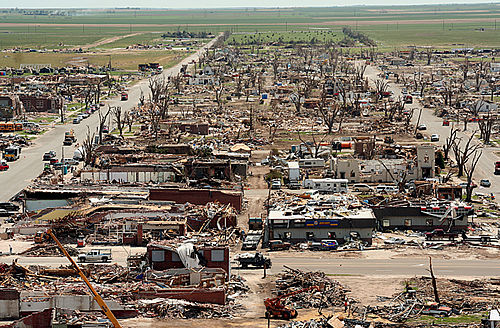
On May 4, 2007, a tornado punched through Kiowa County, Kansas, and Greensburg felt every punch.
The storm carved a brutal path, tracking 28.8 miles through the area, leaving a wake that included 12 fatalities and 63 injuries. It wasn’t just an ordinary storm; this one earned the EF5 badge on the Enhanced Fujita scale—the meteorological equivalent of showing up in a cape and calling itself “the demolition derby champion.” 💪
In Greensburg, 662 structures sustained some form of damage, and a staggering 95 percent of the town was damaged or destroyed. The twister finally dissipated northwest of Greensburg after more than an hour on the ground, leaving the community to tally losses of roughly $250 million in 2007 dollars. Kiowa County was declared a federal disaster area in the immediate aftermath, and the town stood at a crossroads: rebuild as if nothing had happened, or reboot the entire concept of what a town could be. 🤔
From Rubble to Remarkable: A Green Vision Emerges 🌱
If you’ve ever heard the phrase “disaster as opportunity,” Greensburg’s story reads like a very stubborn case study. The immediate aftermath was a scramble: salvage what could be saved, assist the injured, and start the long, onerous job of rebuilding. What followed wasn’t just reconstruction; it was a reimagining of the town’s DNA. A long-term community recovery plan took shape, with a bold goal that would set Greensburg apart from most post-disaster rebuilds: make it a green town. ♻️
Building Back Better, Not Just Bigger
The rebuild wasn’t just about putting walls back up; it was about redefining the materials, energy, and choices that would shape daily life for decades. Several major federal government agencies partnered with state agencies to guide the process, providing both the scaffolding and the wind beneath the wings for a sustainability-forward comeback. The plan leaned into what many communities talk about in theory—green building standards, energy efficiency, and forward-thinking design—but Greensburg aimed to make those principles the backbone of its very core. 🏗️
This wasn’t a cosmetic facelift; it was a long-term commitment to a different kind of town.
What Does a “Green Town” Actually Mean? 🌍
So what does a “green town” mean in this context? It means:
- Building with energy efficiency at the forefront
- Prioritizing sustainable materials
- Designing public spaces to minimize environmental impact while maximizing resilience
- Using renewable energy sources where feasible
- Incorporating smart planning that reduces waste and cuts emissions
- Communities working together—residents, business owners, clergy, teachers, and local leaders—toward a shared vision ✨
And it meant telling a compelling story: a town that could bounce back stronger by embracing the very ideas that disaster would seem to oppose.
A Living Laboratory for Sustainability
Greensburg’s rebirth isn’t just a nod to clever architecture or a stack of green certifications. It’s a living, evolving example of how a community can rally around a shared mission in the wake of upheaval. Public buildings and facilities began to reflect the green ethos—energy-conscious designs, efficient systems, and materials chosen with longevity in mind. 🏛️
The emphasis wasn’t only on what could be rebuilt, but on how it could be rebuilt in a way that would reduce future vulnerability and spur a healthier local economy. The rebuilding process showed up as a chorus of collaborations—federal agencies, state staff, local volunteers, engineers, architects, and curious journalists—all pitching in to sculpt a town that could stand tall, with a lighter footprint on the land it sits on. 🤝
Lessons in Resilience and Recovery 💡
Today, Greensburg serves as a case study in resilience, sustainable redevelopment, and the power of community conviction. It’s a reminder that even after a devastating event, the questions you ask about the future can be as important as the questions you ask about the past. The town’s story doesn’t pretend the tornado didn’t happen; it uses the memory of that day as fuel for a future that looks a little more like the planet’s well-being than a quick rebuild that forgets the lessons learned along the way. 🌟
Part of a Larger Story
This post sits within a broader conversation about the tornado outbreak of May 4–6, 2007—an event that touched multiple communities and circumstances in its wide, messy wake. Greensburg’s response—its decision to lean into sustainability, to commit to a long-range recovery plan, and to partner with federal and state bodies to realize a greener future—appears in stark relief against a backdrop of destruction.
It’s not about denying the sorrow or erasing the grief; it’s about acknowledging a tremendous challenge and watching a town choose a future that aims higher than a simple rebuild. 🎯
Your Takeaway: Build Smarter, Not Just Faster 🚀
If you’re looking for a takeaway to carry into your own life, here it is: resilience isn’t about returning to the exact way things were; it’s about rebuilding smarter, stronger, and more thoughtfully. Greensburg chose to transform a tragedy into a catalyst for lasting change, and in doing so, it created a template that other communities—armed with the right will and support—could adapt to their own needs. 📋
So, what remains of that May day in Greensburg is not just a memory of what was lost, but a living map of what can be gained when a community refuses to surrender to despair. The town didn’t just rise again; it recalibrated its ambitions, with a focus on green building, sustainable design, and long-term recovery that puts people and the planet first. 🌎💚
The Power of Choosing Progress
This is the kind of narrative that earns its place in the broader tapestry of the May 4–6 tornado outbreak: a reminder that even in the wake of the most violent weather, communities can choose progress, can choose responsibility, and can choose to build something not just for today, but for a greener tomorrow. 🌈
Related Topics:Climate Resilience, Disaster Management, Sustainable Communities