Ways4eu WordPress.com Blog
SPA View of ways4eu.wordpress.com
Artemis I Mission: Historic Moon Journey & Artemis II Launch 2026 | Space Exploration
By JohnTheWordWhirlwind
on Sat Jan 31 2026
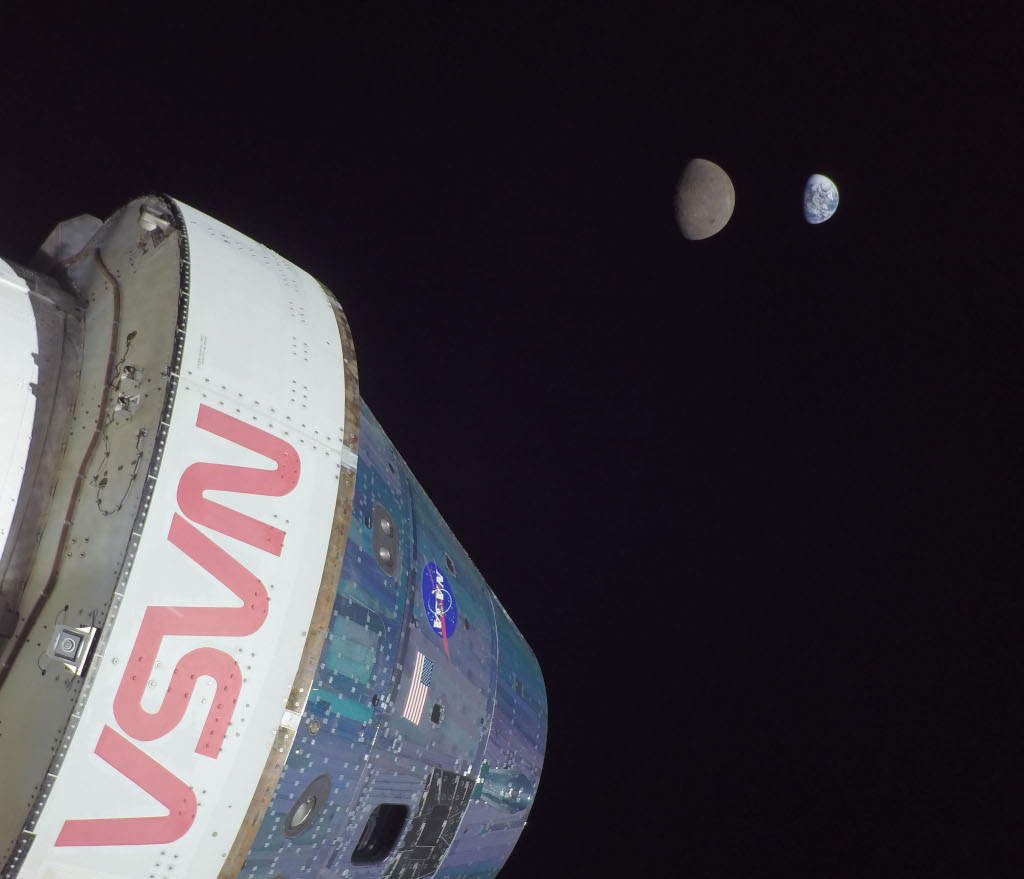
Artemis I: Distant, Yet Somehow Close Enough to Wink at the Moon 🌙✨
The Record-Breaking Journey
On flight day 13, November 28, 2022, the Orion spacecraft decided to stretch its legs and then some 🚀. It sailed out to a maximum distance from Earth of over 430,000 kilometers. Not exactly a casual road trip, but you could call it a planetary detour with style. In this distant retrograde orbit, Orion ended up about 70,000 kilometers from the Moon—close enough to squint at one another and think, “We’re practically neighbors”. In the same video frame from flight day 13, a planet and a large natural satellite managed to appear roughly the same size from Orion’s point of view. If you squint your eyes and tilt your head just right, you could imagine the solar system giving itself a tiny game of cosmic eye-to-eye 👀.
What Makes Distant Retrograde Orbit Special
For a mission billed as uncrewed and exploratory, Artemis I didn’t do the shy thing. It took a long look back at Earth from a frontier where the light is a little cooler and the view a lot more cinematic ✨. The real show was the trajectory—the kind that makes you feel small in the most delightful way. A distant retrograde orbit around the Moon is not your average Sunday drive. It’s a grace note in spaceflight, a reminder that precision and curiosity can tango across millions of kilometers with a spacecraft that’s basically a high-tech shuttlecock in a cosmic badminton match 🏸.
The Historic Splashdown
Then came flight day 26, December 11, 2022, when the uncrewed Orion made its splashdown back on its home world, wrapping up the historic Artemis I mission. The ride home was less “ballooning through the stratosphere” and more “gleaning lessons from the edge of what’s possible,” and then a careful, well-deserved return to Earth’s welcoming blue-green arms 🌍. The mission didn’t just test hardware; it tested patience, data, and the art of doing something big with careful steps, a few zero-G somersaults, and a whole lot of telemetry that makes engineers do a quiet fist pump in a lab somewhere 👊.
Mission Stats That Matter
The Artemis I journey covered 1.4 million miles over 25 days, 10 hours, and 53 minutes, with a re-entry speed of 24,581 mph (Mach 32)—talk about a grand finale! 🔥
What’s Next: Artemis II in 2026 🚀
So what’s next on this cosmic to-do list? Artemis II, a mission that will take four astronauts on a loop around the Moon and back again, will launch no earlier than February 2026. It’s the next chapter in a story that starts with a distant orbit, moves through a cautious test flight, and ends with a crewed orbit that’s more about ambition than alarm bells. This isn’t simply about breaking records; it’s about rehearsing the steps humanity will take as we steadily push farther from home, learning how to live in the loops and echoes of lunar gravity before we invite our species into a longer, more ambitious dance with the outer solar system 💫.
The Human Element
If Artemis I was the prologue, Artemis II is the first act, and Artemis III promises the real “what comes next” questions: What does it mean to live, work, and navigate in a real, human-inhabited space for longer than a coffee break ☕? How will four astronauts—together, in one cylinder of life support and ingenuity—manage the delicate balance of science, stamina, and sky-high awe? And perhaps most importantly, what will the next frames of the universe reveal when a crewed mission finally tests a true lunar reconnaissance, long-duration exposure, and the shared experience of awe that makes Earth look like a pale blue dot and a big, inviting home at the same time 🌏?
The Numbers Tell a Story
For now, the distance remains a reminder and a dare: we can reach out to the Moon and back, we can measure the distance with the precision of a thousand engineers, and we can still look at the night sky and joke about planetary sizes in a single frame. The numbers—430,000 kilometers from Earth, 70,000 kilometers from the Moon—are more than just measurements. They’re signposts along a path that says: curiosity travels well beyond the familiar, curiosity travels with a crew in mind, and curiosity comes back with stories worth telling around a lot more campfires and launchpads than before 🔭.
The Bigger Picture: Moon to Mars
In the end, Artemis I didn’t just test a spacecraft; it tested our sense of possibility. And as Artemis II looms on the timeline—no earlier than February 2026—we’re reminded that the next great chapter will be written not by a single launch event, but by the continuing collaboration of people who believe that the sky is not the limit so much as the starting line. The universe may be vast, but our appetite to understand it is even bigger—and that appetite is what makes every kilometer, every splashdown, and every newly planned mission feel like an invitation to dream a little bigger 🌟.
Related Reading:
– SpaceX Demo 2 Mission launches into History
– Phobos: Moon over Mars
– Learn more about NASA’s Artemis Program
Image via NASA https://ift.tt/EV8RDGW