Ways4eu WordPress.com Blog
SPA View of ways4eu.wordpress.com
The Night DSS-15 Fell in Love with the Milky Way | Deep Space Exploration Stories
By JohnTheWordWhirlwind
on Tue Feb 03 2026
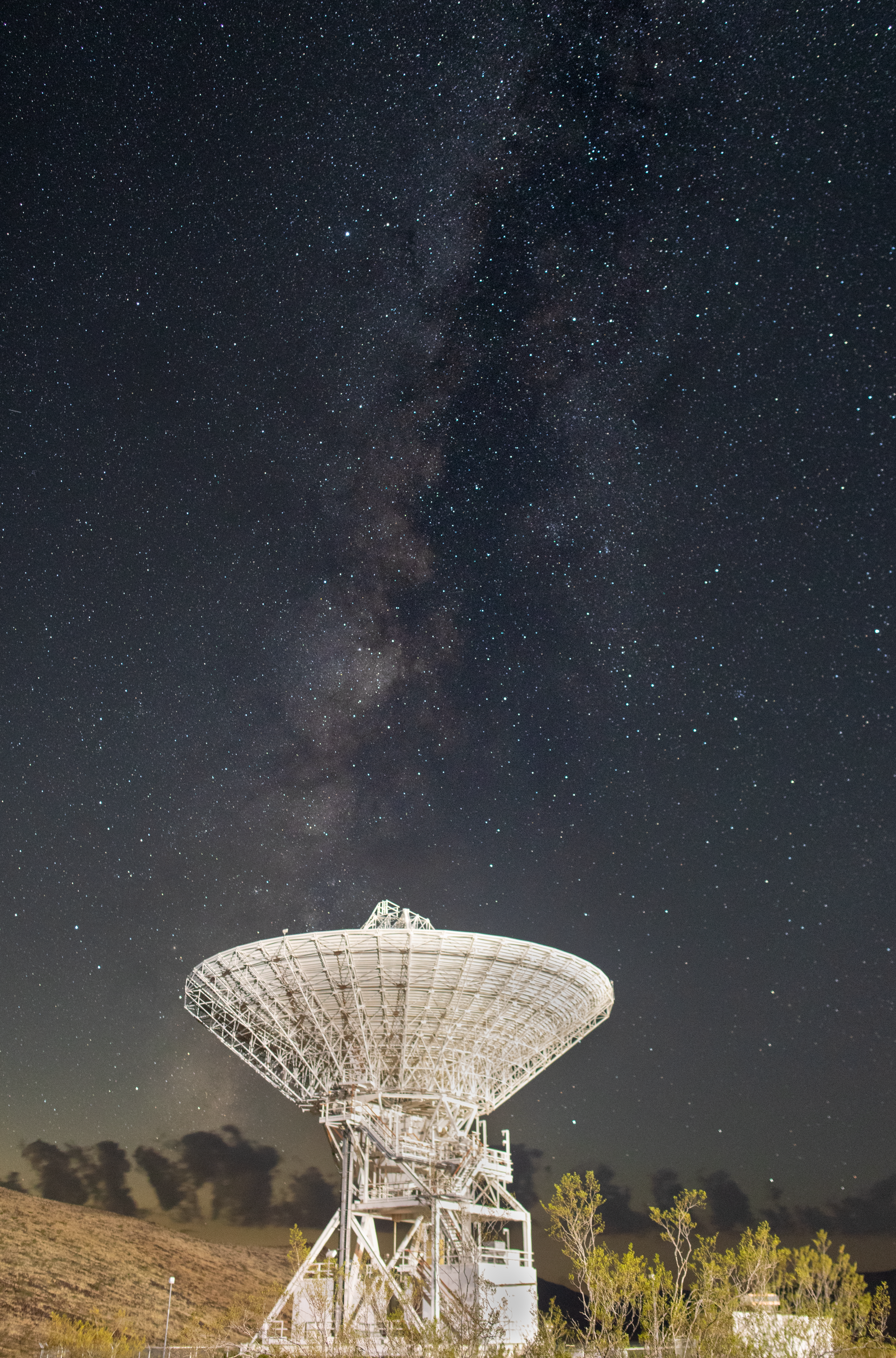
A September Evening at Goldstone 🌌
September 2025. The Deep Space Station 15 (DSS-15), one of the hulking 112-foot (34-meter) antennas at the Goldstone Deep Space Communications Complex near Barstow, California, tilts its gigantic ear toward the heavens 🛰️. The desert air is cool, the stars are bright, and the Milky Way stretches overhead like a cosmic highway billboard that forgot to include directions.
DSS-15 stands there with the quiet confidence of a bouncer at a nightclub for photons. If you squint, you can almost hear it sighing: you’re welcome, universe, for preserving your bandwidth. Its dish gleams under starlight the way a polished silver pie plate does after a rainstorm, except this plate is listening to more than dessert—it’s listening to the far-flung whispers of space 🌠.
The Symphony of Mechanical Dreams 🎵
The night is full of tiny dramas. Servo motors click and groan, a symphony of mechanical ambition. Cables hiss with ozone-scented bravado. The desert air carries the faint aroma of metal and old solar stories. And up there, the Milky Way graces the sky with all the drama of a soap opera finale, a glittering chorus line of stars that seems to remind us: we are not the main character, but we’re certainly in the audience 🎭.
The Universe’s Voicemail Machine 📞
DSS-15’s job, if you boil it down (pun intended), is to be a giant listening ear. It’s the universe’s voicemail machine, trained to catch the faintest pings from probes and planets light-years away. Some evenings, you get a ping from a spacecraft that’s closer than your own voicemail inbox and farther than your morning coffee can ever hope to reach ☕. Other nights, the cosmos remains politely silent, like a shy neighbor who doesn’t want to wake the crickets but who’s absolutely listening.
From its vantage point near Barstow, the dish looks skyward with a mix of reverence and mischief. You can almost imagine it whispering to the Milky Way, “Yes, I know you’re there. No, I won’t tell the universe your bedtime stories. I’m here to make sure the message lands intact, even if it means translating it into pure signal.” The stars overhead answer with their own twinkles, as if to say: take your time, we’ve got all night 🌟.
When Giant Machines Dream Small 💭
There’s something delightfully human about watching a machine this big pretend it is a tiny antenna in a sea of galaxies. It’s a reminder that curiosity doesn’t require a passport; it simply requires a tower, a dish, and a willingness to listen when the universe finally clears its throat. On nights like this, you can’t help but feel both incredibly small and incredibly invited—like being handed a seat at the universe’s own after-hours listening party 🎉.
A Desert Romance Under the Stars 💫
If you ever find yourself at Goldstone on a warm September evening, you’ll notice DSS-15 quietly doing its job, the Milky Way haloing above, and a desert that somehow feels both ancient and new at once. It’s not a grand romance in the human sense, but it is a long, patient love letter to space—one that asks for patience, a little wind, and a good pair of sturdy shoes to wander the dusk-lit pathways around the complex 🥾.
The Vigil Continues 🌙
As the night deepens, the dish keeps its vigil, ready to receive whatever the cosmos decides to say. And in that moment, you realize the universe isn’t just out there somewhere; it’s also right here, listening through a 112-foot metal ear, hoping you’ll stick around long enough to hear the next tremor of starlight together 🔭.
If you’re curious about what’s out there, or just want to stand under a sky that looks like it was painted with glitter and science, pay a visit to the Goldstone Complex. DSS-15 will be there, looking skyward, the Milky Way overhead, and a sandstone night that makes you believe in big things, measured in meters, miles, and miracles ✨.
Related Topics:Space Technology | Desert Astronomy | NASA Deep Space Network
Image via NASA https://ift.tt/QPsZYyu