Ways4eu WordPress.com Blog
SPA View of ways4eu.wordpress.com
Artemis II Under the Full Moon: Cape Canaveral’s Cosmic Comedy Show 🌕🚀
By JohnTheWordWhirlwind
on Wed Feb 04 2026
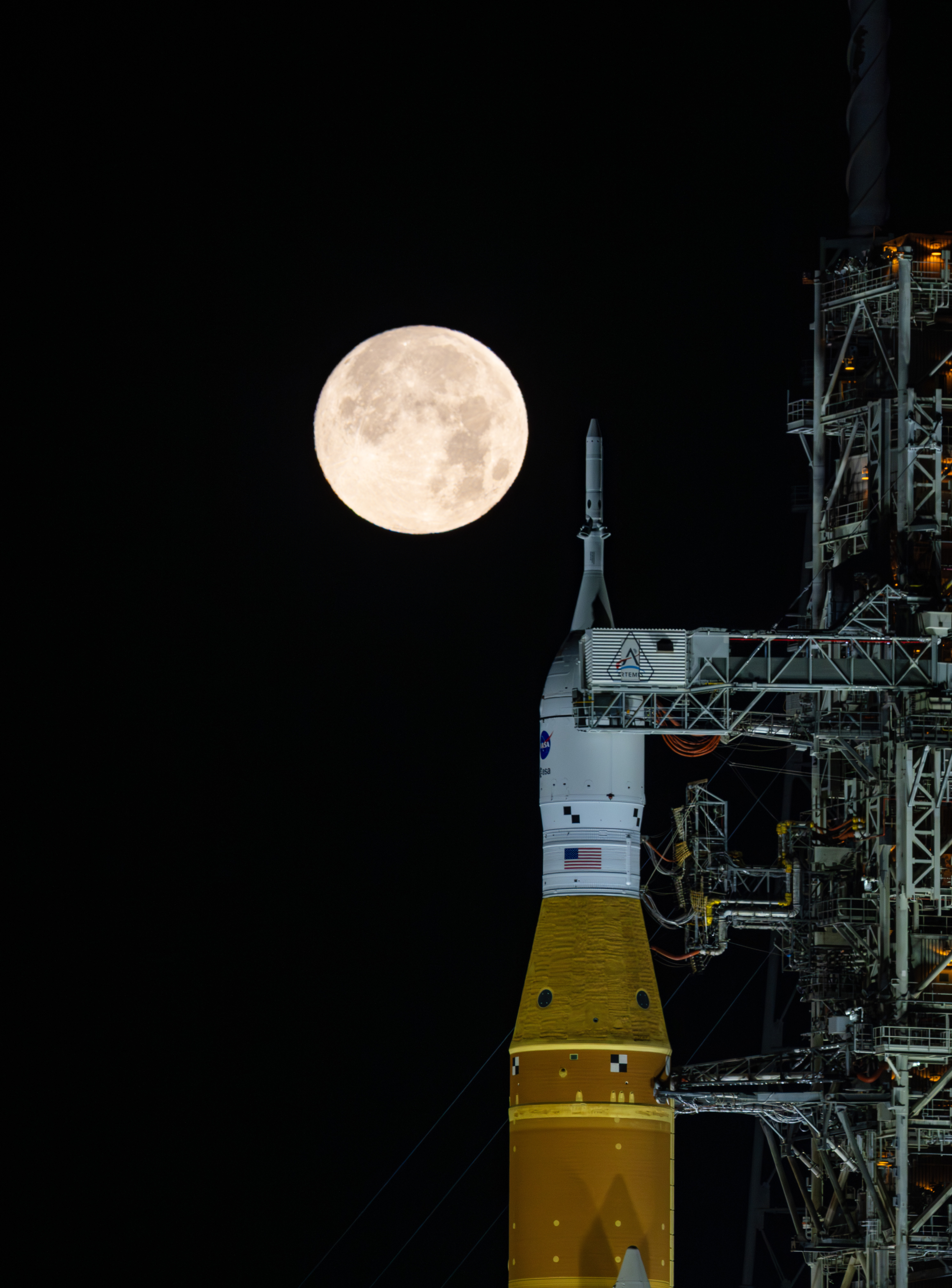
The Moon Takes Center Stage at Cape Canaveral 🌕
Moonrise at Cape Canaveral isn’t picky about its company. It climbs over the SLS (Space Launch System) and Orion like a neon sign blinking, “We’re doing something big, suspiciously big, and yes, we’re going to do it with a lot of coffee.” ☕ On the night of February 1, 2026, in the wee hours when the world still hadn’t decided whether it was a work night or a night to sleep through, a full moon hung overhead as if it had bought a front-row seat to the show that was about to begin: NASA’s shiny stacking of intention and ambition, perched atop the mobile launcher, ready to stage a cosmic promenade.
The scene was not just a technical display; it was a devotional to clarity, or perhaps a grand exercise in not knowing what’s next. The SLS and Orion looked patient, almost pious, as if they’d been asked to stand still for a photo while the universe whispered, “Just hold still while we figure out what to do with you.” 📸 And there, under that gleaming circle of moon, Artemis II loomed in the background like a chorus line of future memories: bold, brassy, and a little bit cheeky, as if Artemis herself whispered, “We’re not late; we’re precisely on schedule—if you count cosmic timing as a suggestion.”
When the Moon Does the Heavy Lifting 🌙
Let’s be honest: the moon was doing most of the heavy lifting that night. Its glow bathed the mobile launcher in a silver, almost metallic lullaby. The Orion spacecraft radiated a quiet confidence, its panels catching the lunar light like a row of tiny mirrors that forgot to go to a party and instead went to a moonlight ball. ✨ Somewhere nearby, technicians and engineers swapped stories in the glow of monitors and the soft clack of keyboards, sipping coffee that was both heroic and deeply necessary. The atmosphere wasn’t tense; it was more like a well-rehearsed improv show where everyone is waiting for a cue that might be “launch,” or it might just be the universe shouting, “Let’s try again in five minutes.”
The Universe Has Its Own Sense of Timing ⏰
There’s something deeply funny about the way space programs treat the night. They prepare as if the universe has a strict bedtime and schedules a sunrise exactly when the countdown ends. But the stars, those ancient pranksters, tend to drift, blink, and throw in a comet curveball just to see if anyone’s paying attention. 🌠 On this February morning, the moon kept its steady halo; Artemis II kept its promises; and the world kept checking its watch, then deciding time does not apply when gravity is plotting its own piece of theater.
A Theatrical Stage Under Lunar Spotlight 🎭
The full moon’s glow did something else, too: it reminded us how small we are—and how funny we can be about it. The SLS and Orion, with all their polished aluminum and meticulously documented procedures, looked almost theatrical under that lunar spotlight. If you squinted, you could imagine the entire mission as a grand stage production where the curtain never fully closes and the audience keeps muttering, “Okay, but seriously, when do we get to launch?” The joke prints itself: humans build colossal machines to reach the moon, and the moon’s best trick is simply being there, already perfect in its round, unanswerable way. 🎪
The Human Heartbeat Behind the Science 💓
In the chatter of the control room, you could hear the human heartbeat behind the science—the kind of laughter that escapes when fear is just a rumor and coffee is a lifeline. Engineers traded technical jargon and insider jokes as if these were the most normal phrases in the English language, the way a barista might call out an order when a latte decides to overflow with enthusiasm. ☕😄 The moon didn’t mind; it kept shining, indifferent to the human need to catalog every tiny step. Sometimes, the best moments arrive when you allow room to improvise, to improvise well, and to improvise with grace when your stars happen to align with a silver stage curtain you didn’t even know you’d hung.
Artemis II: Back to the Future 🚀
Meanwhile, Artemis II carried its own silhouette of expectation. It’s the kind of name that reads like a diary entry: “Artemis II: The One Where We Go Back, Not Backward, But Back to Back to the Future, Maybe.” The mission’s very existence is a wink to history and a nod to the unknown. It’s a reminder that space exploration is less about never making mistakes and more about making room for the ones you didn’t anticipate—the weather anomaly, the minute hand on the countdown that’s decided to stretch a little, the audience of the night sky that’s not in a rush to applaud. 🌌 That’s the humor of exploration: the universe rarely adheres to a neat, tidy script. It prefers offbeat cues, a little improvisation, and a lot of wonder.
The Beauty of Mystery and Wonder 🔭
If you paused to wonder what it all means, you weren’t alone. The moon did not give a lecture on astrophysics, and Artemis II did not issue a press release on future trajectories. Instead, the moment offered a gentle reminder: sometimes the point of a grand expedition is simply to stand under a full moon and acknowledge that some things remain beautifully mysterious. 🌟 It’s a nod to the fact that science thrives on questions, not just answers, and that wonder has a front-row seat at the edge of every launch pad.
Finding Joy in the Unknown 😊
And so, in the quiet hours of that February dawn, the world exhaled a little easier. Not because everything was solved—far from it. Because there exists a kind of joy in the unknown that even a perfectly rehearsed prelaunch checklist can’t undermine. The full moon kept its vigil; Orion kept its quiet confidence; and the SLS kept its pose, like a statue that keeps reminding us, with a smile, that there are things we’re not meant to rush. 🕰️ In this light, uncertainty doesn’t feel like a setback. It feels like a wink from the cosmos, as if the universe is saying, “Relax. We’re doing something big, and there’s a lot ahead of us, and that’s what makes it exciting.”
The Night Belongs to Dreamers 🌃
If you’re tempted to overanalyze, remember this: the night belongs to the moon and to Artemis II, to all the folks who kept their eyes on the gauges and their feet on the ground while their dreams drifted skyward. 💭 It belongs to the laughter that accompanies the realization that some questions are more fun when you don’t have all the answers. It belongs to the feeling that, sometimes, the best way to shape your future is to let the present unfold naturally, lit by moonlight and fueled by coffee, with a launch countdown ticking in the background, ready to surprise you.
The Next Chapter Awaits 📖
And as the first light of dawn began to wash over the launch complex, you could almost hear the universe whisper one last time: there’s more to come, more to discover, more to laugh about, and more opportunities to stand beneath a full moon and wonder, while Artemis II quietly writes the next line of its own story. 🌅 The night, and the moon, and the mission, all agreed: some things are best left wonderfully open until the moment they become something worth celebrating. Then we’ll define the celebration, and maybe—just maybe—discover a little more of the unknown in the process. ✨🚀
Image via NASA https://ift.tt/03xiJru