Ways4eu WordPress.com Blog
SPA View of ways4eu.wordpress.com
Crescent Enceladus: Saturn’s Icy Moon Reveals Hidden Ocean | Cassini Mission Discovery
By JohnTheWordWhirlwind
on Sat Feb 07 2026
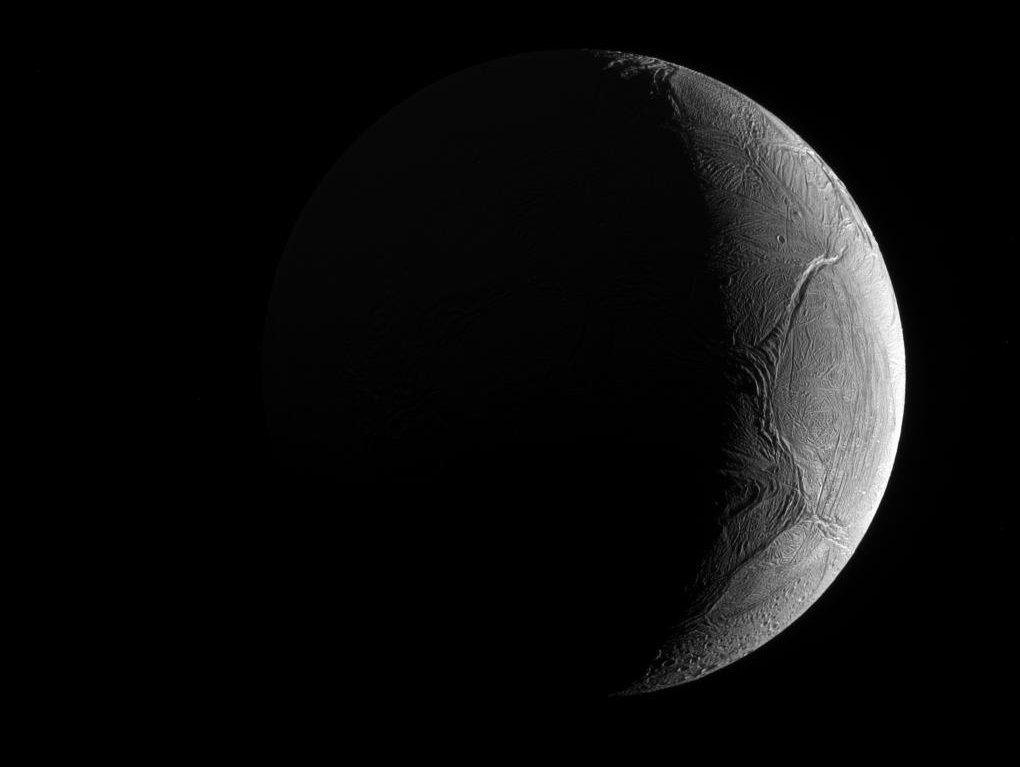
A Cosmic Postcard from Saturn’s Brightest Moon 🌙
Peering from the shadows, the Saturn-facing hemisphere of Enceladus poses in a Cassini-era moment that reads like a cosmic postcard. In November 2016, the spacecraft’s camera was pointed nearly sunward, about 130,000 kilometers from the moon’s bright crescent, capturing a scene that feels half lullaby, half daredevil stunt.
The Mirror Effect: Brightest World in the Solar System 💎
If you’re counting reflections, Enceladus is a mirror with a serious habit of dazzling. The distant world reflects more than 90 percent of the sunlight it receives, giving its surface the same gleam as fresh snow. It’s a small thing, only about 500 kilometers across, yet it carries a big personality: a surprisingly active moon that proves you don’t need to be a giant to steal the show.
Beyond the Ice: A Hidden Ocean World 🌊
Cassini’s flybys have turned the dial on what Enceladus is capable of. Beyond the serene, icy veneer, there’s a chorus of activity: water vapor and ice grains being spewed from the south polar region. It’s more than a spectacle—it’s evidence of an ocean of liquid water hidden beneath the moon’s frigid crust. The result is a world that behaves like a celestial snow globe with a secret, a place where ice meets possible heat and where the cosmos dares us to ask what lies beneath 🔍.
The Tiger Stripes Mystery 🐅
Scientists detected a huge cloud of water vapor over the south polar area and relatively warm fractures in the crust, informally calling these deep crevasses “tiger stripes”. During a close flyby in 2008, Cassini’s instruments sampled the plume directly and detected a surprising mix of volatile gases, water vapor, carbon dioxide and carbon monoxide, as well as organic materials.
A Tiny Moon with Cosmic Significance 🚀
So here’s to Enceladus: a tiny moon with a volcanic heart ❤️, a surface as bright as a winter morning, and a geyser showing that even in the coldest corners of the solar system, life’s questions still bubble up. If you’ve ever felt small in the vastness of space, look at Enceladus and remember that brightness isn’t measured by size—it’s measured by how loudly mysteries shiver beneath the ice ⭐.
The Search for Life Continues 🔬
With its global ocean, unique chemistry and internal heat, Enceladus has become a promising lead in our search for worlds where life could exist. The material shoots out at about 800 miles per hour and forms a plume that extends hundreds of miles into space.
Related Topics:Saturn exploration, Space photography, Ocean worlds
Image via NASA https://ift.tt/PC9TI6M