Ways4eu WordPress.com Blog
SPA View of ways4eu.wordpress.com
🐸 The Tadpoles of IC 410: Cosmic Sculptures Born in Backyard Skies
By JohnTheWordWhirlwind
on Tue Mar 17 2026
🌌 When Stars Sculpt Masterpieces 🎨
10,000 light-years away, gravity and starlight create cosmic art
✨ A Hidden Shoreline of Starlight
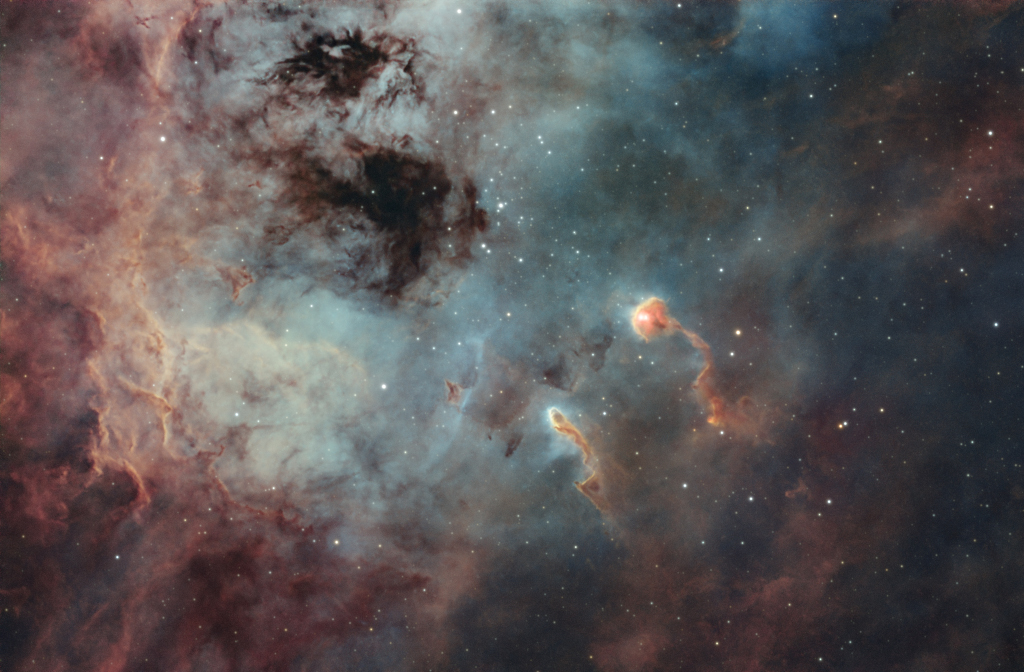
Picture this: a telescopic close-up of the central regions of a faint emission nebula, IC 410, captured under the ordinary glow of backyard skies. It’s a sight that feels almost mischievous in its grandeur — like discovering a hidden shoreline from a balcony and realizing the surf is made of starlight! 🌊✨
This image is presented in a Hubble color palette, blending visible broadband and narrowband data with a dash of near-infrared. The result is a portrait that somehow looks both archival and freshly minted, as if the universe decided to pose for a selfie! 📸
🐸 Meet the Tadpoles
Below and to the right of center lie two remarkable inhabitants of the interstellar pond of gas and dust: the Tadpoles of IC 410! Partly shrouded by foreground dust, the nebula itself cradles NGC 1893, a young galactic cluster that acts like a lively meteorologist in a cosmic forecast! 🌦️
Formed within the same interstellar cloud a mere 4 million years ago, these intensely hot, bright cluster stars energize the surrounding gas into a glowing chorus of emission lines. 🎶
🌊 Titan Structures of Star-Birth
But the real show-stealers are the tadpoles themselves! Composed of denser, cooler gas and dust:
- 📏 10 light-years long — titanic structures stretching across space
- ⭐ Star nurseries — likely cradles of ongoing star formation
- 🌬️ Sculpted by stellar winds — heads etched with bright ridges of ionized gas
- 🚩 Cosmic pennants — tails trailing away like flags in a solar wind
They are waiting for gravity to nudge matter just so, for a spark to leap from dust grain to newborn star! 🌟
🔭 IC 410: The Quiet Beacon
IC 410 sits about 10,000 light-years away, a quiet beacon toward the nebula-rich stretch of the constellation Auriga. It’s a reminder that the night sky, even from a suburban vantage point, is a grand canyon of processes — where gravity, radiation, and time collaborate to fashion structures that would make any sculptor blush with envy! 🗿
🧪 The Science Behind the Art
If you’re chasing the science behind the scene, here’s the throughline:
- ☀️ Young, hot stars inject energy into surroundings, ionizing gas in vivid colors
- 💨 Denser pockets of dust and gas pressurize and shape the flow
- 🌀 Elongated tadpoles form — heads glowing with ionized gas, tails stretching away
- ⏰ Celestial choreography spanning tens of thousands of years in the blink of a stargazer’s eye
⚡ The universe isn’t just big — it’s intricately, artistically detailed. The Tadpoles of IC 410 are signposts of where stars are born and how environments sculpt nascent suns. We can’t pluck a baby star from its dusty cradle, but we can point a telescope, tilt our heads to Auriga, and watch the cosmos do what it does best: create, illuminate, and inspire awe — one tadpole at a time! ⚡