Ways4eu WordPress.com Blog
SPA View of ways4eu.wordpress.com
🎵 The Invisible Hand on the Harp — Arthur Sullivan and the Art of Making History Sing
By iftttauthorways4eu
on Sat Mar 21 2026
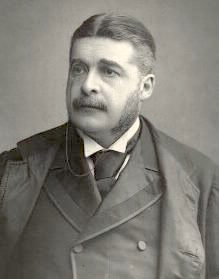
Born in 1842 and whisked away at the close of the 19th century, Sullivan turns up in the musical memory of most people who know that “Major-General” isn’t just a phrase you mutter to yourself when you can’t assemble IKEA furniture.
He’s the other half of a legendary partnership — one that proves a good tune can outlast even the quirkiest theatrical wigs.
🎭 The Birth of a Partnership
Sullivan started out dabbling in a variety of forms: a ballet here, a symphony there, a cello concerto that no one can pretend to have fully appreciated on first listen, and a one-act comic opera that sounds like the perfect warm-up for a long night of operatic silliness: Cox and Box. It’s still performed with enough regularity to suggest that, yes, people enjoy a good source of mistaken identity and a well-timed knock-knock joke set to music. 🎭
The first real collaboration with W. S. Gilbert came with Thespis in 1871. Think of it as the gateway drug for musical theater, where the duo realized that putting words in dialogue form and setting them to a tuneful emergency could be incredibly contagious — like laughter in a crowded theater, only with more chandeliers.
🚢 From Pinafore to Penzance
Enter Richard D’Oyly Carte, the impresario who clearly understood the alchemy of a catchy chorus. In 1875 he enlisted Sullivan to write the music for Trial by Jury, with a libretto by Gilbert. The result? A box-office triumph that proved you didn’t need an epic spectacle to captivate an audience — just a sly wit, a memorable melody, and a chorus that believed every punchline deserved a standing ovation. 🚢
From H.M.S. Pinafore to The Pirates of Penzance and The Mikado, Sullivan’s collaborations became archetypes of clever storytelling through music. They’re not merely shows; they’re cultural events that taught the world how to laugh at itself with competent, gleaming orchestration.
🏛️ The Grand Opera
Sullivan wasn’t all lighthearted capers. He also took on the weightier tasks — the only grand opera, Ivanhoe, arrived in 1891. It didn’t vanish into a memory hole, but it didn’t quite become a perpetual headliner either. It’s a reminder that even a master of comic operas can tiptoe into something grand and serious, with mixed results and a few brave, dusty corners of revival days. 🏛️
🎶 Why Sullivan Endures
In terms of scope, his output spanned 24 operas, 11 major orchestral works, 10 choral works and oratorios, 2 ballets, incidental music for plays, hymns, songs, and a treasure trove of church pieces, piano, and chamber music. 🎶
And let’s not forget the hymns and songs that found life beyond the stage: “Onward, Christian Soldiers” and “The Lost Chord” have the staying power of a catchy chorus that somehow keeps returning whenever you least expect it.
Why does Sullivan endure? Partly because he managed to fuse wit with melody in a way that feels effortless, even when it’s precisely engineered. The jokes land because they’re musical — the rhythm forces timing, the harmony sweetens the bite, and the chorus amplifies the communal joy of being in on the joke. It’s theater as a shared experience, a reminder that when you leave a hall humming, you’ve already contributed to the encore in your own way.
So next time you hear a jaunty tune with a stubbornly cheerful air, maybe take a moment to thank the craftsman who wove it. His works remind us that music is a social act: a dialogue between composer, librettist, performers, and audience, all riding a single, sparkling thread of melody. 🎵