Ways4eu WordPress.com Blog
SPA View of ways4eu.wordpress.com
💜 A Puff of Purple in the Cosmic Snit: IXPE Teases a Supernova Remnant
By Kinda Cool
on Fri Mar 27 2026
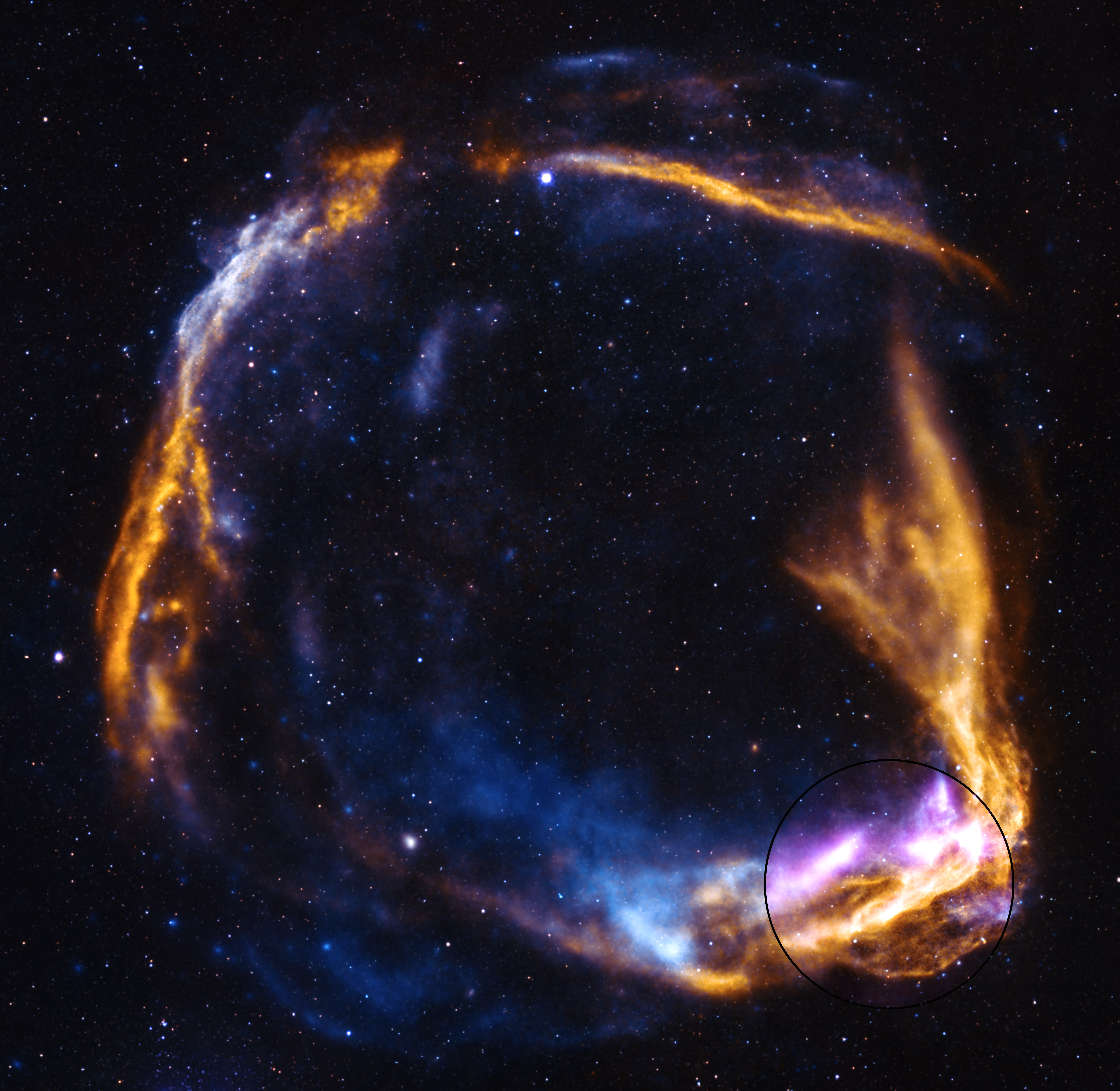
💜 A Puff of Purple in the Cosmic Snit
If you’ve ever tried to take a dramatic selfie and your camera only catches the edge of your hat, you’ll understand the vibe of NASA’s IXPE when it points its X-ray eyes at the outer rim of a spectacular supernova remnant — specifically the purple-highlighted region in the inset. 🔭
🌟 The Universe’s Memory Card
It’s like the universe handed us a memory card with the best sunset on lockdown, and IXPE being the telescope equivalent of “I didn’t ask for a close-up, but thank you anyway.” The bright RCW 86 remnant — the oldest known supernova remnant, observed by Chinese and possibly Roman astronomers in 185 AD — is now a sprawling canvas of energetic particles and magnetic fields.
💜 The Purple Highlight
NASA’s Imaging X-ray Polarimetry Explorer, or IXPE, took a look at the outer rim where particles are being accelerated to near-light speeds by shockwaves from the original explosion. The purple highlights in the image mark regions where IXPE detected strongly polarized X-rays — a sign that the magnetic fields there are ordered like bristles on a brush, rather than tangled up in knots.
🔬 Why This Matters
The X-ray polarimetry data helps scientists understand how particles get accelerated to such extreme energies — one of the biggest unsolved puzzles in astrophysics. RCW 86’s outer rim is essentially a particle accelerator bigger than anything we could build on Earth, powered by a star that blew itself apart almost two millennia ago.
What makes this observation particularly compelling is the way the polarization reveals the geometry of the magnetic fields. In the bright filaments, the fields are aligned perpendicular to the shock front — like water flowing around a boulder — while in fainter regions, the field lines are more chaotic, like a tangled headphone cord after a week in your pocket. 🌌
🔗 Image Credit: NASA