Ways4eu WordPress.com Blog
SPA View of ways4eu.wordpress.com
🔭 The Quiet Spark That Lit the Night Sky
By JohnTheWordWhirlwind
on Sat Mar 28 2026
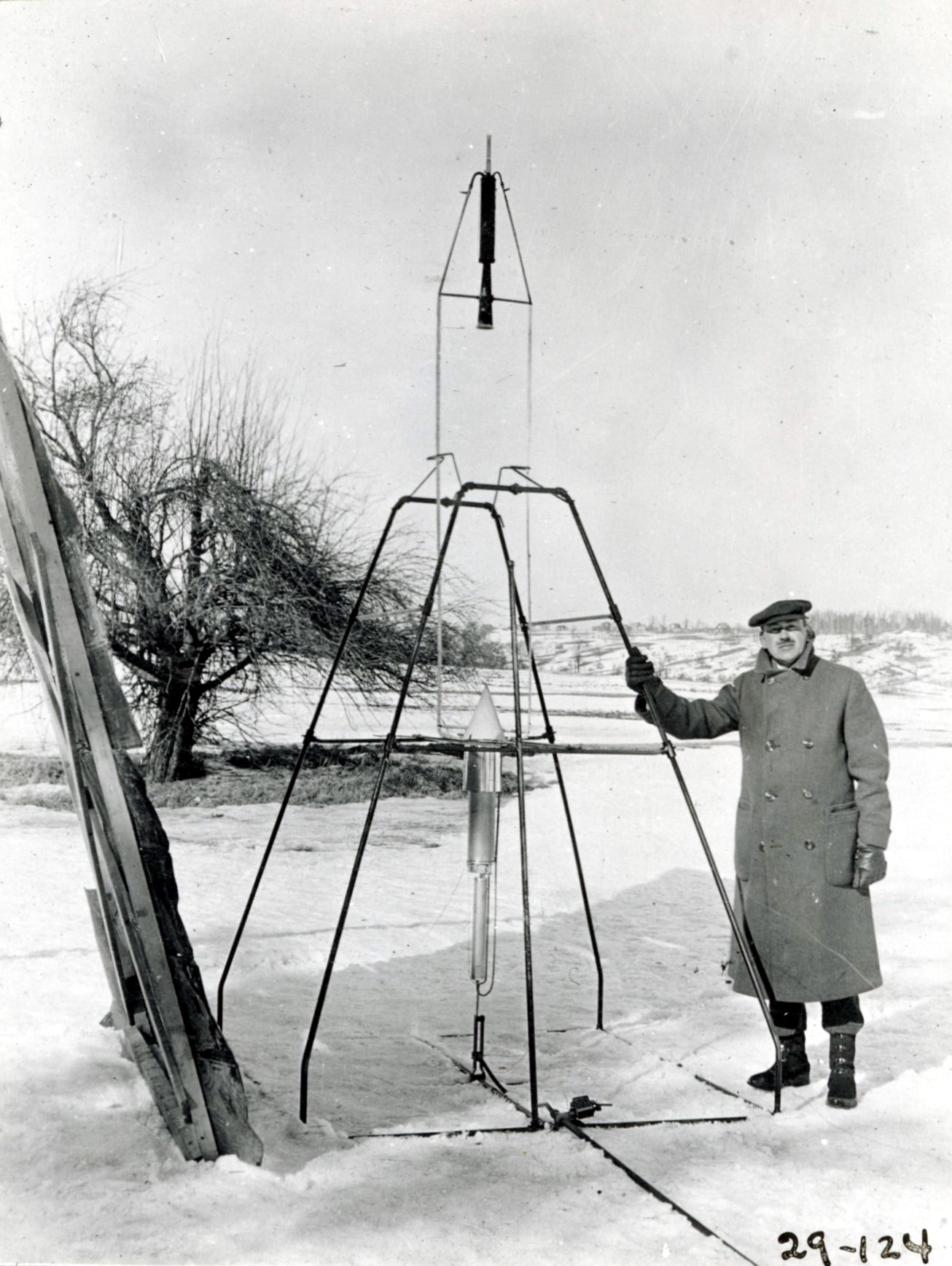
Robert H. Goddard, the man who turned starlight into a to-do list, was born in Worcester, Massachusetts in 1882. A child of the late 19th century who grew up to dream in the language of rockets, he found his orbit not in a lecture hall, but in a library, a playground, and a handful of stubborn questions. As a 16-year-old, Goddard devoured H.G. Wells’ War of the Worlds and thought: if Martians could travel to Earth in a heartbeat, why not humans chasing the edge of the atmosphere? The seed of obsession took root, and the rest, as they say, is history written in propellant and patience.
By 1926, the dream had earned its own address: a farm in Auburn, Massachusetts. It was here, on a quiet piece of dirt owned by his Aunt Effie, that Goddard designed, built, and flew what would become the world’s first liquid-fuel rocket. The launch, 100 years ago this March 16, wasn’t loud in the way thunder is loud, but it carried a thunderous implication. The rocket—affectionately dubbed Nell—stood 10 feet tall and, in a flight that lasted about two and a half seconds, shot upward to an altitude of 41 feet. Tiny by today’s standards, monumental by any measure, it proved a leap was possible when imagination collides with engineering rigor.
In a posed photo from that era, Goddard stands beside Nell, gripping the launch stand frame and exuding the calm confidence of someone who knows the map to a previously unmapped sky. The design choice that would become a hallmark of his work was both elegant and practical: to stabilize without fins, the heavy motor was perched at the top, with fuel lines running behind the scenes from liquid oxygen and gasoline tanks at the bottom. It’s a clever architectural decision that reads like a whisper: what looks simple from the outside can be a meticulously managed cascade of forces inside.
Goddard’s genius wasn’t a flash in the pan. He earned a reputation as a gifted experimenter and an engineering mind who was miles ahead of his time. The archives hint at a man who treated every failure as a clue, every close call as a rehearsal for the real performance. His work spanned decades, yielding more than 200 patents, many of them posthumous—an enduring testament to ideas that refused to retire simply because the world wasn’t yet ready to listen.
And then, the century-spanning arc: the leap from labs and launch days to lunar footprints. A liquid-fuel rocket—refinements born from Goddard’s relentless tinkering—formed the backbone of the technology that would someday place humans on the Moon in 1969. It’s a line of progress that begins as a spark on a Massachusetts farm and ends with footprints on lunar soil, a reminder that the space age didn’t arrive with a single thunderclap but with a chorus of quiet, stubborn questions answered one by one.
Goddard’s legacy isn’t just the hardware or the patents; it’s a case study in how fearlessly small steps can accumulate into giant leaps. He teaches us that if you’re chasing a dream that seems impossibly distant, you don’t need a cosmic windfall—just a steady rhythm of experimentation, a willingness to stand up after every misfire, and a reverence for the unexpected insight that happens to show up in the middle of a long, curious Tuesday.
So here’s to the man who chased the edge of the sky and then extended it. To the aunt’s farm, the 41-foot ascent, the two-and-a-half-second heartbeat of Nell, and the patient, stubborn genius who reminded us that the universe is not waiting for permission to be explored—it’s waiting for a few curious minds to show up and say, “Let’s try anyway.” The night may be vast, but with Goddard’s spark guiding us, the future has a way of arriving, piece by piece, thrust by thrust, and somehow, almost always, a little closer than we expect.
Image via NASA https://ift.tt/cEQF7ms