Ways4eu WordPress.com Blog
SPA View of ways4eu.wordpress.com
🌌 Night Sky Improvisation: When Cosmic Chaos Becomes a Canvas
By JohnTheWordWhirlwind
on Wed Apr 01 2026
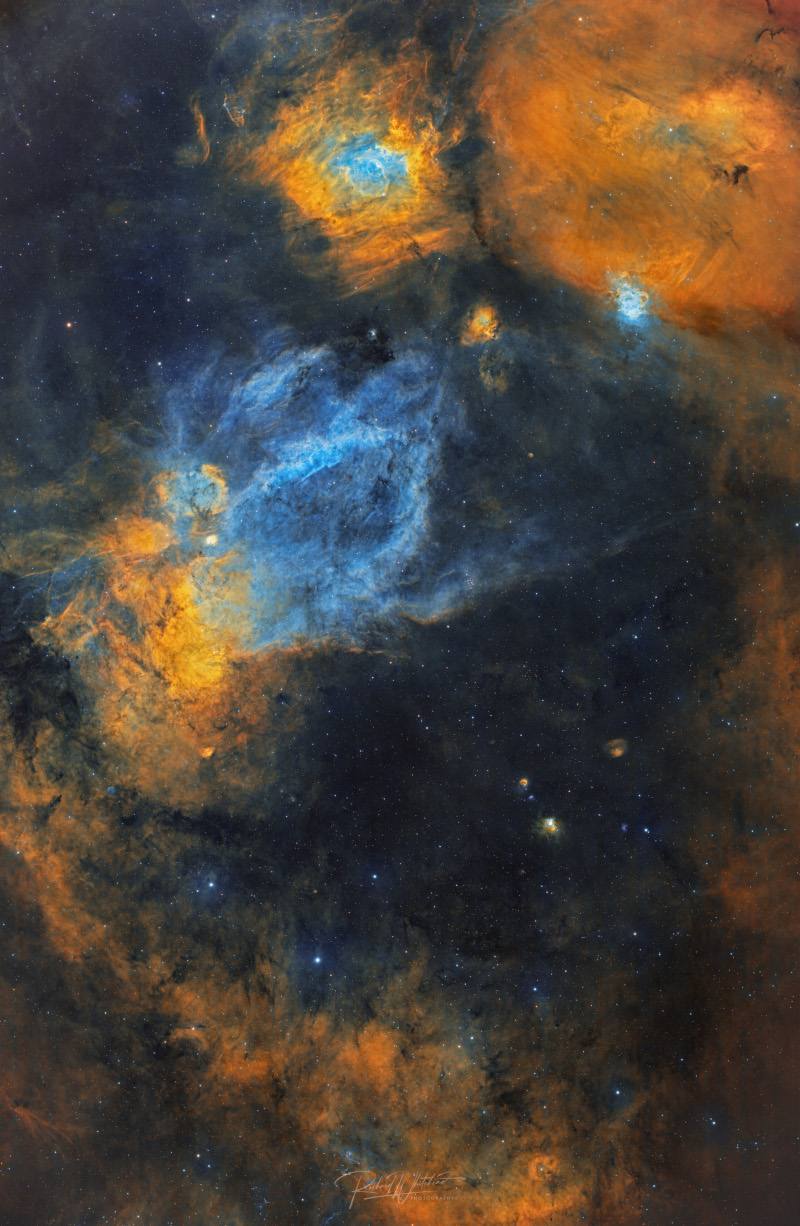
What unexpected things do you see when you look up at the night sky? Tonight, the heavens resemble an abstract painting that wandered off a gallery wall and decided to float through space instead. Across a cosmic canvas, there are swaths of color that feel both intentional and utterly free—like a painter who forgot the rules, then decided the rulebook was a rumor.
If you pause long enough, the abstract starts to murmur with a familiar rhythm. The mind, ever the eager archer, starts tracing shapes in the smudges: a large claw reaching up toward a floating bubble, a visual joke played on the night. It’s a reminder that pattern-hunting is as human as breathing. We crave order even when chaos offers it in a kaleidoscope of photons.
Embedded within these seemingly random structures are the physical laws that govern how light and matter interact. The Claw, known to astronomers as Sh2-157, and the Bubble, called NGC 7635, glow in colors mapped to the yellow and blue we associate with hydrogen and oxygen ions. These colors aren’t just pretty; they’re telltale fingerprints of the stellar alchemy at work. The light from stars—several times the mass of our Sun—zaps these gases into ionization, creating a radiant dialogue between hot matter and high-energy photons.
What we’re seeing is both chaos and structure, a duet performed on the grand stage of the universe. The glow is not random decoration but a consequence of physics in action: energetic photons ripping electrons from atoms, the dance of electrons cascading down and emitting distinct hues, the shaping of gas by fierce stellar winds, the sculpting hands of gravity and pressure over millions of years. In the same frame, you can glimpse the unruly spontaneity of a painting and the meticulous discipline of a scientific instrument.
And therein lies a common thread between art and science: look for the unexpected. The cosmos refuses to be neatly categorized, but it rewards curiosity with bursts of color and quiet revelations. An image that might have been dismissed as a random smear becomes a map of processes: ionization, recombination, radiation pressure, and the choreography of star formation. It’s a reminder that wonder often hides in the junctions—where imagination meets evidence, where a claw and a bubble become more than their names, becoming a narrative about how the universe breathes.
So next time you lift your gaze, consider not just what you see, but what it means when you pause to interpret. The night sky isn’t a static tapestry; it’s a living, luminous joke told in ultraviolet and infrared, with punchlines written in hydrogen and oxygen. And if you’re lucky, your own mind will spot a figure in the margins—a claw carding its phantom way toward a bubble, a reminder that the universe persists in telling stories, as if to say: sometimes the most profound truths arrive dressed as art, and the science that deciphers them is merely the audience clapping back with awe.
Image via NASA https://ift.tt/45MojBz