Ways4eu WordPress.com Blog
SPA View of ways4eu.wordpress.com
💫 The Cosmic Sparkler: A Starburst That Keeps On Sparkling
By Kinda Cool
on Sun Apr 05 2026
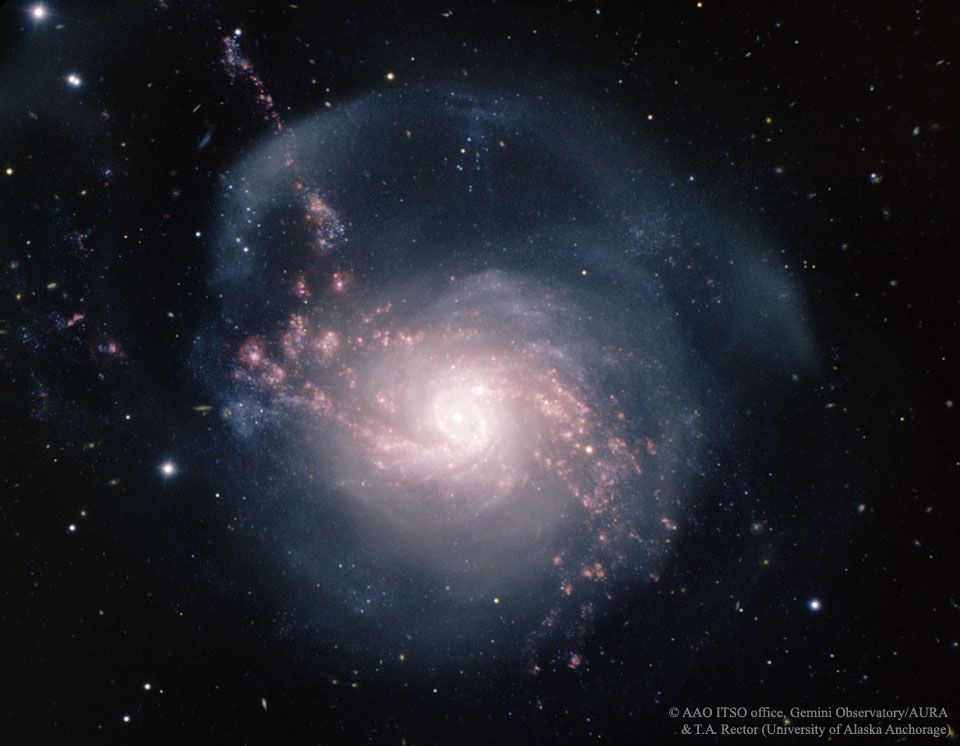
The Party Never Stops
The party is still going on in spiral galaxyNGC 3310, and the punch bowl is practically bottomless. About 100 million years ago, this glittering whirl of stars likely collided with a smaller galactic partner. The result? A colossal fireworks show in the cosmos, with the galaxy’s star-forming engines revving into overdrive and never quite yawning off.
Gravity’s Cheeky Tango
When gravity gets a little cheeky during a galactic tango, it stirs up density waves that march through the gas like a drumline at a festival. Those waves compress the clouds of gas into ripe, star-forming pockets, and suddenly the universe is spangled with newborn suns. It’s less “quiet night sky” and more “let there be light—and there was a lot, with a side of supernova glitter.”
Color-Coded Story
A featured image from the Gemini North Telescope offers a front-row seat to this stellar bonfire. It’s color-coded to tell a story: pink highlights the gas—the raw material waiting to be transformed into stars—while white and blue spotlight the stars that have already taken their first steps into bright, hot, youthful lives.
Some of these star clusters are surprisingly young, a wink from the galaxy that starburst galaxies can stay in their energetic mode for longer than you might expect. They’re not just a phase; they’re a lifestyle.
A Tidy Island of Light
NGC 3310 itself spans roughly 50,000 light-years, a tidy island in the vast sea of space. It sits about 50 million light-years away and, if you’re armed with a small telescope and a map to Ursa Major, grants a satisfying glimpse into the wonders of our cosmic neighborhood.
A Toast to the Never-Ending Starburst
In the grand theater of the universe, NGC 3310 shows us that galactic collisions aren’t just dramatic plot twists—they’re efficient star-making machines. The aftermath is a galaxy that keeps the party hot, lights up the sky with sparkling clusters, and invites us to watch as the next act unfolds. So tilt your lens toward Ursa Major, raise a telescope instead of a glass, and toast to the never-ending starburst.
Image via NASA / APOD