Ways4eu WordPress.com Blog
SPA View of ways4eu.wordpress.com
🌑 Solar Eclipse of the Heart: A Moonlit Misadventure in 2026
By Kinda Cool
on Wed Apr 08 2026
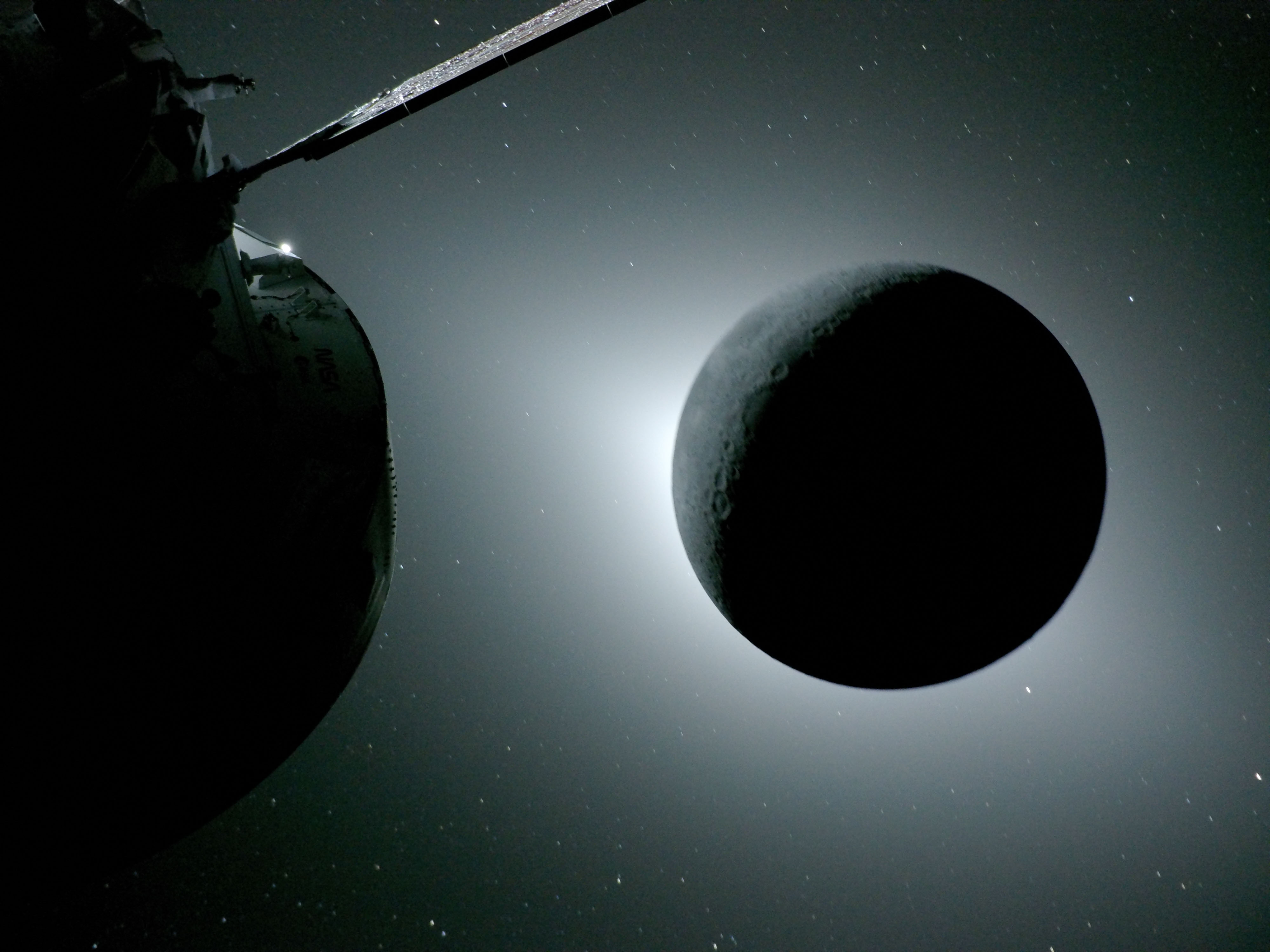
A Cosmic Photo-Op
If you’ve ever tried to take a selfie with a celestial event and ended up with a glare so bright you could see your own existential dread, you’re not alone. The Moon, that shy, dimpled disco ball, recently played door-to-door with the Sun in a solar eclipse on April 6, 2026. The result? A cosmic photo-op that makes your best sunrise pic look like it was shot through a coffee mug.
A Celestial Diva
Picture this: the Moon, backlit by the Sun, lounging like a celestial diva while a battery-powered paparazzi camera on the Orion spacecraft‘s solar array wings snaps away. It’s a setup that would make any space-nerd swoon and any hardware reviewer faint from giddy awe.
A Ring of Brightness
The Sun, a blazing cosmic spotlight, shines through the Moon’s silhouette, revealing a ring of brightness where the Moon fails to completely block the star’s glory. It’s not just a blackout; it’s a dramatic reveal, like watching a magician pull a comet out of a hat and then trip over the curtain cord. The Moon’s craters become craters of character, each one a tiny reminder that even in celestial alignment, there’s room for a wink.
Orion as Supporting Actor
In the foreground, Orion stares back with the confidence of a space shuttle saying, “I’ve got this.” The twin wings of the solar array, sensors humming and circuits caffeinated, frame the Moon as if it were the celebrity guest at a very technical afterparty. It’s a friendly reminder that exploration isn’t just about the destination; it’s about the quirks of the journey.
Solar Eclipse of the Heart
The phrase “Solar Eclipse of the Heart” comes to mind because, frankly, who among us hasn’t had a dramatic moment while something brighter than life itself blocks the view of something else? The Moon is playing a starring role, shadowed by the Sun yet still commanding a presence. And there, on the left, Orion stands as the dependable supporting actor—steadfast, practical, and somehow managing to look good in a solar close-up.
Theater of the Cosmos
If you’re tempted to overthink it, remind yourself: this is the theater of the cosmos, where natural phenomena give you both a physics lesson and a punchline. The Moon’s backlighting is not a loss of luminosity but a dramatic rebranding—what if faint glory is exactly what you need to remind you that even in darkness, there’s a halo of possibility?
A Halo of Possibility
So here’s to the Moon, the Sun, and the sturdy engineers who enabled Orion to catch them in a frame that feels almost scripted, except it’s real and it’s happening. May every eclipse bring a bit of theater, a dash of science, and a reminder that even among galaxies, there’s room for a good, giggly moment. And if you find yourself chasing the perfect shot: the best photographs aren’t just about the light; they’re about the story the darkness refuses to hide.
Image via NASA