Ways4eu WordPress.com Blog
SPA View of ways4eu.wordpress.com
🎨 The Quiet Genius Nobody Asked For: Henry Darger
By Kinda Cool
on Sun Apr 12 2026
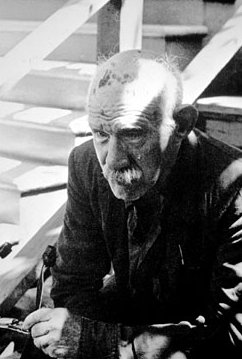
A Cosmic Prank of Art
Imagine a guy who spent most of his life buried in the quiet background of American history, only to crash the cultural party after he’s long gone. Meet Henry Darger, a Chicago-born oddball whose work now sprawls across museums and writing desks like a cosmic prank: vast, strange, and somehow too personal to ignore.
Stubborn Quiet
Born April 12, 1892, he lived through the century’s rough patches with a kind of stubborn quiet. His early years were not exactly a montage of applause. His mother died when he was young, and circumstances steered him toward institutions and hospitals rather than playgrounds. He spent time in a children’s asylum and later drifted through poverty, performing the daily rites of service jobs at hospitals and nursing homes.
15,145 Pages
After his death in 1973, a pair of landlords—Kiyoko and Nathan Lerner—uncovered a treasure trove that would reframe how we think about art.In the Realms of the Unreal is not just a manuscript; it’s a sprawling portal with 15,145 pages chronicling a rebellion of child-slaves on a fantastical planet. Alongside it sit hundreds of watercolor and collage illustrations.
Tenderness and Terror
What makes Darger a figure that continues to spark conversation is the mix of tenderness and terror, innocence and violence, devotion and secrecy. His pages are laced with Catholic imagery, which lends a solemn gravity. They also push against the edges of conventional taste: the depictions of war, the stark brutality, and the striking presence of nude figures.
A Private Diary in a Library
When the Lerner family unearthed Darger’s work, a quiet genius stepped out of the shadows and into the spotlight. It was a discovery that felt like finding a private diary in a library, except the diary had been cataloged with the care of a treasure map. The response—curiosity, reverence, debate—reflected a broader shift in how we measure value in art.
Art’s Power to Unsettle
To approach Darger today is to negotiate a delicate balance: celebrate the scale of his creation while acknowledging the discomfort some viewers feel. It’s a reminder that art’s power often lies precisely in its ability to unsettle us. The worlds Darger built—vast, intricate, volatile—offer a mirror for how we narrate history.
A Dare
In the end, Henry Darger’s legacy isn’t only the epic novel and the sprawling visual saga. It’s a dare: to consider the extraordinary within the ordinary, to listen to the whispers of a private universe that demanded air, ink, and color, and to accept that sometimes the most provoking art comes from someone who showed up to life with a pen, a box of cutouts, and a refusal to bow to the safety of “normal.”
Read the full article: Wikipedia — Henry Darger