Ways4eu WordPress.com Blog
SPA View of ways4eu.wordpress.com
☄️ The Green Glow and the Blue Ballet: A Closer Look at Comet R3 (PanSTARRS)
By Kinda Cool
on Tue Apr 14 2026
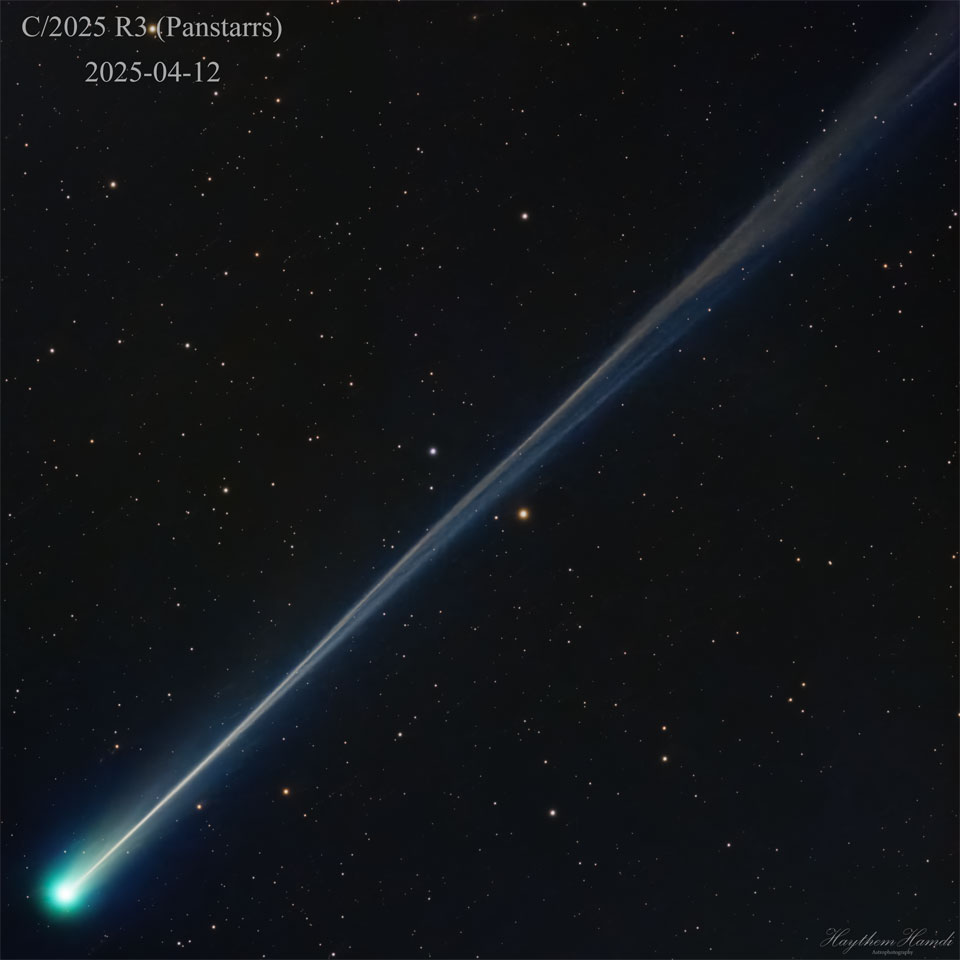
🌌 A Cosmic Handbrake Spill at Dawn
If you’ve been awake before dawn in the northern skies lately, you might have caught a sight that looks a bit like a cosmic handbrake spill: a wispy, glowing stream unfurling from a speck of dirty ice millions of miles away. Meet Comet R3 (PanSTARRS), the newest bright member of the inner Solar System, strutting its stuff with a tail that’s both green and blue and a vibe that says “we’re not just passing by.”
🧊 The Crumbling Ice Loaf and Its Green Glow
Here’s the lowdown, without the jargon you didn’t ask for but with all the wonder you deserve. The central nucleus—think of it as a crumbling ice loaf the size of a few kilometers across—soaks up the Sun’s warmth. That solar kiss makes it shed a cloud of neutral gas into a surrounding coma. This glowing cloud shines a pale green, a courtesy glow from the escaping gases as they bask in sunlight. It’s not a single flame, but a gentle, steady mist of material that creates the comet’s core glow.
💨 The Ion Tail — Solar Wind’s Blue Brushstroke
Then there’s the other, more dramatic act: the ion tail. Some of the gas that escapes from the nucleus gets hit by the Sun’s energetic photons and then stripped of electrons by the solar wind. Once ionized, these particles are swept away from the Sun, sketching a sleek, outward-facing blue tail. The color isn’t magic—it’s the light from ionized gases, painted blue by the energies at play. And this tail isn’t a rigid rope. It’s a wispy, shifting phenomenon, constantly shaped by the solar wind’s variable gusts and lulls.
🔭 The Ceaseless Conversation Between Comet and Sun
From Rhode Island, two days ago, the image shows a multi-degree ion tail—an impression of length, direction, and drama that seems to defy a simple explanation. The tail’s breadth and structure reveal the ceaseless conversation between the comet and the Sun: the nucleus releasing life-supporting gas, the solar wind sculpting it, and our view catching a moment of that dance.
🌅 A Window Before Dawn
For observers aiming to catch R3 (PanSTARRS) at its best, the window is before dawn for roughly another ten days. Those in northern skies will have their turn, after which the comet transitions to southern skies, offering a fresh stage for a different set of observers. It’s a reminder that comets aren’t just static lights in the night; they’re celestial laboratories, showing us the physics of volatiles meeting solar energy, in real time and at a scale we can glimpse with a good telescope or even a sturdy pair of binoculars.
✨ A Temporary, Spectacular Tutorial
If you’re chasing the next great streak across the dawn-dusted sky, keep an eye on the green glow of the coma and the blue sweep of the ion tail. Comet R3 (PanSTARRS) isn’t simply passing through; it’s providing a temporary, spectacular tutorial on how ice becomes gas, how gas becomes a tail, and how the Sun’s wind writes the final, ever-changing lines on this cosmic canvas.
Image via NASA / APOD
© H.J. Sablotny — All rights reserved. The text content of this post is the intellectual property of H.J. Sablotny. Images are subject to their respective copyright holders and are used for illustration purposes only.