Ways4eu WordPress.com Blog
SPA View of ways4eu.wordpress.com
🎮 Flow, Feeds, and the Art of Being Featured
By Kinda Cool
on Tue Apr 14 2026
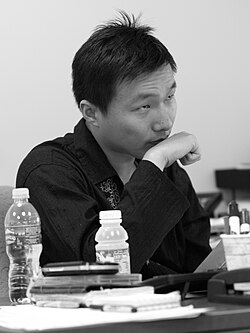
⭐ A Gold Star on a Boring Tuesday
If you’ve ever spent a Tuesday morning pretending you’re a curated museum exhibit, you’ve felt the pull of Today’s Featured Article. It’s the Wikipedia equivalent of a gold star—suddenly your screen isn’t just full of facts, it’s a tiny spotlight, turning semi-confident curiosity into something that sounds almost poetic.
🎮 From Browser Experiment to Art Piece
Today’s flavor comes from a little splash of digital history: Flow, the game that began as a browser experiment and grew into a bona fide multi-platform art piece.Jenova Chen and Nicholas Clark kicked off a project that would blur the line between “game” and “experience.” The Flash version, released in 2006 as Chen’s master’s thesis grew legs, led players through two-dimensional planes where a microscopic aquatic life form evolves by gulping smaller life forms. It’s a premise so simple it could fit on a whiteboard: swim, evolve, thrive.
🧘 The Promise of Flow Itself
What makes Flow sing isn’t merely its visuals or its soothing synths; it’s the promise of flow itself.Mihaly Csikszentmihalyi’s theory meets interactive media in a way that nudges players toward a state where challenge and skill harmonize. You’re not just moving a blob around a screen—you’re nudging your own sense of balance, your own sense of progress. The game becomes a tiny meditation on growth, a micro-myth of personal development wrapped in a glossy, minimalist package.
🎨 Whispering Instead of Screaming
There’s an unapologetic elegance to Flow’s design critique as well. Reviewers often lauded its aesthetics and acoustics while noting its gameplay as deliberately spare. It’s a reminder that a “game” doesn’t have to scream for attention to be meaningful; sometimes it whispers so softly you lean in to listen. The experience has, over the years, drifted into a kind of art-piece-or-game ambiguity—an ambiguity that doesn’t diminish its value, but rather enriches the conversation about what games can be when they prioritize atmosphere and idea over mission-driven conquest.
📈 From Thesis to PlayStation
Flow’s journey didn’t stop with the browser.Thatgamecompany—fueled by Chen’s vision and a dash of Santa Monica Studio support—brought Flow to PlayStation 3, expanding its audience and cementing its status as a landmark in independent game design. The transition is itself a story about scaling ideas: how a thesis-driven experiment can evolve into a commercially accessible, emotionally resonant experience.
📊 Numbers That Tell Their Own Story
Of course, the numbers have their own charm. A “hundred thousand downloads in two weeks” is not just a metric; it’s a signal that people were hungry for a certain cocktail of simplicity and depth. By 2008, Flow had racked up millions of plays—proof that a well-tuned concept can travel far on the web’s wings, then land with a wider audience on a console store shelf.
💡 The Takeaway
So, what’s the takeaway for readers who aren’t designers wiring up their next prototype? Flow is a case study in choosing your own pace and your own kind of challenge. It teaches that the value of a game—or any creative work—doesn’t hinge solely on complexity or speed. It hinges on intention: what feeling are you trying to evoke? What experience are you crafting for your audience? How will you measure success beyond the scoreboard?
Wikipedia Featured Article — read the full article: Wikipedia
© H.J. Sablotny — All rights reserved. The text content of this post is the intellectual property of H.J. Sablotny. Images are subject to their respective copyright holders and are used for illustration purposes only.