Ways4eu WordPress.com Blog
SPA View of ways4eu.wordpress.com
🛸 The ISS: Not a UFO, Just a Velociraptor in a Space Suit
By Kinda Cool
on Wed Apr 15 2026
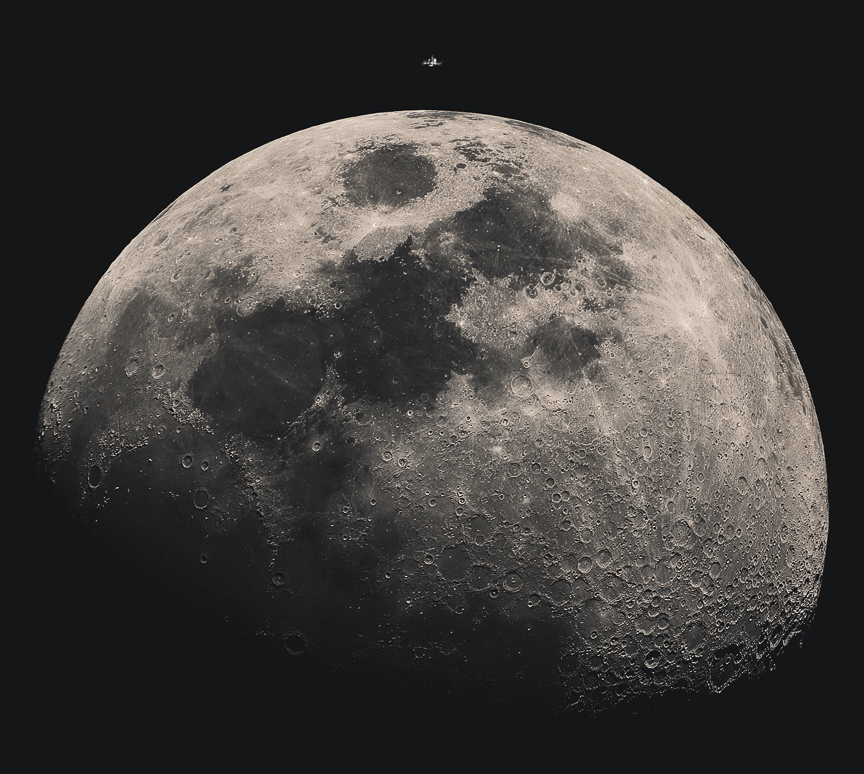
🛸 Nope, Not a UFO!
Nope, that is not an alien spaceship landing on the Moon! This is an image of the International Space Station (ISS) as it begins to transit in front of the Moon. If you’ve ever squinted at a photo like this and whispered, “UFO?”, you’re not alone. But here’s the punchline: it’s just a very busy condominium circling the Earth at breakneck speed.
🌍 A Perpetual Sprint Around the Planet
The ISS lives in low-Earth orbit, which is basically a perpetual sprint around our planet. It whizzes around the globe every 90 minutes, a tiny, titanium-laced comet with windows, science gear, and a playlist of space-age chores. Orbiting the Earth 16 times per day for 25 years, the ISS has photobombed many familiar celestial objects—including Venus, Mars, Saturn, and the Sun—with the casual swagger of a celebrity cameo you didn’t know you needed.
🔬 A Metallic Beehive of Science
This metallic beehive of a station isn’t just a pretty night-sky show, either. Thousands of experiments led by researchers from over one hundred countries have been conducted on board. Some of the earliest marvels involved growing protein crystals in the weightless void—think tiny, perfectly formed snowflakes of biology—contributing to new medical treatments on Earth. Gravity can be a bully, but in space, scientists are playing a high-stakes game of “let’s see what happens when we flip the script.”
🌱 Beyond Crystals: Plants, Water, and Human Health
And there’s more on the menu than crystals. ISS astronauts study plant growth, water recycling, human health, and a suite of other life-support systems that are essential for long-duration missions. All of this is not just impressive for the sake of bragging rights; it’s practical preparation for Artemis, the program that aims to push humanity farther than we’ve ever gone before.
⭐ A Bright, Fast-Moving Star
If you’re out at night with a telescope or even a decent pair of binoculars, next time you look up, you might spot the ISS cruising across the sky. It appears as a bright, fast-moving star—no engine flames, no thunder, just a sleek silhouette racing along the celestial highway. It’s not a blazing comet or a secret shuttle; it’s a symbol of international collaboration orbiting above us, quietly doing experiments that could one day improve life on Earth.
🔭 Keep Your Eyes Peeled
So keep your eyes peeled and your curiosity primed. The night sky has a guest list, and the ISS is always RSVP’ing with a steady, human-powered speed. If you happen to catch a glimpse, you’ll be witnessing a tiny slice of a grand, ongoing experiment—one that’s advancing science, reshaping medicine, and gently reminding us that the universe isn’t just something we watch; it’s something we orbit.
Image via NASA / APOD
© H.J. Sablotny — All rights reserved. The texts on this blog are the intellectual property of H.J. Sablotny. Images are subject to their respective copyright holders and are used for illustration purposes only.