Ways4eu WordPress.com Blog
SPA View of ways4eu.wordpress.com
🧊 SPHEREx Maps the Milky Way’s Frosty Side: Blue Ice, Orange Organics
By Kinda Cool
on Fri Apr 17 2026
🧊 Cooler Than a Penguin Wearing a Scarf
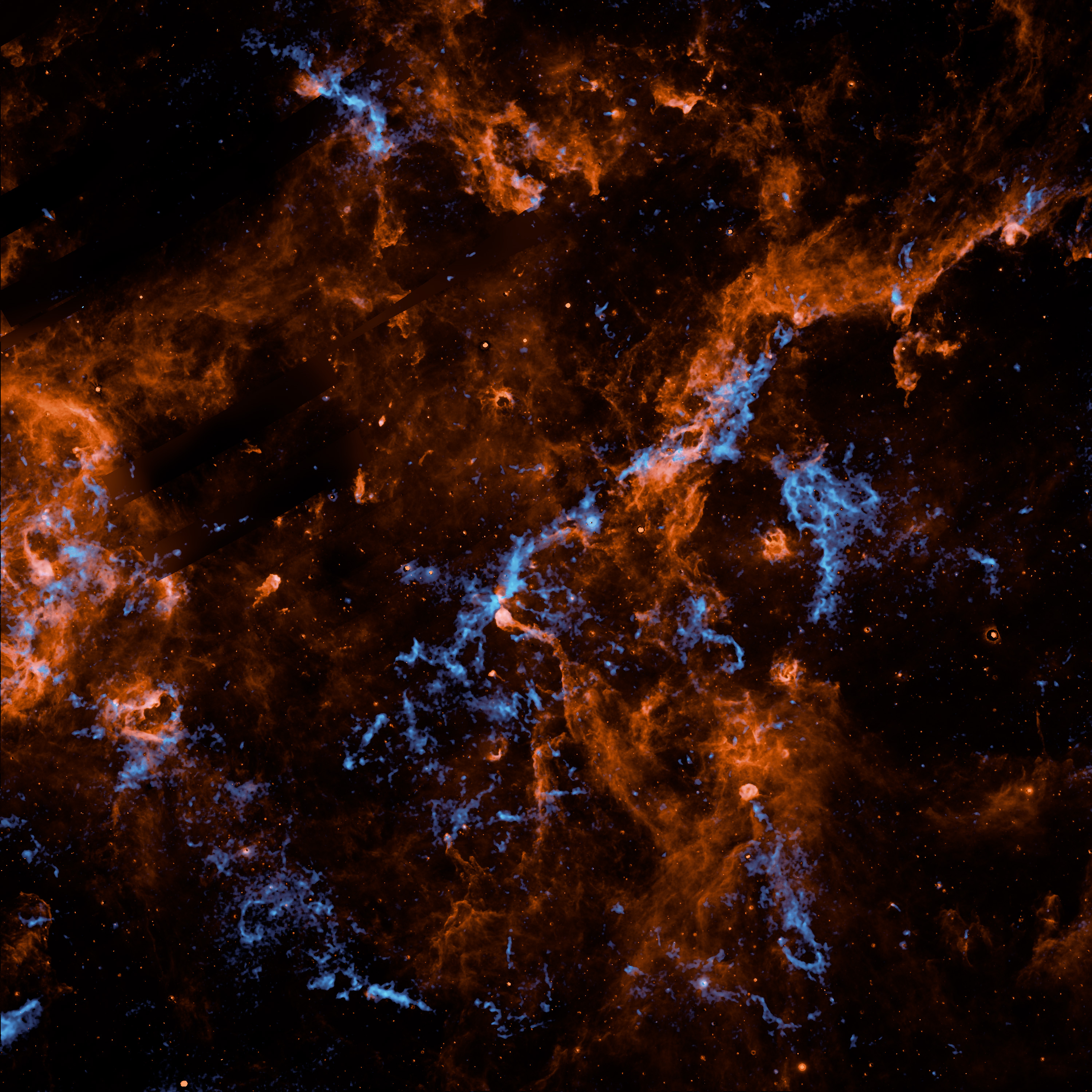
NASA’s SPHEREx mission has rolled out a brand-new map of the Milky Way’s frosty side, and the results are cooler than a penguin wearing a scarf. In the Cygnus X star-forming region, SPHEREx reveals vast frozen complexes that are basically the galaxy’s version of an icebox left open during a power outage—except this ice helps form stars, not just casseroles.
❄️ The Galaxy’s Icebox — Frozen Complexes Explained
If you’re wondering what “frozen complexes” means in space-speak, imagine giant clouds of water ice and other molecules hanging out in the cold outskirts of stellar nurseries, waiting for the moment a newborn star decides to turn up the heat and start fusing stuff together. Spoiler alert: it’s a lot cooler than your morning latte.
🎨 Blue for Ice, Orange for Organics
The chemical signature of water ice is shown as bright blue structures, while polycyclic aromatic hydrocarbons (PAHs) are in orange. In plain language: SPHEREx’s color-coded map is painting water ice in blue and those complex carbon-rich molecules in orange, so scientists can see where the icy mantles coat dust grains and where organic chemistry is buzzing in the interstellar medium.
⭐ Why Ice Matters for Star and Planet Formation
Why does this matter? Because ice is a key player in star and planet formation. Frosty mantles on dust grains help build more complex molecules, including the ingredients for water and perhaps even the precursors to life. By mapping where water ice and PAHs accumulate, SPHEREx helps astronomers piece together the timeline of how stars wake up from their cold slumber.
🔬 Cosmic Spectroscopy on a Grand Scale
SPHEREx isn’t just taking pretty pictures; it’s doing a kind of cosmic spectroscopy on a grand scale. By scanning the sky in near-infrared wavelengths, SPHEREx collects spectra for every pixel, allowing scientists to identify specific molecular fingerprints—like the telltale signs of water ice and PAHs. The result is a mosaic that highlights where these ices and organics cluster within the Milky Way’s bustling star factories.
🎬 Cinematic Implications
If you like sci-fi-level visuals, the implications are downright cinematic. Cygnus X isn’t just any star-forming region; it’s one of the galaxy’s most active nurseries. Seeing how ice and carbon-based chemistry organize themselves there gives us clues about how planetary systems—potentially including ones with oceans—come into being from these chilly beginnings. It’s like watching the blueprint for planetary weather be drawn in blue and orange across the cosmic canvas.
🔭 The Cooler Narrative of Our Galaxy
So here’s to SPHEREx—the NASA mission that turns interstellar ice into art, blue for water and orange for organic chemistry, all under the vast halo of the Milky Way. The cosmos just handed us a cooler, more colorful narrative of how stars and planets come to be, one icy blue filament at a time.
Image via NASA
© H.J. Sablotny — All rights reserved. The text content of this post is the intellectual property of H.J. Sablotny. Images are subject to their respective copyright holders and are used for illustration purposes only.