Ways4eu WordPress.com Blog
SPA View of ways4eu.wordpress.com
🌅 Dawn’s Bright Visitor: PanSTARRS Lights Up the Predawn Sky
By Kinda Cool
on Sat Apr 18 2026
🌅 Dawn Blushes, and the Comet Steps Out
As the eastern horizon blushes with early morning light, Comet C/2025 R3 PanSTARRS is stepping out in brightness and confidence. This is a comet that doesn’t need a dramatic entrance to steal the show: binoculars and small telescopes catch its glow readily, and—at dark sky sites—the little wanderer may be just flirting with naked-eye visibility. If you’ve been hoping to see PanSTARRS with the unaided eye, this week is shaping up as a good audition.
📸 A Camera Catches What Eyes Miss
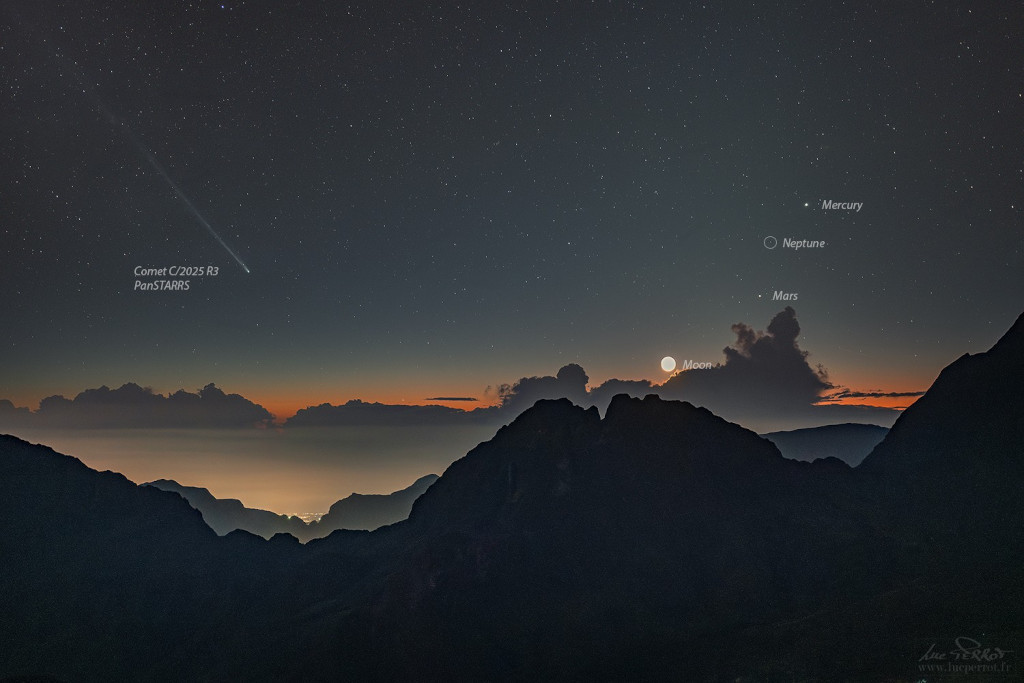
A camera image from April 16 still makes it clear: PanSTARRS is visible, even if it isn’t quite eye-bright yet. The comet’s light is catching the dawn’s first rays and giving observers something bright to chase in the early hours. Binoculars reveal its shape; a small telescope shows more detail; and a little patience under dark skies will reward you with a tail that’s longer than you might expect.
🪐 Sharing the Stage with Planets
From the vantage point of a volcanic peak overlooking France’s Réunion Island, Earth itself becomes part of the observing deck. In predawn eastern skies, PanSTARRS shares the stage with Mars and Mercury, two naked-eye planets that seem to have wandered into the comet’s spotlight. Neptune lurks in the same general region, faint and patient. Saturn, meanwhile, is playing hide-and-seek behind a low cloud bank.
🌞 Perihelion Approaches
For northern hemisphere observers, this weekend is a promising window to catch PanSTARRS about an hour before sunrise. The comet is brightening as it heads toward perihelion on April 19, a moment when its solar approach nudges more light from its icy nucleus outward. If you can swing a pre-dawn wake-up call, you’ll be in the sweet spot.
🧭 Practical Tips for Your Observing Plan
Best time: roughly one hour before local sunrise, with the east-northeast sky as your stage. Finding aid: start near the bright planets of the predawn sky (Mars and Mercury) and use binoculars to lock onto PanSTARRS. Sky conditions: look for a dark enough site with a clear horizon and minimal light pollution.
⏰ The Clock Is Ticking for Northern Observers
As the days roll toward late April and into early May, PanSTARRS will be easier to find from the southern hemisphere. For northern observers, the coming days offer a last good chance to glimpse it in the brightening dawn. So set your alarm, grab your binoculars, and greet the sunrise with a comet in your line of sight.
Image via NASA / APOD
© H.J. Sablotny — All rights reserved. The text content of this post is the intellectual property of H.J. Sablotny. Images are subject to their respective copyright holders and are used for illustration purposes only.