Ways4eu WordPress.com Blog
SPA View of ways4eu.wordpress.com
👁️ The Eye That Gazed at the Milky Way: A 27-Frame Mosaic from the Atacama
By Kinda Cool
on Sun Apr 19 2026
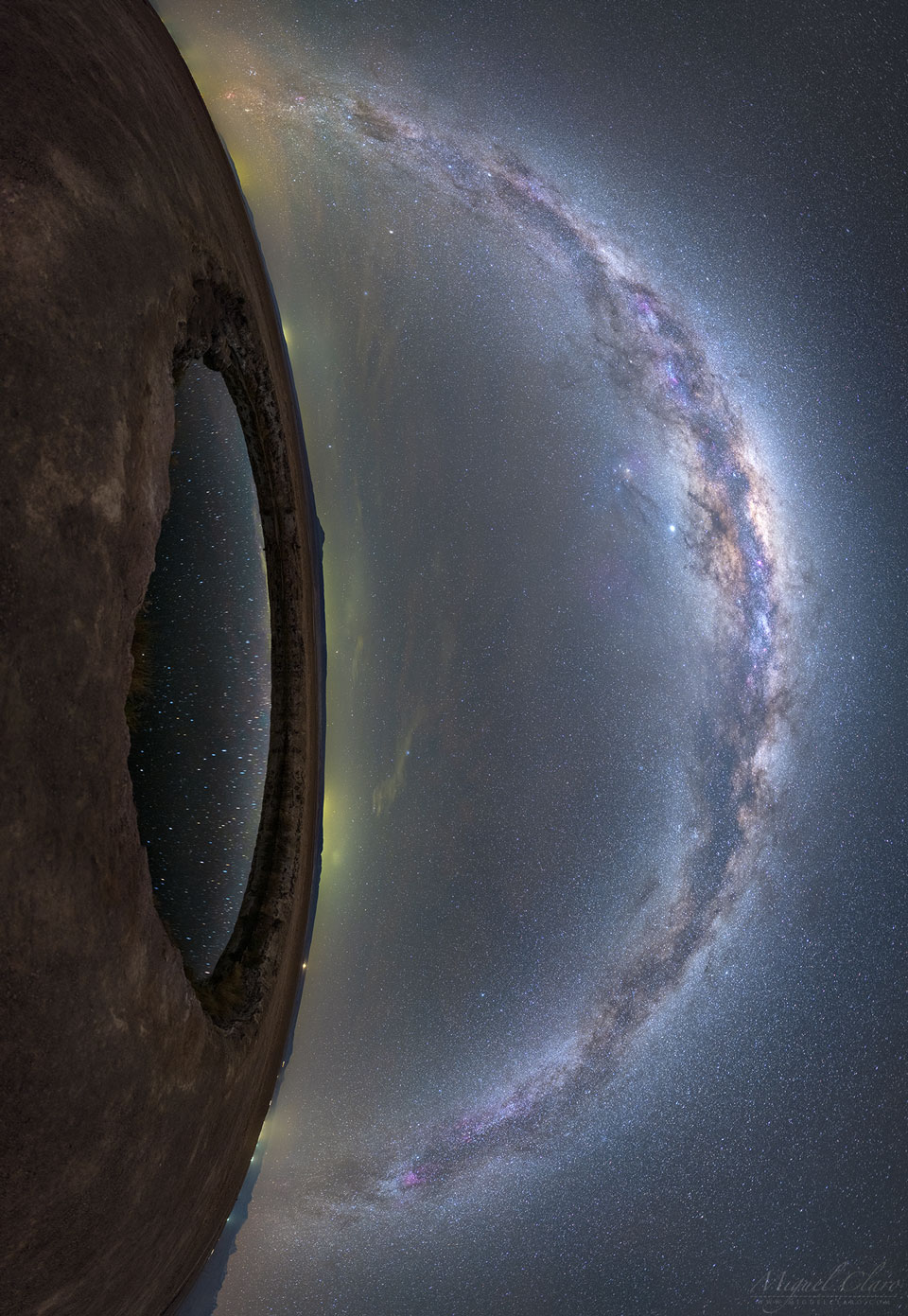
👁️ Stars in Your Eyes — The Lagoon That Blinks
Have you ever had stars in your eyes? It appears that the eye on the left does, and moreover, it appears to be gazing at even more stars. In 2019, a 27-frame mosaic captured from Ojas de Salar in the Atacama Desert of Chile invited the cosmos to lean in a little closer. The eye is a small lagoon, a reflective pool that mirrors the dark, velvet sky as the Milky Way arched overhead.
🌌 A Bustling Highway of Light
What looks like a smooth, unbroken band circling the sky is, in truth, a bustling highway of light. The Milky Way, from our earthly point of view, is a long, luminous spiral of story after story told by billions of stars. But it’s not just a naked ribbon; it’s decorated with filaments of light-absorbing dust that weave through the bright stellar crowd, and pockets of red-glowing nebulae that glow like tiny cosmic embers. It’s the astrophysical equivalent of a fashion show.
🪐 Jupiter and Saturn: Late Arrivals
If you look just a touch left of the galactic arch, you’ll spot Jupiter; if you shift your gaze a bit to the right, Saturn nudges into view. These two wandering worlds peek through the celestial crowd as if they’re late arrivals to the most exclusive stargazing party in the desert. They don’t shout; they simply sit there, cosmic and confident, letting the Milky Way’s arched chorus carry their quiet shine.
🏙️ Civilization Below, the Universe Above
The horizon in this image isn’t the familiar, soft glow of a distant city. Instead, a vertical line of lights marks the outskirts of small towns scattered along the edge of the desert. They form a delicate rung on the ladder between Earth and sky, tiny pin-pricks that remind you that civilization is just below the frame, while above you, the universe throws a party you didn’t RSVP to, and you’re somehow on the guest list.
🔴 Mars-on-Earth
All of this sits within a rugged, almost Martian landscape. The rocky terrain around the lagoon is a reminder of the red planet’s own storytelling capacity. It’s a reminder that the Earth’s most alien-feeling landscapes are not on another world, but in places like the Atacama: high, dry, and so dark that the night sky becomes a tapestry rather than a backdrop.
📸 27 Frames of Patient Magic
Photographing this scene demanded a patient, methodical approach—27 frames stitched together into a single mosaic, each frame a careful capture of star-filled air and reflected sky. The result is more than a pretty picture; it’s a map of night’s quiet intensity. The lagoon’s glassy surface catches the Milky Way’s arc as if the cosmos had pressed its upper lip to the water, letting the river of stars spill into the lagoon’s mirror.
🏜️ Why the Atacama Excels
What makes a shot like this sing? It’s a blend of patience, place, and a little desert magic. The Atacama’s famously dry air and extremely stable atmosphere make it one of the best places on Earth for deep-sky photography. The high altitude keeps things crisp, and the lack of light pollution lets the Milky Way glow with a clarity that feels almost cinematic.
✨ An Invitation to Linger
Ultimately, this 27-frame mosaic from Ojas de Salar is less a photograph than a quiet invitation. To tilt our heads up, to notice how the Earth and sky converse, and to realize that there are eyes in the landscape that are always watching—eyes made not of flesh but of water, dust, and starlight. The Milky Way isn’t just a distant spiral; it’s a shared glance, a celestial gaze with a twinkle of red nebulae, a reminder that the universe isn’t a cold void but a curious, radiantly alive space.
Image via NASA / APOD
© H.J. Sablotny — All rights reserved. The text content of this post is the intellectual property of H.J. Sablotny. Images are subject to their respective copyright holders and are used for illustration purposes only.