Ways4eu WordPress.com Blog
SPA View of ways4eu.wordpress.com
🌌 Chasing PanSTARRS’ Long Tail: A Dawn-Dressed Comet
By Kinda Cool
on Mon Apr 20 2026
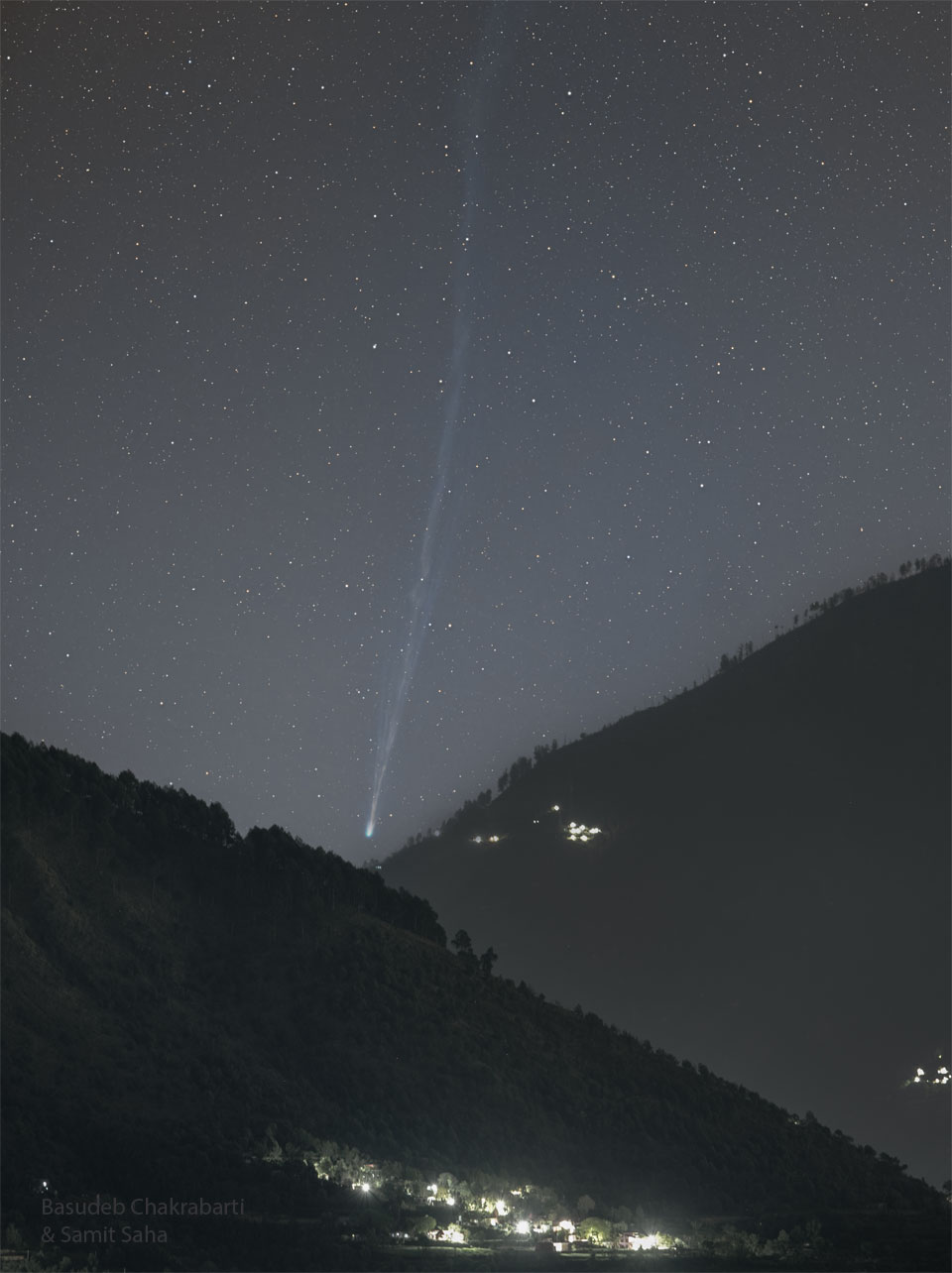
🧣 The Cosmos Wears Its Most Dramatic Scarf
If you want to see the cosmos put on its most dramatic scarf, grab a camera and point it at Comet C/2025 R3 (PanSTARRS). This week the freshly brightened visitor makes its northern debut, tilting its eastern glow toward the dawn like a cosmic early riser. Naked-eye visibility? A bit shy. A camera? Absolutely eager.
💨 The Ion Tail — Perspective at Play
The long, many-degree tail you’ll hear about is not some magical trick of the light. It’s a slice of celestial physics and perspective. The ion tail, in particular, can stretch for many degrees across the sky, especially in long-exposure shots. A steady exposure reveals the tail’s graceful arc, a salt-and-pepper stream of ions lighting up the night.
🏔️ Threading Through Himalayan Peaks
In the featured image from last week, Comet C/2025 R3 (PanSTARRS) showed off its flowing tail threading through a valley between two Himalayan peaks in India. Picture it: ice-blue gas streams against the rugged silhouette of snow-dusted ridges, the tail tracing a sinuous line as if the mountains themselves were drawing it.
🕐 Perihelion Passed, Earthbound Encore Next
The comet passed its closest approach to the Sun yesterday. As it moves toward its closest approach to Earth next week, observers might catch a bushy dust tail in addition to the ion tail. Dust tails tend to be broader and can take on a more “bushy” appearance, especially as sunlight scatters through the larger, dustier particles shed by the comet.
🌅 The Farewell Tour
After its northern encore, the comet is slowly drifting toward southern skies. By the end of the month, you’ll find PanSTARRS after sunset in the southern hemisphere’s twilight, fading as it continues its slow drift away from the inner Solar System. It’s the kind of farewell tour you want to photograph.
📸 Tips for Catching PanSTARRS on Camera
Shoot with a tracking mount if you’ve got one, or at least use a moderate-long exposure to let the tail’s glow bloom. Start around 15–30 seconds on a clear, dark night; stack multiple frames to boost signal-to-noise. Use a wide to normal field of view. Include a foreground feature—craggy peaks, a ridge line, or a lone tree—to give the shot a sense of place and drama.
Image via NASA / APOD
© H.J. Sablotny — All rights reserved. The text content of this post is the intellectual property of H.J. Sablotny. Images are subject to their respective copyright holders and are used for illustration purposes only.