Ways4eu WordPress.com Blog
SPA View of ways4eu.wordpress.com
✨ A Fresh Look at the Crab Nebula: Glittery Popcorn and a Pulsar
By Kinda Cool
on Tue Apr 21 2026
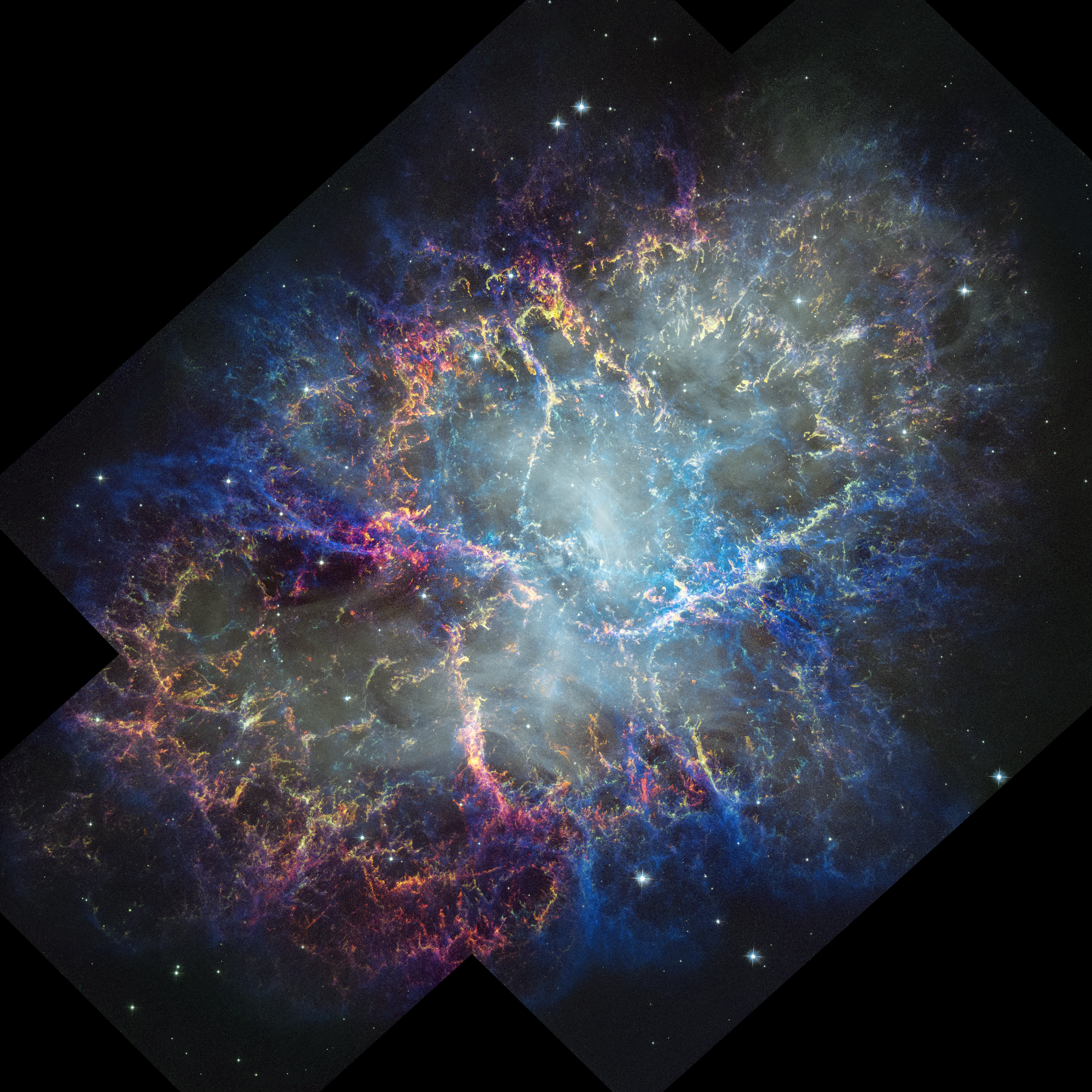
✨ Glittery Popcorn and a Pulsar
If the universe had a photo album, the Crab Nebula would be the one with glittery popcorn and a pulsar glued to its center. This cosmic leftovers platter is what remains after a star-snack-sized explosion in 1054 CE, and it’s still putting on a show. The latest optical portrait from Hubble, when you tuck in all the vintage pictures from the past, becomes a time-lapse reel of growth, wind, and stubborn filaments floating in space.
🌀 A Dynamic, Living Remnant
This image is not a one-and-done snapshot. The Crab Nebula is a dynamic, living remnant—if you can call something that glows with high-energy particles “alive.” The Hubble photo, stitched together with earlier snapshots and data from radio, infrared, and X-ray eyes, lets scientists track how the nebula’s outer edges creep outward and how its inner light show keeps morphing.
💫 What Powers the Show
The Crab Nebula is a supernova remnant powered by a central pulsar—a rapidly rotating neutron star—that blasts a wind of charged particles outward. The result is a pulsar wind nebula that shines across the spectrum. In visible light, you can trace tangled filaments and wisps woven into a haunting, almost artful web. In X-ray and radio, you catch the more energetic side of the party, where particles race around magnetic fields at nearly the speed of light.
📏 Quick Facts
The Crab Nebula is about 11 light-years across and lies roughly 6,500 light-years from Earth. The central pulsar whips around about 30 times per second. If you tried to clap along to that beat, your hands would get a serious workout.
🔭 Every Instrument Sees It Differently
Why combine Hubble with older images and other telescopes? Because every instrument sees the nebula a little differently, like a group of friends describing the same concert from different vantage points. Hubble gives crisp optical detail. Radio telescopes map the larger structures. X-ray eyes show the high-energy heart. Infrared glows unveil dust and cooler material. When you fuse all of that together, you get a more complete, time-stamped story.
🔬 A Laboratory for Plasma Physics
A modern, multi-decade, multi-telescope approach helps scientists test models of how remnants like the Crab shape their surroundings. The expanding remnant is not just a pretty shell; it’s a laboratory for plasma physics, particle acceleration, and the messy but fascinating physics of how a star’s death seeds the next generation of cosmic light shows.
📖 A Celestial Survivor
The Crab Nebula is not a static postcard. It’s a dynamic, evolving masterpiece whose daily dramas become clearer when you line up Hubble’s crisp present with the past—and let other telescopes chime in as well. The result is a fresh, funny, and fascinating look at a celestial survivor that keeps teaching us how to read the sky, one photon at a time.
Image via NASA
© H.J. Sablotny — All rights reserved. The text content of this post is the intellectual property of H.J. Sablotny. Images are subject to their respective copyright holders and are used for illustration purposes only.