Ways4eu WordPress.com Blog
SPA View of ways4eu.wordpress.com
🎂 The Day of the Trifid Nebula: Hubble’s 36th Birthday Glow-Up
By Kinda Cool
on Fri Apr 24 2026
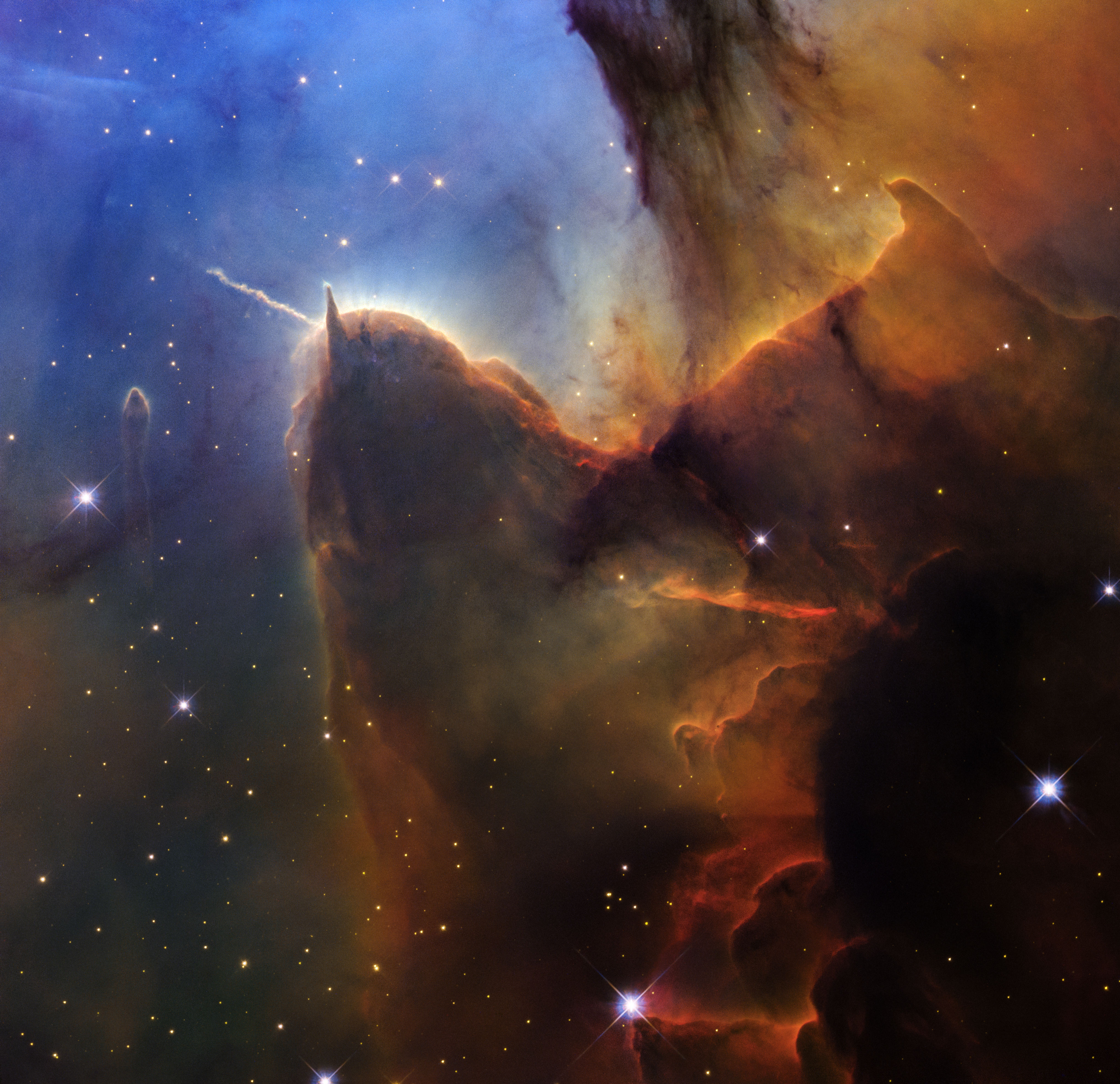
🎂 Hubble Turns 36
NASA is celebrating a milestone birthday with a sparkle: Hubble turns 36, and the universe gets a gift-wrapped selfie of the Trifid Nebula. This star-forming patch of space—an interstellar nursery where gas, dust, and a dash of cosmic drama babysit newborn suns—was first captured by the mighty Hubble back in 1997. Now, after nearly every orbital mile Hubble could travel and more than a few upgrades that would make a sci‑fi gadget jealous, NASA has released a brand-new image of the Trifid. Spoiler: it’s as if the nebula got a glow-up from a telescope with a serious upgrade dependency on better cameras.
🌌 A Celestial Hybrid of Three Lobes
Let’s set the scene. The Trifid Nebula is not just a pretty name; it’s a celestial hybrid of three lobes (hence “trifid”) and a star-forming powerhouse. Picture a cosmic latte with ultraviolet frosting, where newborn stars heat up surrounding gas until it glows in neon hues of pink and blue. This is the type of place where starlight is a tad dramatic, and gravity is basically Yoda: “Do or do not, there is a dust lane.” The nebula’s beauty isn’t just eye candy; it’s a laboratory for understanding how stars kick off their lives and how planetary systems—maybe like our own someday—get their start.
📸 The Reunion: A New Image
Now, about the reunion: the new image was captured using the Hubble Space Telescope’s most excellent camera upgrade arc. Hubble’s been cruising the cosmos longer than some generational space blogs have existed. It has stretched its peepers across the sky, dodged a few space-rock conspiracies, and weathered more maintenance milestones than a NASA rover in a soap opera. With almost its full operational lifetime behind it, Hubble proves that patience, paired with better sensors, can reveal changes in the nebula that we mere mortals would miss in a blink. The updated camera acts like a fashion upgrade for the cosmos—same subject, sharper lines, more dramatic color contrast, and enough detail to make a nebula look like it’s ready for a close-up.
⏱️ Surprisingly Dynamic on Human Time Scales
What makes this new Trifid image so fascinating isn’t just the pretty display. It’s the reminder that the universe, while vast and ancient, is also surprisingly dynamic on human time scales. We’re not watching a light show that lasts longer than a lifetime; we’re watching a narrative unfold in real time. The Hubble upgrade lets astronomers notice subtle changes—new knots of star-forming activity, shifting dust lanes, and the glow of stellar winds shaping the gas. It’s not a rerun of the same frame, but a continuing episode of cosmic evolution, with Hubble as the meticulous director steadily refining the shot.
😉 A Certain Whimsy
And yes, there’s a certain whimsy to it all. Here’s the telescope that’s seen galaxies, supernovae, and the occasional space-sherbet-pink-scape—the observational equivalent of a veteran photographer who still gets a thrill out of adjusting the zoom to catch specks of stardust in high-definition. The Trifid Nebula gets to showcase its life cycle with a (slightly higher) frame rate, thanks to that improved camera. It’s like upgrading from film to high-definition digital: the essence remains, but the textures become richer, and the colors sing louder.
🔭 Reading the Universe’s Diary
The Day of the Trifid Nebula isn’t just a celebration of a telescope or a single image; it’s a reminder that collaboration between human curiosity and the tools we build can yield snapshots that feel almost time-travel-y. We’re looking at a region that forms stars, reshapes itself under gravity’s tug, and offers us a clearer, more vibrant window into processes that sculpt the cosmos. And in that window, we catch the acts—the bright young stars lighting up their cradle, the dark lanes where dust hides, and the gentle drift of matter being stirred by stellar winds.
🥂 To 36 Years of Cosmic Service
As we toast 36 years of Hubble’s cosmic service, we can’t help but marvel at the notion that our species has, with a keen eye and a clever camera, learned to read the universe’s diary in near real time. The Trifid Nebula’s new portrait is more than a pretty space postcard; it’s a chapter in an ongoing science story that invites questions, invites wonder, and—perhaps most importantly—invites us to keep looking up.
💡 The Show Goes On
Bottom line: The Day of the Trifid Nebula is a celebration of change, curiosity, and the quirky joy of upgrading our view of the heavens. Here’s to the nebula’s glow, to Hubble’s perseverance, and to the next breathtaking image that makes us pause and whisper, “Wow, we live in a remarkable neighborhood.” If you’re hunting for a reminder that science can be both awe-inspiring and a little bit playful, this is it. The cosmos hasn’t stopped surprising us, and with Hubble still on the job, the show goes on.
Image via NASA https://ift.tt/a71AeoL
© H.J. Sablotny — All rights reserved. The text content of this post is the intellectual property of H.J. Sablotny. Images are subject to their respective copyright holders and are used for illustration purposes only.