Ways4eu WordPress.com Blog
SPA View of ways4eu.wordpress.com
Peaks in the Sky: Stars in the Making Among the Cometary Globules
By JohnTheWordWhirlwind
on Tue Apr 28 2026
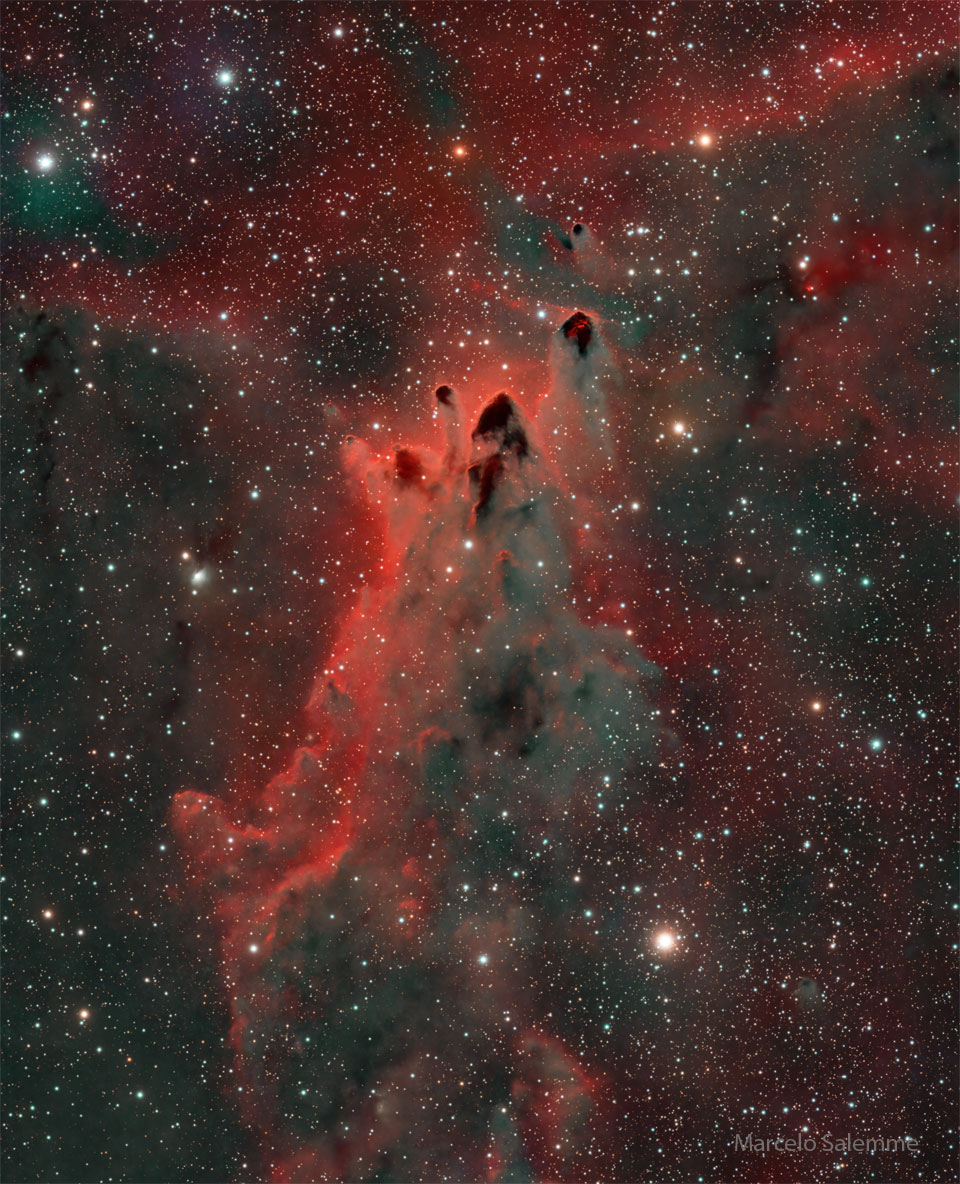
🌌 A Cosmic Landscape
They’re like mountain peaks, but they’re forming stars.
If you tilt your gaze toward the nautical southern skies—where Puppis and Vela drift along the Milky Way’s southern edge—you’ll find a forest of light-year-tall sculptures: cometary globules. Bright-rimmed, flowing shapes gather near the center of a rich starfield, then reach out toward the borders where Puppis and Vela hitchhike along the cosmic coast. It’s a surreal landscape, one where the landscape itself is a nursery for newborn suns.
These globules are not mountains carved by weather or time but clouds of interstellar gas and dust, sculpted by the intense forces of their neighborhood. They’re about 1300 light-years away, a distance that seems almost shy when you consider how grand the scene is: billowing pockets of matter that glow with a quiet, internal energy, each one cradling the potential for a handful of new stars.
✨ What Shapes These Silhouettes?
What shapes these celestial silhouettes?
Ultraviolet light from nearby hot stars pours energy into the clouds, ionizing the outer rims and carving bright, glowing outlines around their edges. The light doesn’t just illuminate; it wields a chisel. The result is a set of rims that glow like neon halos around the darker, denser interiors. And there’s a wind in this story as well—the kind of wind that comes from the Vela supernova remnant. The remnants of an exploded star push and sweep the gas, giving these globules their characteristic “swept-back” shapes, as if the cosmos itself is wind-blown dune art.
🧬 Star Birth in Slow Motion
Inside each globule, a different, slower drama unfolds.
Cold gas and dust gather in cores, slowly collapsing under their own gravity, a prelude to star birth. These are low-mass stars in the making, the shy students in a very bright class. Their formation will, in time, cause the globules to disperse—stars shining where there were only clouds moments before. It’s a reminder that creation is a disruptive process: the act of forming light often scatters the very material that gave birth to it.
A particularly telling detail sits in cometary globule CG 30, perched upper right in the group. Inside its head, a small reddish glow lingers—a telltale sign of energetic jets from a star in the earliest stages of formation. It’s a beacon within a beacon: a newborn star continuing to carve out its own niche, sending out streams of material that speak in the language of celestial growth.
If you’re the sort who enjoys the poetry of astronomy, this scene offers a potent metaphor: peaks that aren’t merely summits to be climbed, but cradles where new light is born. The globules are bright and purposeful, yet they aren’t solitary. They are part of a wider cosmic chorus—the Vela remnant’s expansive influence, the ultraviolet scribbles of hot stars, and a handful of nascent suns waiting to emerge from their dusty veils.
So next time you’re scanning the night sky and pausing on the southern reach of Puppis and Vela, imagine what you’re glimpsing: a rugged, glowing landscape where stars are drafted into existence, one cometary cap at a time. The sky isn’t just a map of distances; it’s a storyboard of potential—the mountains that dream of becoming galaxies, the cradles where the next generation of stars stretches toward the bright, inevitable horizon.
Image via NASA https://ift.tt/gsdyvx2