Ways4eu WordPress.com Blog
SPA View of ways4eu.wordpress.com
A Gently Glowing Galaxy
By JohnTheWordWhirlwind
on Thu Apr 30 2026
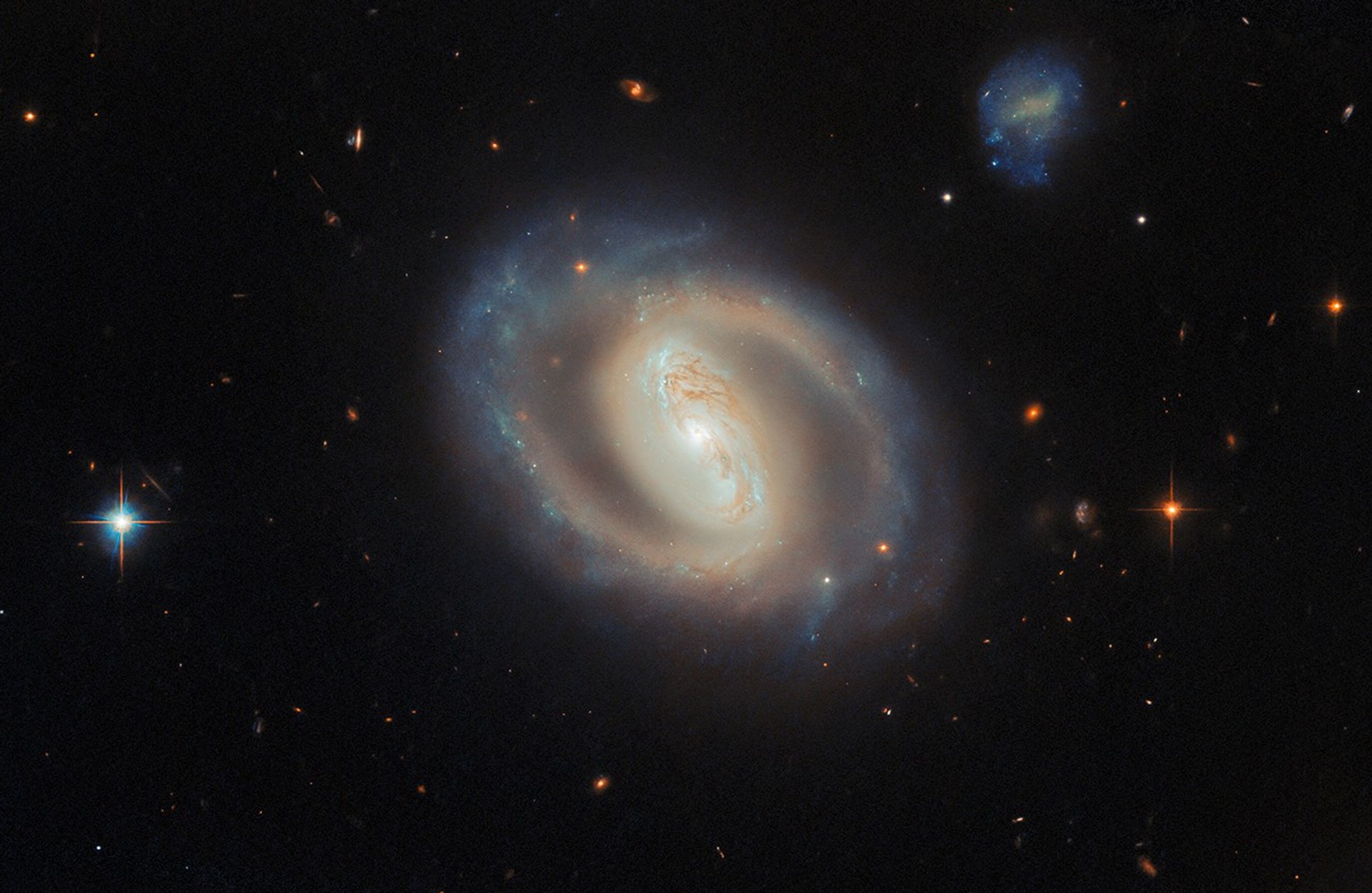
🌌 A Gently Glowing Galaxy
When NASA’s Hubble telescope takes a peek at the cosmos, it often feels less like a scientific instrument and more like a diva with a very expensive mood ring. Case in point: IC 486, a barred spiral galaxy that glows with a soft, ethereal light in a recent image from the Hubble Space Telescope. It’s the kind of glow that whispers, “Yes, I woke up like this,” while also shrugging at gravity like it’s a casual Tuesday.
Let’s set the scene. IC 486 isn’t flaunting a neon sign or blasting a disco ball—what we get is a delicate, almost celestial sigh of light. The galaxy’s bar structure cuts a suave silhouette through spiraling arms, giving us a visual cue that elegance and gravity can share a latte without spilling a drop. The glow around it isn’t the blinding glare of a starburst; it’s more like moonlight on a calm highway, if the highway happened to be made of dust, gas, and a dash of interstellar mystery.
Why does this glow matter? In the grand scheme, it’s a reminder that galaxies aren’t just random clumps of stars. They’re choreographed dances where gravity, gas dynamics, and star formation collaborate to produce light that travels across millions of years to politely interrupt our Tuesday afternoon with a tiny cosmic wink. The soft radiance hints at regions where young stars are stirring the gas like a cosmic soup, heating it just enough to glow without turning the pot into a boil-over.
For science nerds and casual stargazers alike, IC 486 offers a few charming talking points:
- A bar with a purpose: The barred spiral structure isn’t just a fashion choice. The bar acts like a conveyor belt, guiding gas toward the center and fueling any hungry central activity. It’s the galaxy’s own commuter rail—no delays, just gravitational precision.
- Ethereal glow: The soft glow is a cue about the star formation rate and the types of stars lighting up the surroundings. It’s not a blinding beacon; it’s a gentle reminder that the universe can be both majestic and cozy at the same time.
- A cosmic mood ring: The colors and brightness tell a story about different stellar populations and interstellar dust. It’s like peering at a galaxy’s mood through a multi-hued lens—slightly dreamy, mostly awe-inspiring.
If you’re feeling poetic (or just in the mood for a short, science-flavored daydream), imagine IC 486 as a galactic lantern, hanging in the vast canopy of space. Its gentle light doesn’t shout; it invites. It nudges us to consider the slow, patient work of star formation and the graceful choreography of gravity that keeps such structures intact over billions of years. And if you listen closely, you might hear the faint chorus of distant supernovae, like celestial applause for another perfectly balanced cosmic composition.
In the end, IC 486 reminds us that some of the universe’s most striking visuals aren’t about fireworks. They’re about a soft, enduring glow—a reminder that even on a cosmic scale, there’s beauty in the quiet, in the subtle shimmer of a barred spiral doing what it does best: gracefully guiding light along its elegant spiral arms.
So next time you scroll past a NASA image labeled IC 486, pause for a moment. Let that gentle glow wash over you. It’s not just a galaxy; it’s a reminder that the universe can be luminous, mysterious, and wonderfully human in its own way—one softly glowing spiral at a time.
Image via NASA https://ift.tt/OGU6juv
© 2026 ways4eu.wordpress.com H.J.Sablotny — All rights reserved. The text content of this post is the intellectual property of H.J.Sablotny. Images are subject to their respective copyright holders and are used for illustration purposes only.