Ways4eu WordPress.com Blog
SPA View of ways4eu.wordpress.com
The Glittery Drama of NGC 3137
By JohnTheWordWhirlwind
on Tue May 05 2026
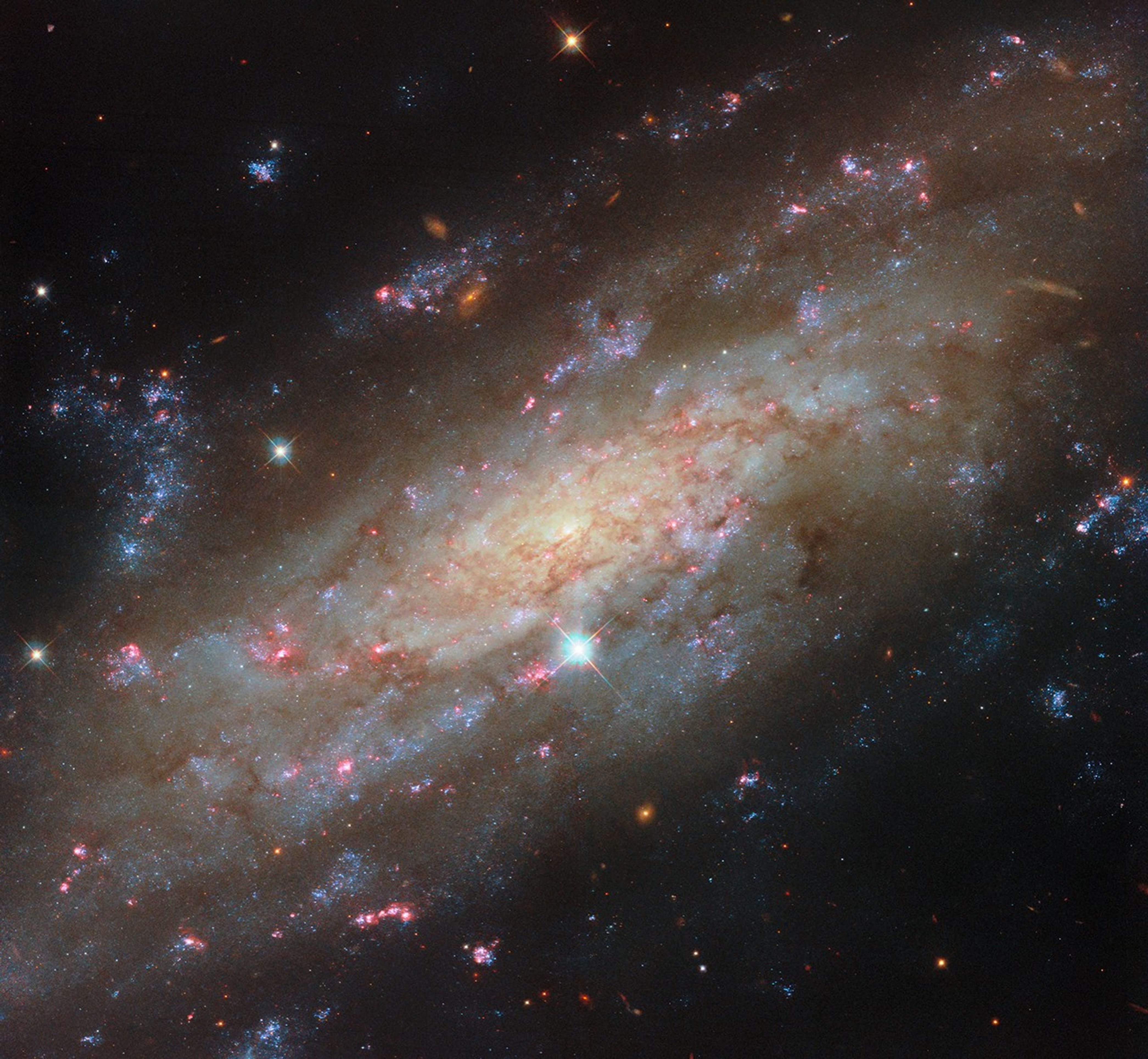
✨ The Glittery Drama of NGC 3137
If you’ve ever wondered what a galaxy looks like when it’s dressed to the nines for a celestial gala, look no further than NGC 3137. This glittery spiral, tucked away about 53 million light-years from Earth in the constellation Antlia—the Air Pump, yes, the sky’s most fashionable respiratory device—is the sort of cosmic centerpiece that makes the universe feel like it’s hosting its own glitter party.
The Hubble Space Telescope, ever the velvet-roped observer of the skies, captured this galaxy with all the poise of a cosmic paparazzo. Its spiraled arms twist and shimmer as if they’ve just learned a new dance routine and refuse to stop showing off. The central bulge glows with a quiet confidence, while the outer rings reach outward like dancers stretching before a grand finale. It’s enough to make a galaxy engage in serious sci-fi fangirling.
NGC 3137 isn’t just a pretty face, though. Spirals like this are laboratories—tiny, twinkling laboratories that tell us about star formation, gas dynamics, and the way gravity can choreograph a grand spiral flourish over millions of years. When you zoom in on the image, you can almost hear the hush of interstellar dust clouds coalescing into new stars, each one a potential supernova in disguise, waiting for its cue to sparkle on stage.
A 53-million-light-year distance sounds like a cosmic road trip you’d never survive, and that’s because you wouldn’t. Yet in that unreachable span, light from NGC 3137 began its journey long before humans wrote the first love sonnets or decided to invent the pizza. And here we are, binoculars and fancy space cameras in tow, catching the galaxy in a moment of glittering glory as it waltzes through space and time.
Antlia—the Air Pump—gets a surprising cameo in this narrative, not as a device to fill balloons, but as a celestial descriptor that helps us categorize the constellation’s vibe. If Antlia had a slogan, perhaps it would be: “Breathing life into the night sky, one glittering galaxy at a time.” And Hubble, of course, is the all-seeing maître d’ of this interstellar restaurant, guiding our eyes to the main course: the starry spiral that refuses to stay quiet.
For astronomy fans and casual stargazers alike, images like this are reminders that the universe isn’t just vast; it’s visually captivating. NGC 3137 invites us to imagine the countless stars forming, evolving, and dancing within its arms, a slow-motion ballet performed on a stage so expansive that a single glance may only scratch the surface of its splendor.
So next time you scroll through space photo feeds and stumble upon a glittering spiral, take a moment to give NGC 3137 a quiet round of applause. It’s doing the gravity-defying work of shaping galaxies and lighting up the cosmic night with a sparkle that proves the universe still knows how to put on a show.
Image via NASA https://ift.tt/ZGDkzW6
🔗 NGC 3137 emission nebula | Constellation Antlia | How emission nebulae glow | Star formation in nebulae | H-alpha and OIII colors | Astrophotography nebula tips
© 2026 ways4eu.wordpress.com H.J.Sablotny — All rights reserved. The text content of this post is the intellectual property of H.J.Sablotny. Images are subject to their respective copyright holders and are used for illustration purposes only.