Ways4eu WordPress.com Blog
SPA View of ways4eu.wordpress.com
A 65-Year Space Soap Opera
By JohnTheWordWhirlwind
on Wed May 06 2026
🚀 A 65-Year Space Soap Opera
🚀 America’s First Human Spaceflight
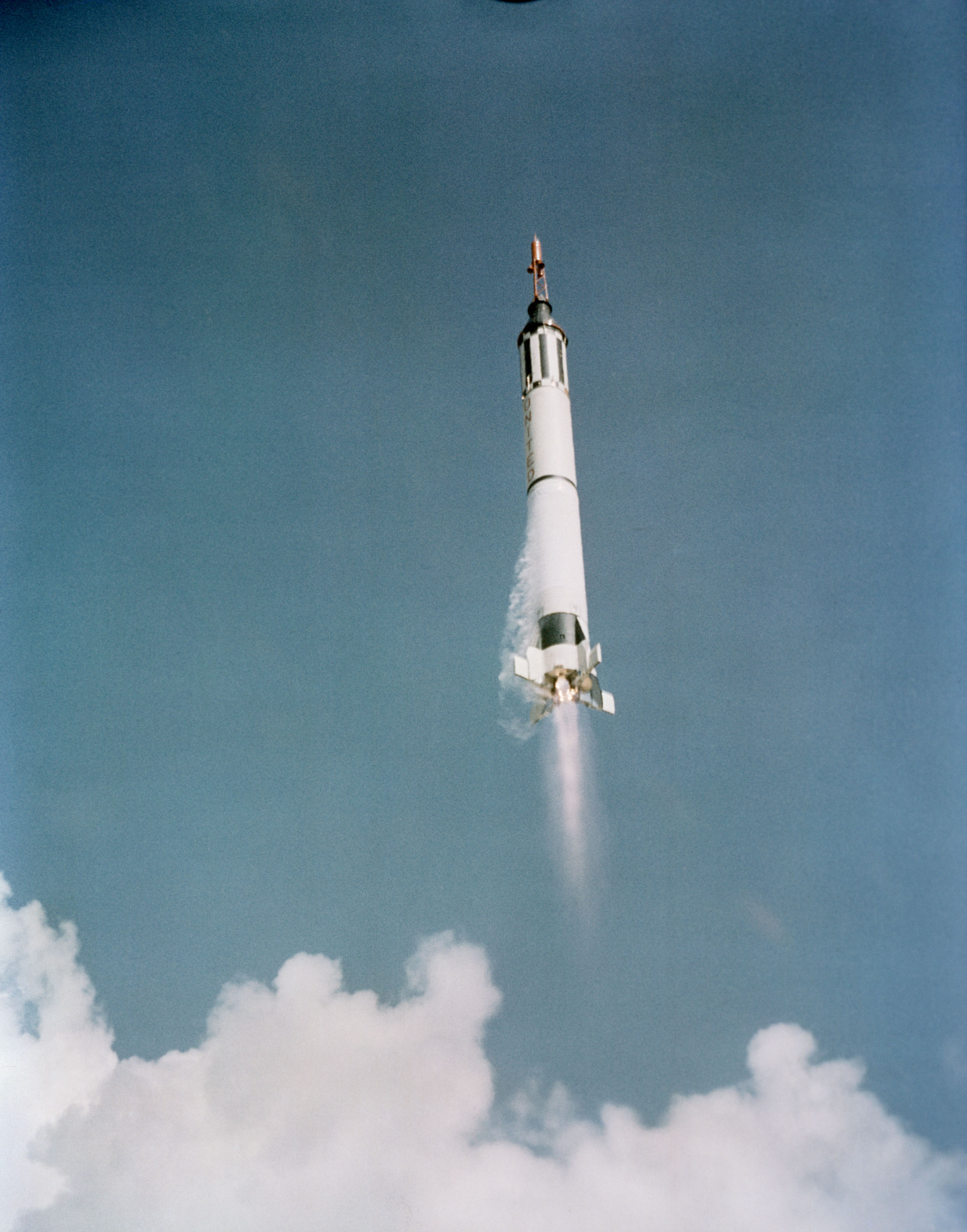
Let’s be honest: spaceflight isn’t just science—it’s America’s favorite long-running reality show, complete with dramatic pauses, nerve-waring countdowns, and occasional stubborn hardware that seems to prefer a dramatic exit stage left. On May 5, 1961, MR-3—an overconfident little rocket with more bravado than sense—took its spot on the launchpad, and Alan Shepard, a gentleman with the demeanor of someone who could calmly fish a satellite out of a tree, boarded the capsule with the calm of a man who just realized the coffee maker is not the flight control center.
This moment wasn’t just a technical milestone; it was a social event. The nation watched, popcorn in hand, as the Mercury-Redstone 3 mission—America’s answer to the logistics of “how far can we throw a man and still aim for the stars?”—began its ascent from Cape Canaveral, Florida. And when Shepard spoke those famously practical words, “Let’s go,” the phrase barely had time to brush off the lips before gravity politely reminded everyone it still existed. Yet go it did, lifting the hopes (and the applause) of a country ready to redefine “small-step, giant leap” as a daily motivational poster.
Beyond the bravado and the bang, Mr. Shepard’s flight—though brief by modern standards—set a rhythm for American space endeavors: dream big, test boldly, and keep the sense of humor intact when the rocket doesn’t quite hit the mark on the first attempt. The MR-3 mission proved that long before we started arguing about gravity assists, NASA understood something essential: spaceflight is as much about meticulous planning as it is about the ability to roll with it when a sensor reads like it’s seeing double.
From that May morning, America began to build a 65-year legacy of human spaceflight that’s more than a timeline—it’s a story of continuity, curiosity, and coaxing the universe to cooperate with a nation that won’t stop asking, “What’s next?” The MR-3 flight didn’t just place Shepard in space; it placed the United States on a path of sustained exploration, collaboration, and occasionally sending a fleet of rockets to remind the world who’s boss in the neighborhood of the stars.
Here’s what the 65-year arc looks like in broad, human terms:
– Firsts that shaped the culture: Getting a man into space (and back) kicked off a culture of experimentation. The early missions were as much about learning to live in microgravity as they were about learning to live with the idea that the sky isn’t the limit—it’s just the initial pitch.
– The incremental leaps: From MR-3 to the Apollo era, to the Space Shuttle program, to the modern era of commercial partnerships and international cooperation, America’s spaceflight journey is a reminder that progress often arrives in steady, caffeinated increments rather than dramatic, overnight transformations.
– A resilience narrative: We’ve weathered launch delays, budget squabbles, and more versions of “we’ll fix it in the next attempt” than a folksy handyman TV show. The pattern remains: acknowledge the snag, adjust the plan, and keep the mission in sight.
– Humor as a vehicle: The lighter moments—comical mission patches, clever mission nicknames, and NASA’s own culture of wit—keep the mission accessible. It’s difficult to stay starry-eyed about missing a target when you can smile about it later on.
– A cooperative future: The 65-year arc isn’t just about triumphs with the United States at the helm; it’s about partnerships, shared knowledge, and a broader human enterprise. International crews, shared data, and the pooling of resources remind us that space exploration transcends borders and politics—though we’ll keep the solar system’s best punchlines for late-night panel discussions.
In telling this story, it’s worth celebrating the human element: the engineers who wrestle with telemetry as if it’s a stubborn mule, the astronauts who bring both courage and humor to the cockpit, and the scientists who translate every data point into a next-step hypothesis. The legacy isn’t just a museum exhibit; it’s a living practice of curiosity, risk management, and the stubborn belief that curiosity deserves a seat at the table—and a runway on which to sprint toward the unknown.
So, as we mark this anniversary, we honor the thread that ties MR-3 to every subsequent mission: a willingness to dream, to test, and to keep trying—even when the odds look like a coin toss with a sticky edge. America’s 65-year legacy of human spaceflight is more than a chronology; it’s a living narrative about how a country—armed with grit, ingenuity, and a good sense of humor—continues to reach for the stars while keeping one eye on the next small, audacious step.
Image via NASA https://ift.tt/CKfFjlb
🔗 Mercury program history | Human spaceflight timeline | NASA commercial crew program | International space cooperation
© 2026 ways4eu.wordpress.com H.J.Sablotny — All rights reserved. The text content of this post is the intellectual property of H.J.Sablotny. Images are subject to their respective copyright holders and are used for illustration purposes only.