Ways4eu WordPress.com Blog
SPA View of ways4eu.wordpress.com
Messier’s Moon and the Mythical Rays of Fecunditatis
By JohnTheWordWhirlwind
on Sat May 09 2026
🔭 Charles Messier’s Lasting Footprint
In the vast catalogue of the night sky, few names are as charmingly persistent as Charles Messier. A 18th-century telescope tinkerer with a taste for hunting down cosmic confusions (comets, mostly), Messier left behind a list that has guided stargazers for centuries. Today, when we point our binoculars at bright nebulae and star clusters, we’re tracing the footprint of his systematic eyebrow-raise: “Not a comet? Then it must be Messier’s!” The result is a map that doubles as a visual chorus line of some of the sky’s most dazzling spectacles.
🌕 Two Unusual Craters in Mare Fecunditatis
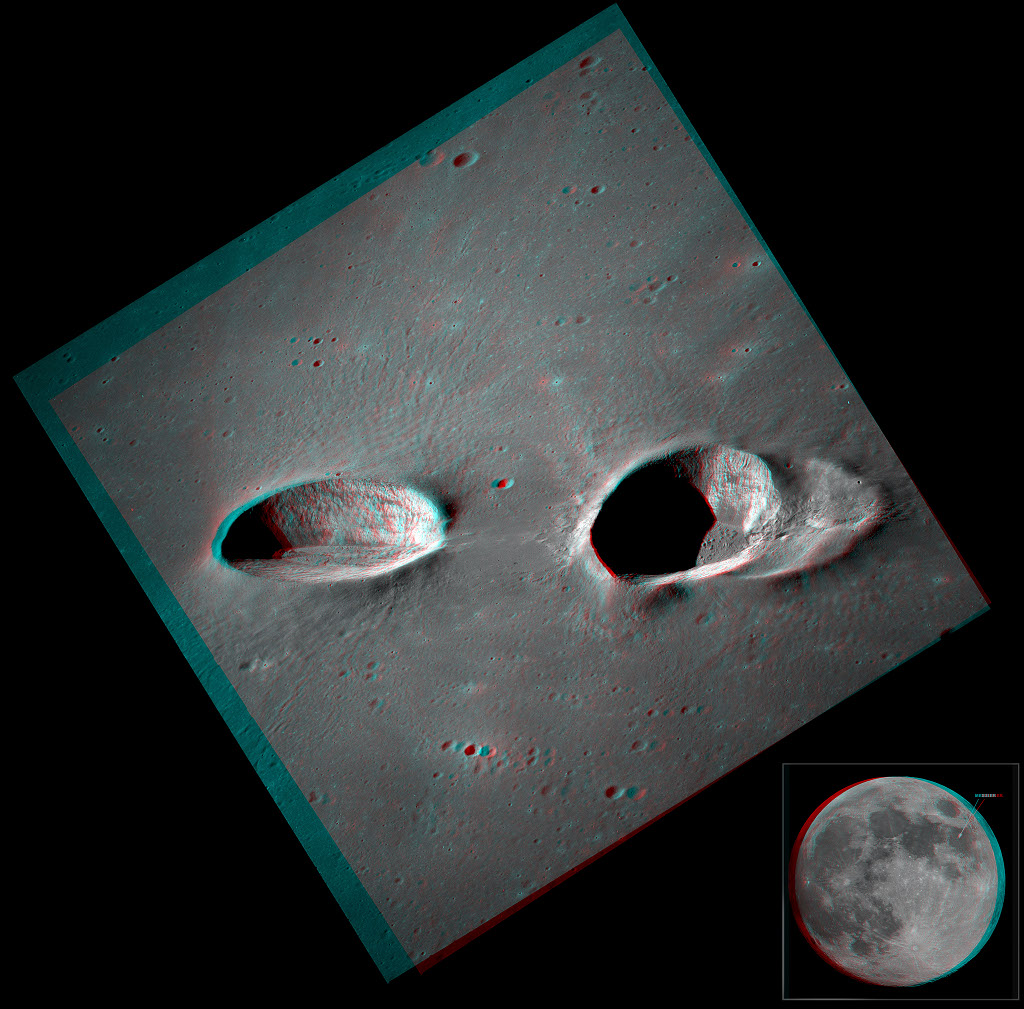
But Messier isn’t only a beacon in the heavens above; his name also marks two remarkable companions on the Moon: the crater pair Messier and Messier A, tucked away in the Sea of Fertility, or Mare Fecunditatis. Picture two lunar fishhooks, long and lean, lying on the smooth, dark mare—dimensions of 15 by 8 kilometers for Messier and 16 by 11 kilometers for Messier A. Their slender, elongated shapes aren’t artistic whimsy; they’re the fingerprint of a very particular kind of cosmic accident.
☄️ The Shallow Impact That Drew Rays
The story goes something like this: an impactor struck the Moon at an extraordinarily shallow angle, moving from left to right, and gouged out these craters. The shallow hit didn’t just carve caves in the lunar crust; it also launched rivers of debris that radiated out along the surface to the right, creating two bright rays that stretch beyond the frame of many photos. If you’ve ever peeked at the Moon through a telescope and wondered why some craters look like long, slender marks rather than round pits, Messier and Messier A provide a textbook case of how impact geometry can sculpt the landscape.
🕶️ Apollo 11 Stereo Trick in 3D
For those who love a little optical theater, there’s a delightful twist in the tale. A stereo image of the crater pair was crafted to be viewed with red/blue glasses (red for the left eye). This isn’t a gimmick; it’s a deliberate nod to the era when 3D imaging was a cutting-edge curiosity. The two high-resolution scans—AS11-42-6304 and AS11-42-6305—were plucked from the Apollo 11 mission archives and stitched into a compelling reminder that even a familiar Moon can surprise us when seen with a different eye. The result is a striking, slight-as-a-silhouette 3D presentation of Messier and Messier A that invites you to tilt your head and let the lunar topography do the talking.
🌌 Why This Pair Still Fascinates
If you’re swiping through starlight on a clear night and wondering about the ties that bind the heavens and the Moon, Messier offers a tidy bridge: a catalog that helped generations navigate the night, and a lunar duo that demonstrates how impact physics and planetary geology can produce both towering scenes and simple, elegant shapes. The rays, the elongated craters, the chasing light—all of it is a reminder that our sky is not just a static tableau but a dynamic, ongoing story written in crater walls and reflected light.
So next time you settle in with a telescope or a planetarium video, give a little nod to Messier: the man who organized the night into a wardrobe of celestial curiosities, and the name that now threads through the Moon’s own quiet geography. Messier and Messier A aren’t just craters; they’re a compact, cinematic chapter in the ongoing chronicle of how the cosmos shapes the landscape we observe from Earth—and how a simple stereo glimpse can transform that landscape into something freshly three-dimensional.
📡 Image Source
Image via NASA
© 2026 ways4eu.wordpress.com H.J.Sablotny — All rights reserved. The text content of this post is the intellectual property of H.J.Sablotny. Images are subject to their respective copyright holders and are used for illustration purposes only.