Ways4eu WordPress.com Blog
SPA View of ways4eu.wordpress.com
Orion Never Had a Sword Like This
By JohnTheWordWhirlwind
on Sun May 10 2026
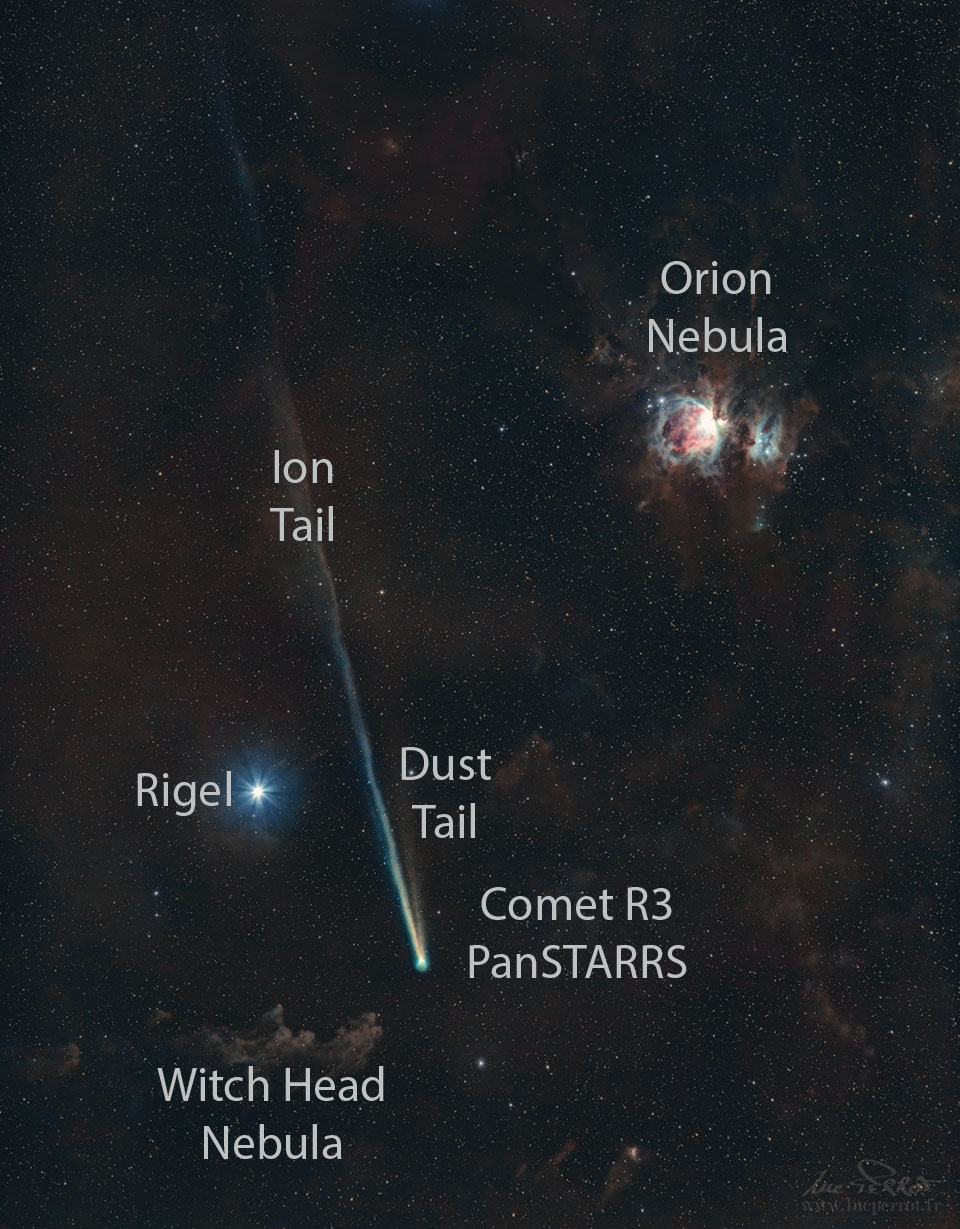
☄️ A Comet Stealing Orion’s Spotlight
As Comet C/2025 R3 (PanSTARRS) cruises out of the inner Solar System, it’s delivering a show-stealing performance for long-exposure cameras that even the ancient hunter would envy. Right now, it’s drifting through the rich tapestry of Orion the Hunter, with the distant Orion Nebula shining on the upper right like a cosmic siren song for night photographers.
🌬️ Two Tails, Two Physical Stories
Two tails, many tales. Comet R3 PanSTARRS has become a master of multitasking in the void: a short dust tail that points toward the top of the image and a long, wavy ion tail that fans out toward the upper left. The ion tail is a telltale sign of a comet in action—ions being swept away by the solar wind, pale blue and glowing with the distinctive light of excited carbon monoxide. It’s a reminder that comets are not serene snowballs but dynamic travelers ditched by the Sun’s energy and plasma.
✨ Dust Tail: Stubborn and Cinematic
The dust tail, meanwhile, is a study in stubborn elegance. Cometary dust grains are laced with stubborn character: large particles that resist radiation pressure, continuing to share a little of the comet’s own orbit as they drift away from the Sun. Their glow isn’t self-generating; it’s reflected sunlight, softly painting the tail with a silvery, sunlit sheen that can turn a mere night sky into something almost cinematic.
🧪 Quick Physics of the Tail Duet
If you’re wondering about the physics behind the show, here’s the quick version: the Sun’s gravity and radiation pressure act differently on dust particles of various sizes. Larger grains feel less push from sunlight and keep to a path closer to the comet’s original orbit for longer, which is why the dust tail holds a curving line near the comet’s prior trajectory. The ion tail, cut clean and straight by the solar wind, points directly away from the Sun and often takes on a blue hue—the color you see here coming from excited molecules like carbon monoxide in the coma.
🌴 Reunion Island: A Perfect Vantage
The image you’re admiring was captured just a few days ago from the mesmerizing vantage of Reunion Island, strategically located in the southern Indian Ocean. From that vantage point, the night sky offers a clear stage for this celestial drama, with Orion reigning above and the Orion Nebula providing a sparkling backdrop to PanSTARRS’ elegant two-tailed performance.
🎭 Why It Feels Theatrical
So, what makes this comet feel almost theatrical? It’s a combination of timing, geometry, and a little bit of cosmic drama queen energy. As PanSTARRS speeds away from the inner Solar System, the Sun’s light and wind sculpt its tails into contrasting, complementary arcs that tell a story of material diversity, solar influence, and the unending wanderlust of small bodies that carry the history of the solar system in their icy cores.
📷 Stargazer Notes
If you’re an stargazer with a camera, this is the kind of night that rewards patience and a steady tripod. Long exposure images capture the tails in all their nuance—the subtle shimmer of dust reflecting sunlight and the electric blue trail carved by ionized gas. It’s not every season you get two distinct tails doing their duet in a single frame, and it’s certainly not every season that Orion’s glow provides such a perfect proscenium for the show.
In short: Orion never had a sword like this. PanSTARRS is turning the hunter’s sky into a live-action celestial opera, and the footage is as educational as it is awe-inspiring. If you missed it this week, keep your eyes on the skies—the comet’s tail-duet will keep writing new chapters as it slides farther from the Sun and deeper into the night.
📡 Image Source
Image via NASA
🔗 Dust vs ion tail explained | Comet long-exposure tips | Orion Nebula context
© 2026 ways4eu.wordpress.com H.J.Sablotny — All rights reserved. The text content of this post is the intellectual property of H.J.Sablotny. Images are subject to their respective copyright holders and are used for illustration purposes only.