Ways4eu WordPress.com Blog
SPA View of ways4eu.wordpress.com
Rise Goes to Washington: A Zero-Gravity Diplomatic Debut
By JohnTheWordWhirlwind
on Thu May 14 2026
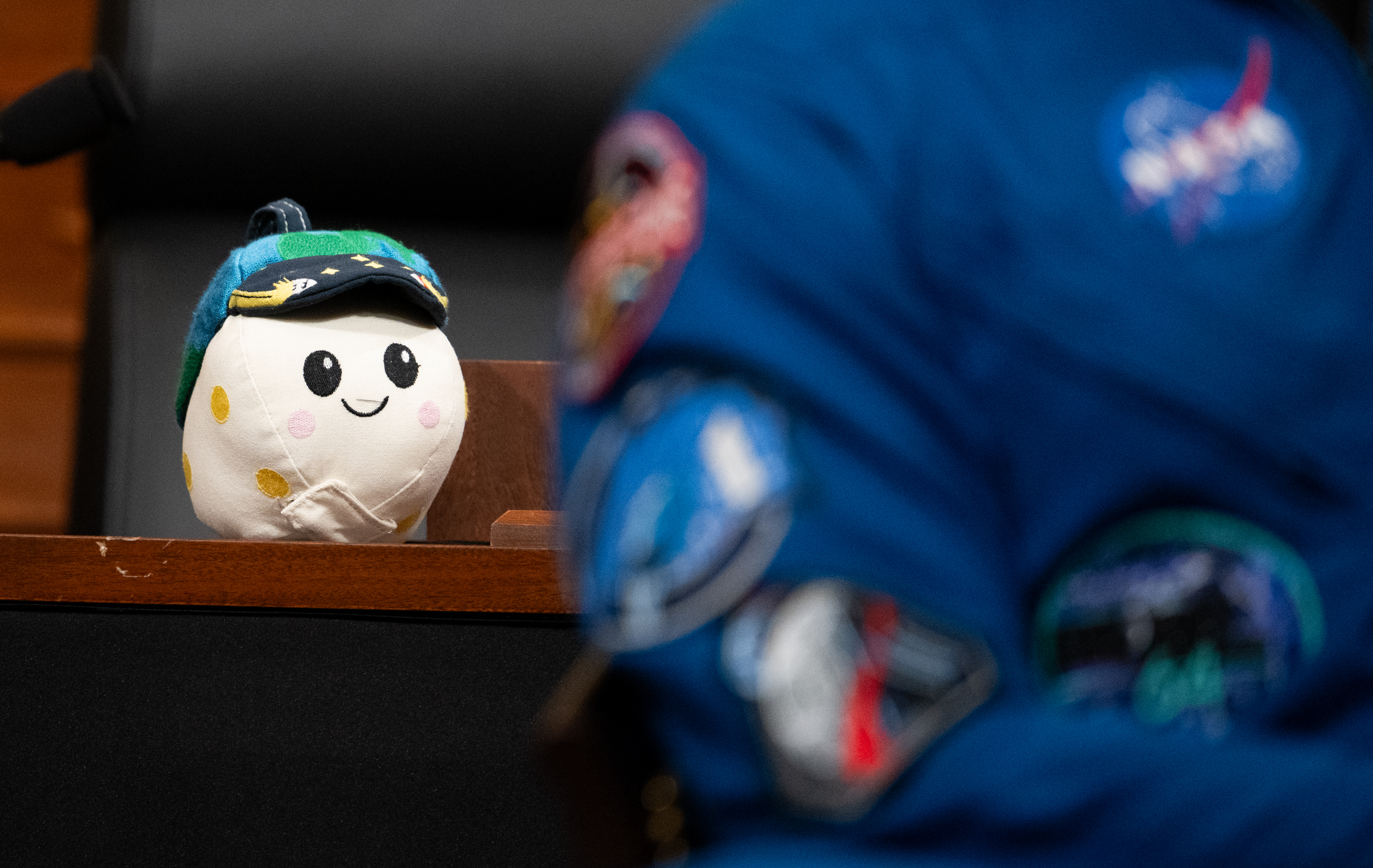
🚀 Rise Takes the Dais in Washington
On Tuesday, May 12, 2026, a tiny, unflappable hero took center stage (albeit on a dais) in Washington, D.C. No, it wasn’t a chiseled mascot with a cape. It was Rise—the Artemis II zero gravity indicator—sitting calmly among the seriousness of congressional staff, as the Artemis II astronauts shared updates, plans, and a few jokes with lawmakers and aides who probably hadn’t seen a gadget that looks like it belongs in a sci-fi café booth.
🛰️ Small Device, Big Job
Rise has a job that sounds fancy but is basically the spaceflight version of a mood ring for physics: it tells you when things are truly zero-g or just pretending to be. In the capricious world of spaceflight instrumentation, Rise is the nerdy, dependable friend who knows how to stay afloat when everyone else is trying to figure out who moved the water cooler near the coffee pot. And there it was—on the dais—being ogled, photographed, and probably searched for a fault that would let it give a dramatic sigh and say, “Relax, I’m fine.”
🏛️ Policy Room Meets Orbital Precision
The scene had all the gravity you’d expect from a serious briefing, with the added spice of a cosmonaut’s grin and a few interns who clearly believed they were about to witness the.policy-shaped version of a rock concert. Rise, however, remained the quiet star of the show. It didn’t need to flex; its job is to indicate that the astronauts are weightless, which in the current political climate is basically a metaphor for “gravity of responsibility.” And let’s be honest: in any room full of folks tasked with budgeting the universe, a tiny indicator calmly signaling zero gravity is the kind of humor we all deserve.
📘 The Bookmark of Artemis II
As the Artemis II team spoke with congressional staff, Rise sat like a poised bookmark in the chapter of human space exploration. It reminded everyone that the next great leap isn’t just about rockets and rovers; it’s about the equipment that makes those rockets and rovers possible. It’s the backstage crew—mic’d and ready—wearing a badge that says, “I may be small, but I keep the ship from sinking into a pothole of gravity.”
🧭 Calm Data in a Loud World
There was a wink in the air (metaphorical, but you could feel it) as the astronauts explained trajectories, timelines, and the careful choreography required to keep this mission on track. Rise, meanwhile, did what it does best: stay cool, stay level, and subtly remind the room that even in Washington, the science behind space exploration still runs on precision, not bravado. If you’ve ever seen a cat perched on a windowsill, surveying the yard with righteous judgment, you’ve seen Rise’s attitude—a calm confidence that says, “I’ve got the data; I’ve got the altitude; let’s keep the orbit, people.”
🔬 Why This Symbol Matters
The visual of Rise on the dais wasn’t just a cute prop. It was a symbolic nod to the quiet bravery of the tools we rely on—the sensors, indicators, and dashboards that translate the cosmos into numbers we can understand, debate, and fund. It’s one thing to dream about shooting for the stars; it’s another to trust a tiny indicator to shout back from a zero-g environment, “Yep, we’re there. We’re really, actually there.”
🌌 Precision Over Bombast
And so, Rise goes to Washington—not to steal the show, but to remind everyone in the room that progress is a chorus of careful calibrations. The astronauts shared mission milestones with the staff, the staff nodded like seasoned astronomers, and Rise kept its cool, perched on the dais as a gentle reminder that science doesn’t demand drama to be decisive. It asks for precision, patience, and a little bit of gravity-defiance when the moment calls for it.
➡️ What Comes Next
If you’re reading this and thinking, “But what’s next?” you’re asking the right question. The next steps involve more data, more approvals, and more opportunities for Rise to do what it does best: sit there and quietly declare that the path to deep space is paved not by bombast, but by well-calibrated indicators and a shared belief that the universe is worth measuring, one zero-g moment at a time.
So here’s to Rise—the unsung partner of Artemis II, the glass of cool clarity in a room full of ambitious plans, and the tiny sentinel that reminds us: when we aim for the stars, the real work begins with the science that makes the journey possible. And if a zero gravity indicator can steal a moment of congressional attention and make us smile, then perhaps the future isn’t so far away after all.
📡 Image Source
Image via NASA
🔗 Artemis II timeline | Zero-g indicator role | Policy and mission funding
© 2026 ways4eu.wordpress.com H.J.Sablotny — All rights reserved. The text content of this post is the intellectual property of H.J.Sablotny. Images are subject to their respective copyright holders and are used for illustration purposes only.