Ways4eu WordPress.com Blog
SPA View of ways4eu.wordpress.com
A Galaxy, a Bar, and a Tiny Spiral of Fate: The Grand NGC 1300
By JohnTheWordWhirlwind
on Sun May 17 2026
🌌 A Barred Spiral with Main-Character Energy
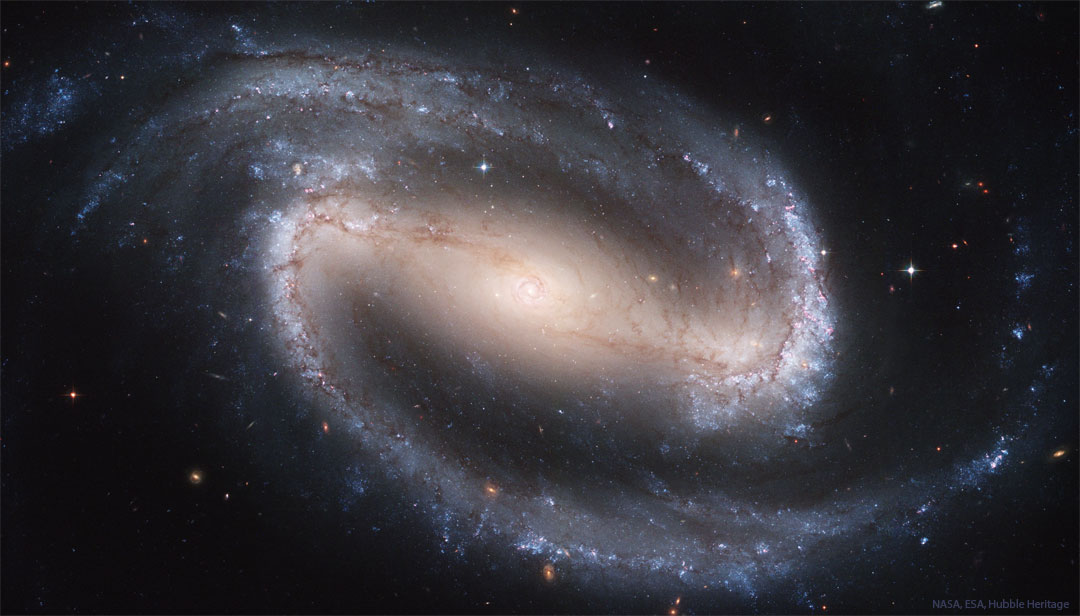
Across the center of this spiral galaxy, a bar stretches its cosmic arms like a grand, celestial skateboard ramp. A second, smaller spiral nestles at the heart of that bar, as if the galaxy decided to stack its most dramatic features in a cosmic Russian doll. And at the core of that inner spiral sits a supermassive black hole, quietly steering the neighborhood with gravity’s own hands. Welcome to NGC 1300—the big, beautiful barred spiral that stands about 70 million light-years away, cruising through the constellation Eridanus as if it owns the night sky’s boulevard.
🔭 Hubble’s High-Definition Portrait
This is not just any galaxy. It’s a flagship example in the grand parade of island universes—an old-school spiral with a modern-day megaphone for the universe’s drama. The Hubble Space Telescope gave us a composite image that’s so detailed it could double as a celestial coffee-table book. In it, NGC 1300 unfurls more than 100,000 light-years of stellar artistry, revealing a dominant central bar that slices through the disk with scientific swagger and spiral arms that wind around with a majesty you’d expect from the cosmos’ best choreographers.
🧪 Why Galactic Bars Matter
If you stand back and squint at the image long enough, you start to notice the story behind the shapes. Galactic bars aren’t just decorative—they’re engines. They shepherd gas toward the center, fueling star formation and feeding whatever lurks in the core (yes, that includes supermassive black holes, which can weigh millions to billions of suns). But the how and why of the giant bar’s formation, its durability, and its influence on stellar birth rates are still lively topics in the field. It’s the kind of astrophysical mystery that keeps astronomers up at night in the best possible way—like a sci-fi plot line written across millions of years of cosmic time.
🏙️ The City Analogy That Actually Works
NGC 1300 is a reminder that the universe loves a good architectural metaphor. Picture a city with a grand main boulevard (the central bar) that funnels pedestrians to a bustling downtown (the inner spiral) where gravity does its best Broadway production, starry performers included. The outer spiral arms reach outward like a glittering skyline, tracing the galaxy’s motion through space as if it were sketching a spiral galaxy map with a painter’s care and a navigator’s precision.
❓ Questions Still on the Table
For those of us who enjoy the “why” as much as the “wow,” NGC 1300 invites a series of questions that keep researchers busy. How did such a monumental bar arise in the first place? What keeps it coherent against the galaxy’s spinning chaos? And, crucially for the star lovers among us, how does this grand structure shape where, when, and how brightly new stars burn? The answers aren’t simple or quick—they require simulations, telescopes at multiple wavelengths, and a willingness to revise theories in light of new data. But that’s the beauty of science: every crisp Hubble image is a bookmark in a living, evolving story about how galaxies grow, glow, and occasionally alight with the drama of black holes.
📚 Why NGC 1300 Is a Cosmic Lab
If you’re hunting for a takeaway, here it is: NGC 1300 isn’t just a pretty face in the cosmos. It’s a dynamic laboratory that helps us understand how galaxies organize their mass, birth stars, and feed their central behemoths. The bar, the inner spiral, the quiet but powerful black hole—all are players in a grand performance that’s been unfolding for billions of years and will continue long after the light we see today has long ceased to exist in the same form.
✨ Final Look Toward Eridanus
So the next time you scan the night sky and find Eridanus, imagine this: a colossal barred spiral lies there, 70 million light-years away, quietly orchestrating a dance of stars and gas, a bar as a conductor, an inner spiral as a chorus, and a supermassive black hole as the silent audience that keeps it all in balance. The cosmos doesn’t just contain galaxies—galaxies contain stories, and NGC 1300 is one of the most stylish, most intriguing chapters we have, written in light.
📡 Image Source
Image via NASA
🔗 Barred spiral formation theories | Black hole role in galaxy centers | Star formation in barred spirals
© 2026 ways4eu.wordpress.com H.J.Sablotny — All rights reserved. The text content of this post is the intellectual property of H.J.Sablotny. Images are subject to their respective copyright holders and are used for illustration purposes only.