Ways4eu WordPress.com Blog
SPA View of ways4eu.wordpress.com
Beacon of Light: JWST Sings Messier 77 in Cetus
By JohnTheWordWhirlwind
on Tue May 19 2026
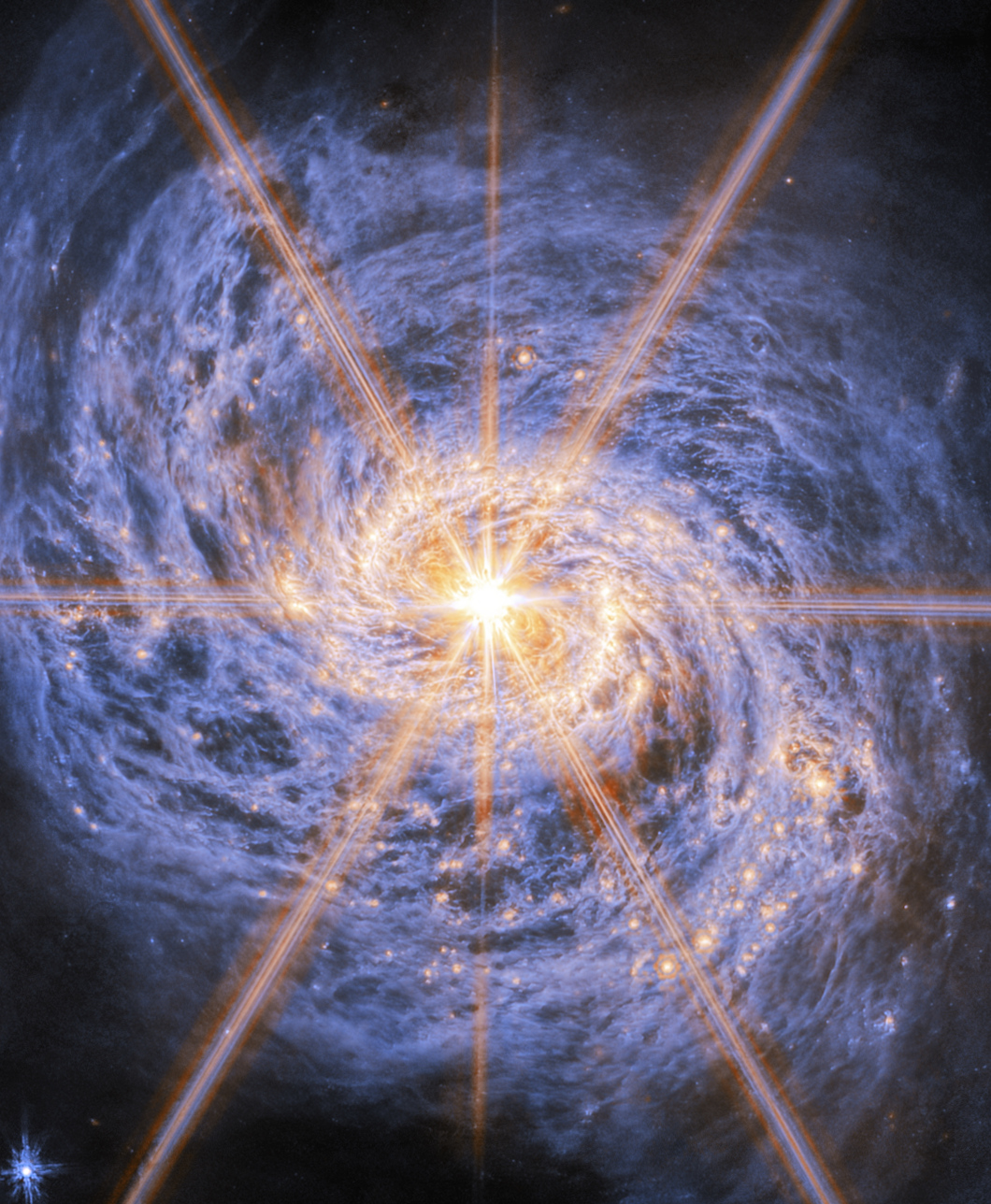
🌟 JWST & Messier 77: A Galactic Powerhouse
When the James Webb Space Telescope’s latest image of Messier 77 (M77) dropped, it felt like a cosmic fireworks show. This barred spiral in Cetus, about 45 million light‑years away, is a favourite among astronomers for its glowing bar, star‑forming arms, and the hidden black hole that lies at its heart.
⚙️ Why M77 Captures the Science Community
JWST’s infrared eye cuts through dust, revealing star‑forming nooks invisible to optical telescopes. The bar funnels gas toward the core, fueling stars and possibly an active galactic nucleus—a quiet reminder that a galaxy can be a bustling, dynamic city hidden behind its spiral arms.
✨ The Visual Feast
With swirling green‑yellow arcs and shiny knots of newborn stars, the image is a data‑rich laboratory: from the distribution of dust to the choreography of gas flows. It’s the kind of picture that would make a physicist doodle while sipping coffee and a fan wonder why every galaxy can’t have such a dramatic complexion.
📈 How the Image Advances Our Knowledge
By mapping the bar’s influence on star formation, researchers can test theories of galaxy evolution. M77 shows how bars can rearrange stellar orbits and trigger bursts of activity—an everyday laboratory to check the physics written into the cosmos.
📡 Image Source & Pin‑Downs
Image courtesy of NASA and shared via ift.tt link. The science behind the picture is full of clues for those who like to peek at the finer details of a spiral galaxy’s heart.
🔗 Quick Links
• Barred spiral galaxies | • Galaxy evolution & JWST | • M77 research papers
© 2026 ways4eu.wordpress.com H.J.Sablotny — All rights reserved. The text content of this post is the intellectual property of H.J.Sablotny. Images are subject to their respective copyright holders and are used for illustration purposes only.