Ways4eu WordPress.com Blog
SPA View of ways4eu.wordpress.com
A Dark Wolf in Gum: The Unlikely Hero of Starbirth
By JohnTheWordWhirlwind
on Thu May 21 2026
🌌 Cosmic Opening Scene
🐺 The Wolf’s Cave Identity
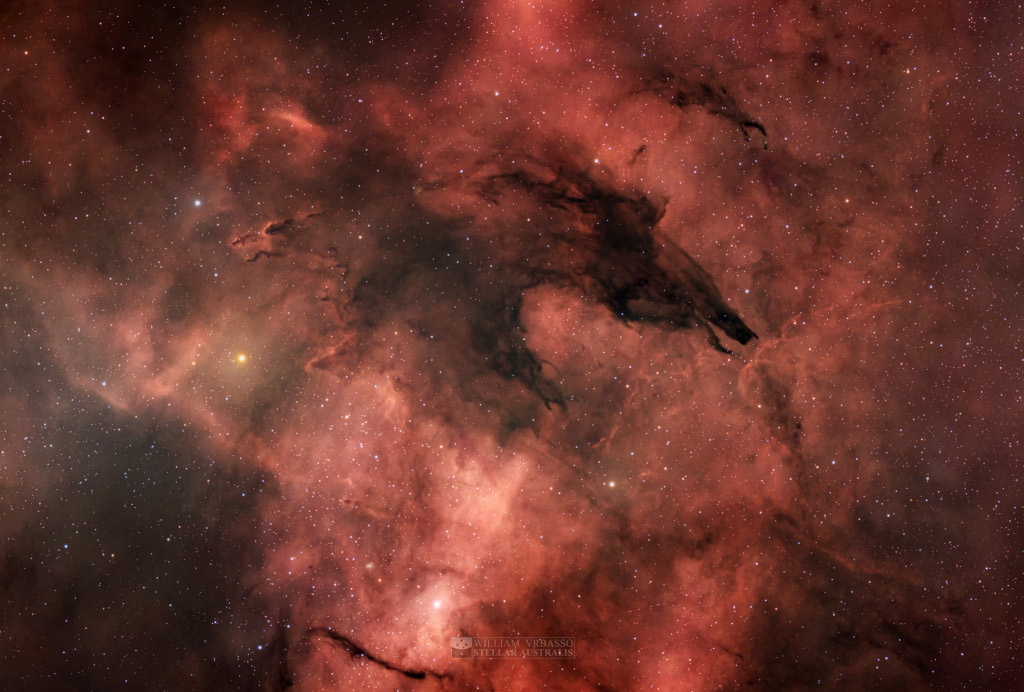
A dark wolf lies in gum. No, this isn’t a riddle—it’s astronomy with a wink. Meet the Dark Wolf Nebula (Sandqvist–Lindroos 17), a spooky dust cloud tucked inside Gum 55 (RCW 113) in the Scorpius constellation. If you’ve ever sneezed at a speck of cosmic grit, you’re not far off: interstellar dust is a pest in our kitchens and our skies. But in the grand theater of star formation, this stubborn dust plays a starring, life-creating role.
🧭 Location in the Sky
What you’re seeing in this image is not a fearsome predator stalking the heavens, but a haloed harbor of science. The Dark Wolf’s cloak of dust doesn’t just obscure light; it choreographs the very conditions under which stars are born. Young stars blaze in Gum 55 with ultraviolet and visible light that can heat the surrounding gas to the point where collapse halts—no baby suns under these conditions. The Dark Wolf acts like a patient thermostat, absorbing that energetic radiation and re-emitting it at longer wavelengths, mainly in the infrared. It’s as if the dust are tiny, spacefaring radiators, cooling the gas just enough for gravity to do its quiet, inexorable work.
🧱 Dust, Gas, and Structure
Cooler gas is gravity’s favorite playground. When pockets of gas lose heat, they become denser, and gravity can take over. The gas collapses, clumps form, and out of that chaos, a new star or star cluster begins to shine. Dust is not just a barrier to peering through the cosmic fog; it’s an essential regulator that keeps the environment from getting too hot too quickly. Without it, the gas would burn away its chance to birth stars.
✨ Why Darkness Enables Starbirth
But dust isn’t just a passive regulator. It’s the meet-cute in the cosmos’ long, starry romance. Hydrogen atoms, the simplest and most abundant building blocks in the universe, meet within these dust-rich nurseries and form molecular hydrogen. This molecular form is the fuel for future stars, the spark that lights up galaxies. So the seemingly sinister Dark Wolf is not a villain at all—it’s a harbinger of cosmic life, a quiet guardian of the star-creation process.
📏 Scale and Distance
In the shadowed edges of Gum 55, the Dark Wolf reminds us that beauty in the universe often wears a veil. Its darkness is not emptiness but a carefully tuned instrument, a player in a larger symphony where dust, gas, gravity, and light dance toward the birth of suns. So the next time you glimpse a so-called “dark” nebula, remember: what looks like a menace might be the environment’s most important ally.
🔬 Scientific Relevance
If you’re hunting for cosmic lessons, here’s the takeaway: dust may be a nuisance on Earth, but in space it is a master craftsman. It tempers radiation, shepherds gas into star-forming tempers, and even helps hydrogen atoms find their match. The Dark Wolf isn’t a riddle to be solved; it’s a doorway into understanding how the universe kindles new light.
📷 Observational Perspective
In the end, the Dark Wolf’s howl is actually the universe whispering, “Life begins here.” A dark, dapper silhouette in Gum 55, it’s less a predator and more a herald—of stars, warmth, and the timeless romance of cosmic creation.
Image via NASA https://ift.tt/mfXl09r
🧠 Interpreting the Nebula
🔗 Dark nebulae and star formation | How dust clouds block starlight | Barnard catalogue history
🌠 Star Formation Context
© 2026 ways4eu.wordpress.com H.J.Sablotny — All rights reserved. The text content of this post is the intellectual property of H.J.Sablotny. Images are subject to their respective copyright holders and are used for illustration purposes only.