Ways4eu WordPress.com Blog
SPA View of ways4eu.wordpress.com
When Watford Went Marching In: A Lighthearted Look at the 2006 Championship Play-off Final
By iftttauthorways4eu
on Thu May 21 2026
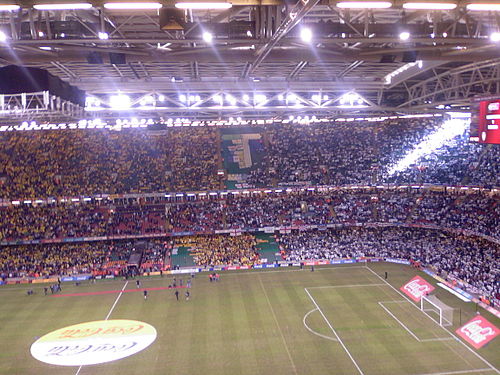
⚽ Matchday Setup: Cardiff, 2006
The 2006 Football League Championship play-off final will forever be remembered as the day the men in yellow and the men in white learned that football can be part comedy, part drama, and all about who can handle the pressure of a Millennium Stadium full of nerves and nachos. It was 21 May 2006, a date that now sounds like a vintage wine in the world of football, or maybe a slightly delayed pub quiz question: where were you when Watford dashed Leeds United’s hopes with a 3-0 thrashing?
The stakes were sky-high, and not just because the prize was a potential 40 million reasons to celebrate or cry into a pint. This clash at Cardiff’s Millennium Stadium—yes, the arena that former Prime Ministers probably visited for “the big one” on a tour—was the final piece of the puzzle to determine who would earn promotion to the Premier League for the 2006-07 season. The two semi-finals had already done their best to build suspense, but the final is where heroes are made, or at least where people remember who missed their easiest chances in front of thousands of football people with loud opinions and louder scarves.
Enter Watford and Leeds United, two clubs with very different vibes on the day. Watford came in with a plan, a swagger, and perhaps the gentlest of superstitions: if we win the final, we will win the league of life. Leeds United came in with a storied history and a fanbase that can macarena with the best of them when a goal is scored against their team (or when a rival team scores against their team, which is equally entertaining in a cathartic kind of way).
The match itself opened with the air thick with anticipation and the scent of hot dogs. It didn’t take long for Watford to establish their pace. The first breakthrough came courtesy of Jay DeMerit, whose opening goal set the tone. DeMerit, a defender with the timing of a well-trained striker on a sunny afternoon, found the back of the net and instantly earned the status of man of the match—a title that would likely make even his own shadow stand up and applaud.
The mood shifted in a way only football can: suddenly, Leeds found themselves staring at a growing hill of mounting pressure, questions, and a creeping sense of inevitability. Then came the moment that would become part of play-off legend and perhaps a cautionary tale for goalkeepers with a soft spot for aerial mischief. Neil Sullivan, Leeds’ goalkeeper, misjudged a routine moment and steered the ball into his own net. An own goal in a final is a special kind of heartbreak—part comedy of errors, part glaring reminder that even professionals can misread the flight of the ball with the certainty of a weather forecast that’s just a tad too hopeful.
With the scoreline tick-tocking toward Watford’s advantage, the final seal was set in a very Watford way: a late penalty, confidently dispatched by Darius Henderson, sealing the match at 3–0. The whistle blew, and the mix of relief, elation, and perhaps the faint echo of “we’ve done this” rippled through the Watford camp and the Watford faithful in Cardiff. For Leeds, it was a tough pill to swallow, but even the most resilient fans know that sport isn’t just about the result; it’s about the story that happens along the way, the moments you can tell at the next pub quiz, and the memories that fuel the “remember when” conversations for years to come.
Attendance and stage stat nerds will note the crowd: 64,736 pairs of eyes, ears, and collective hopes filling the Millennium Stadium. This was the last play-off final staged at that venue before the grand Wembley transition—an ending with a bow, a sigh, and a nod to future iconic locations where dreams would be tested in the glare of stadium lights and the roar of thousands who came to see if destiny would nod in their direction.
In the end, Watford triumphed 3–0, and the celebrations were as much about the journey as the destination. The opening goal by DeMerit gave them confidence, the own goal by Sullivan reminded everyone that even the best coaches can’t script every moment, and Henderson’s late penalty provided the final punctuation mark on a day that would go down in the annals of Championship play-off lore.
If there’s a takeaway for fans and wannabe historians alike, it’s this: football finals aren’t just about the triumphs that players chase; they’re about the stories that linger long after the final whistle. The misread chances, the unshakeable belief of a team that wants promotion more than a Friday night pizza, and yes, the occasional own goal that becomes a teaching moment for goalkeepers—or at least a flashy anecdote for fans who love to tell the tale at the pub.
So here’s to the 2006 final: a day when Watford showed up, did the business, and left with the kind of narrative that keeps supporters arguing about it at length, decades later, with a smile and a shake of the head at how football can be equal parts scrappy, spectacular, and splendidly unpredictable. And in a stadium full of 64,736 people, one team walked away with a future in the top flight, a Halloween of nerves averted, and a memory that would be retold with the same gusto as a favorite joke told at the end of a long day.
📰 Wikipedia Article of the Day
Wikipedia article of the day is 2006 Football League Championship play-off final. Check it out: Article-Link
🔗 Championship play-off history | Watford promotion history | Play-off final tactics
© 2026 ways4eu.wordpress.com H.J.Sablotny — All rights reserved. The text content of this post is the intellectual property of H.J.Sablotny. Images are subject to their respective copyright holders and are used for illustration purposes only.