Ways4eu WordPress.com Blog
SPA View of ways4eu.wordpress.com
Hubble Sights Galaxy in Transition: The Curious Case of NGC 1266
By JohnTheWordWhirlwind
on Fri May 22 2026
🔭 First Look at NGC 1266
🌌 Galaxy in Transition: Core Idea
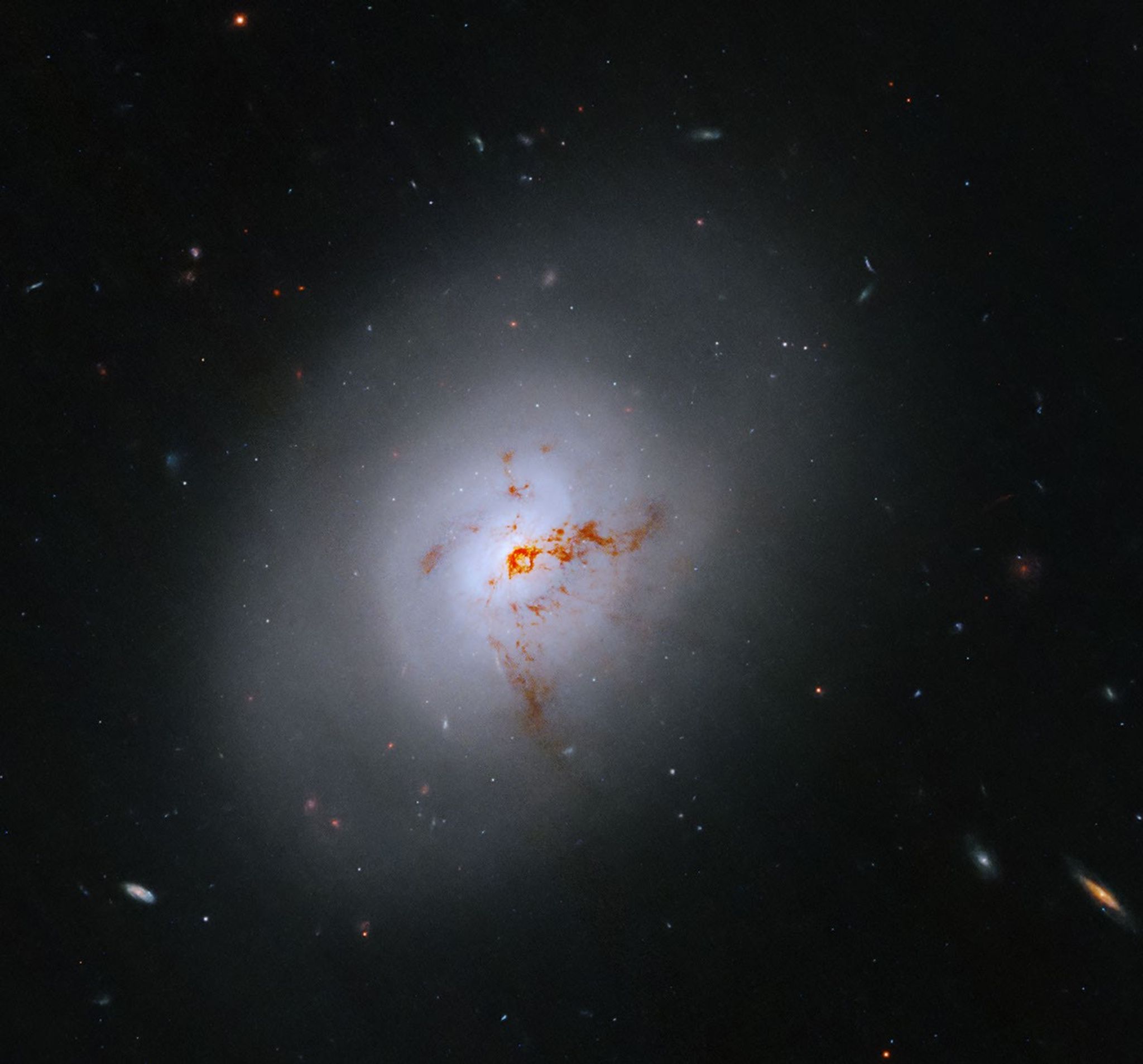
If you’ve ever tried on a new hairstyle and ended up with the ultimate “I woke up like this” vibe, you’ll understand NGC 1266. This lenticular galaxy, snapped by the NASA Hubble Space Telescope, looks every bit like it’s in the middle of a cosmic makeover—polished, enigmatic, and curiously undecided about its own spiral tendencies.
🧲 Gas Dynamics and Feedback
NGC 1266 sits at the crossroads of a galactic midlife crisis. Its center glows with a bright confidence, as if it woke up one morning and said, “Today I’m going to outshine the neighbors.” The surrounding disk, meanwhile, plays it cool with a hint of spiral structure peeking through the curtain, a face that says, “I could be a spiral if I want to, but I’m enjoying the mysterious, arm-free look today.” It’s the stellar equivalent of wearing a little black dress with sneakers—elegant, practical, and a touch baffling.
💥 Outflows and Star Formation Impact
What makes this post-starburst galaxy so gripping? Starbursts are fireworks displays in galaxies—an extravaganza of newborn stars lighting up the stage. But NGC 1266 appears to have hit pause on the encore button. It’s the cosmic equivalent of burning bright and then quietly sipping tea in the corner, still dazzling, but with a story that invites questions rather than a chorus of answers. The bright core suggests a bustling inner engine, perhaps a supercharged active galactic nucleus hiding in plain sight, while the outer regions whisper that star formation is no longer the life of the party.
📡 What Hubble Adds
The lack of obvious spiral arms is what earns NGC 1266 a seat in the “awkwardly charming” club. Spiral arms are the galaxy’s best argument for getting up and dancing, but here the choreography is more avant-garde: a central spotlight with a halo of subtler motion around it. It’s as if someone sculpted a wreath of stars and then decided to keep it sleeker, more minimalist—like a galaxy that took a bow and left the stage to catch its breath.
📏 Scale and Distance Context
Astronomers are not just gazing in awe; they’re taking notes. The image invites us to ponder how quickly a galaxy can transition from a bustling, star-making furnace to a more subdued, post-starburst silhouette. NGC 1266 raises questions about gas dynamics, feedback processes, and the occasional cosmic nudge that nudges a galaxy from “sweltering” to “stylishly cool.” It’s a reminder that galaxies are not static ornaments in the night sky; they’re dynamic, undergoing dramatic personal growth stories that can span millions of years—give or take a few million.
🧪 Why This Object Matters
If you’re keeping score, NGC 1266 is a masterclass in subtle drama. A bright center that could pilot a galaxy-sized spaceship, a disk that hints at hidden spirals, and an arms-length expression that refuses to commit to a grand spiral romance. It’s the astrophysical equivalent of a character who’s all swagger but keeps their true intentions encrypted in a dim, twinkling smile.
🛰️ Multi-wavelength Interpretation
In the grand sweep of the cosmos, NGC 1266 reminds us that transition can be beautiful, sometimes even more compelling than a pristine, well-behaved spiral. It’s the universe’s way of saying: change is not just inevitable; it can be captivating. And if a galaxy can flirt with form while holding back the full spiral barrage, so can we—at least in our late-night, telescope-admiring daydreams.
🧠 Big-Picture Astrophysics
So here’s to NGC 1266: a lenticular enigma with a bright center, a face that hints at spiral charm, and absolutely no discernable arms to distract from its intriguing story. The cosmos has a sense of humor, and in its act of transition, it’s giving us one heck of a show.
✅ Final Reflection
Image via NASA https://ift.tt/G506qnV
🔗 NGC 1266 research | AGN feedback and quenching | Hubble transition galaxies
© 2026 ways4eu.wordpress.com H.J.Sablotny — All rights reserved. The text content of this post is the intellectual property of H.J.Sablotny. Images are subject to their respective copyright holders and are used for illustration purposes only.