Ways4eu WordPress.com Blog
SPA View of ways4eu.wordpress.com
Moon Robots, Moon Laughs: How Students Are Building the Next Lunar Lawn Mowers for NASA
By JohnTheWordWhirlwind
on Thu May 28 2026
🌕 Student Robotics Meets the Moon
🤖 What the Challenge Is About
When you think of NASA’s Lunabotics Challenge, you usually imagine astronauts in shiny suits etching the edge of the Moon with a laser pointer, right? Sure, maybe not that exactly. But what if I told you that the future of lunar exploration might hinge on student teams with more grit than a packet of powdered sugar and more clever hacks than a college dorm’s Wi-Fi? Welcome to the wild, wonderful world of the 2026 Lunabotics Challenge, where twenty-something engineers-in-training (and a few caffeine-fueled late nights) are designing remote-controlled lunar robots that could one day scoot across regolith like it’s a lazily rolling carpet.
🚀 Why NASA Cares About Lunar Robots
A star student and her crew take center stage
🧪 Engineering Skills in Practice
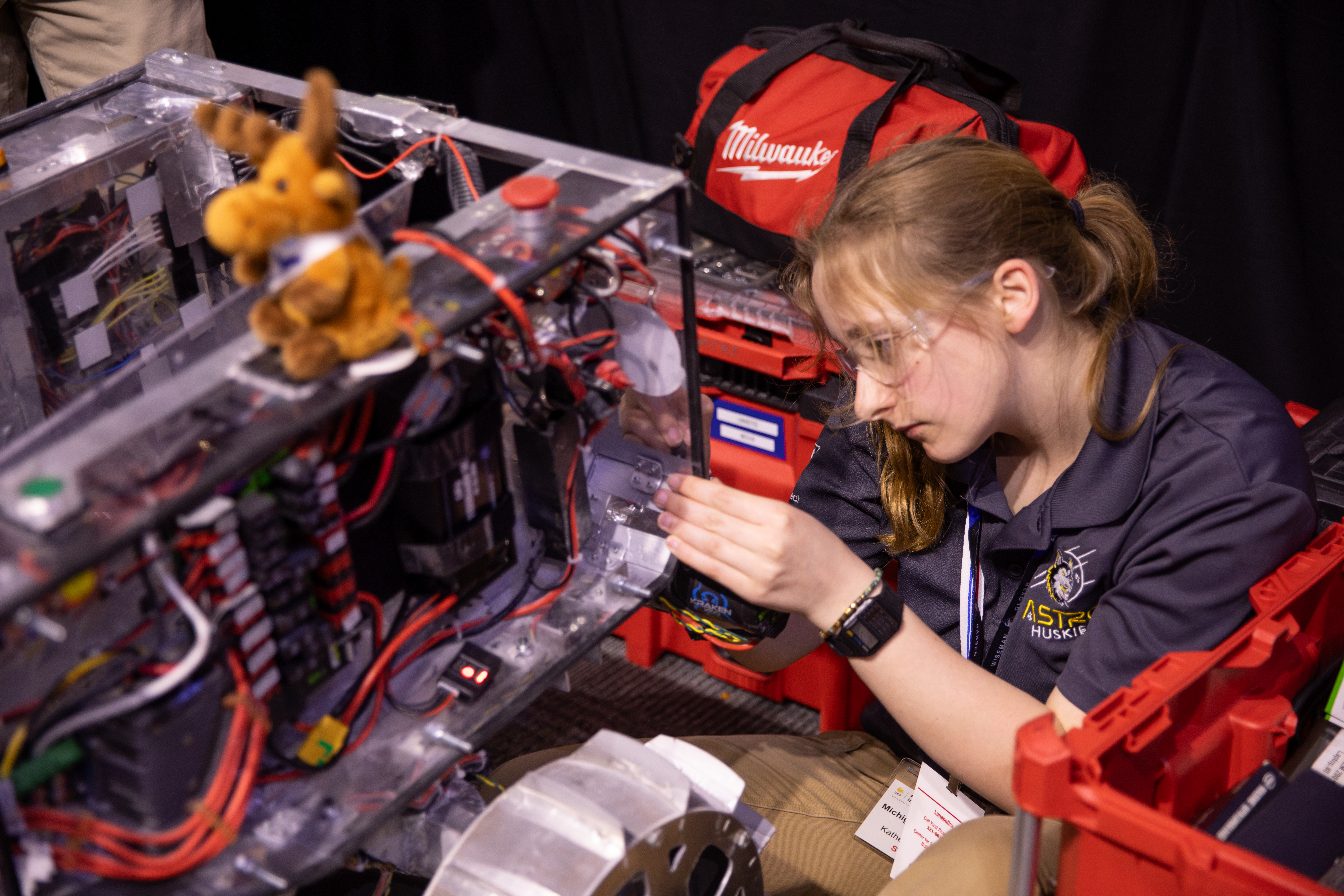
Katherine Rauscher, a rising star from Michigan Technological University, is leading a team that embodies the spirit of “figure it out and then figure it out again, but better.” In the finals, her team rolled out a prototype lunar robot that looked part sci-fi marvel, part high school science fair on Red Bull. The setting? The Astronauts Memorial Foundation’s Center for Space Education, tucked inside the Kennedy Space Center Visitor Complex in Florida. The date? Tuesday, May 19, 2026. The vibe? Buzzing with the kind of anticipation that only a room full of ambitious students, NASA officials, and a few bemused dads can generate.
📚 Education and Team Innovation
What these robots are up to
🌌 Lunar Exploration Context
Forty-seven teams from across the United States stepped into the arena with one mission: design and build remote-controlled robots capable of traversing the moon’s rough terrain and, yes, constructing regolith-based berms. In other words, these machines are not just about bravado; they’re about practical problem-solving. They must maneuver gritty lunar soil (regolith) while mimicking the challenges Artemis will throw at future explorers. Think of it as a test run for lunar housekeeping—only the broom is a robot with wheels, tracks, and perhaps a dash of stubborn ingenuity.
✅ Final Reflection
The challenge, in plain language, is to prove the robots can handle real lunar tasks under conditions that resemble the harsh, dusty, gravity-defying environment of the Moon. The berm-building portion is a clever proxy for regolith manipulation tasks—where the robot digs, moves, and shapes the soil to create protective berms around potential landing zones or habitat modules. It’s not just about speed; it’s about precision, resilience, and teamwork. And yes, there’s a bit of dramatic flair as teams sprint to their designated turns, hoping their creation behaves itself like a well-trained lunar pony.
📰 Source and Reference
A look at the human side: students, mentors, and the nerdy joy of invention
🧩 Lessons Learned
These teams are a blend of engineering majors, robotics enthusiasts, and the kind of people who consider a spare servo motor a social life. They spend months designing, building, and testing their robots, only to discover that the real innovation happens in the margins: clever cable management, power efficiency hacks, and the moment when a twig of a solution snaps into place just as the timer ticks down.
🏁 Closing Notes
Katherine’s team, like many others, demonstrates the core Lunabotics ethos: take a big, intimidating challenge and break it down into bite-sized problems. How do you traverse uneven lunar terrain without tipping over? How do you pick up, move, and compact regolith without scattering it to the four winds? How do you program a robot to adapt when the ground under its tracks shifts like a bad magic trick? The answers come through iteration, testing, and a healthy dose of “let’s try it this way and see what happens.” And yes, there’s a lot of teamwork—mentors guiding, peers encouraging, and the occasional celebratory victory dance when the robot executes a maneuver flawlessly (or at least doesn’t crash spectacularly).
🛠️ Prototype Build Phase
Why this matters beyond the finals
📊 Testing and Iteration
The Lunabotics Challenge isn’t just a showcase; it’s a proving ground for the next generation of space engineers. The work these students are doing today could influence how teams equip future lunar missions with autonomous or semi-autonomous support systems. The ability to construct and manipulate regolith in challenging environments translates to real-world skills: robust mechanical design, resilient control systems, and the kind of problem-solving muscle that only a room full of late-night debugging sessions can build.
👥 Team Coordination and Roles
And let’s be honest: there’s something wonderfully goofy about a group of bright students giving their all to build a robot that can bury its own berm and still look cool while doing it. It’s STEM, it’s spectacle, and it’s incredibly hopeful. If you ever doubted that the future could feel both high-tech and delightfully playful, Lunabotics proves you wrong—in the most entertaining way possible.
🧭 Mission Constraints and Trade-offs
A nod to the big picture (with a wink)
📡 Data, Sensors, and Control
As Artemis aims to return humans to the lunar surface, the contestants in this year’s Lunabotics Challenge remind us that exploration is a team sport. It’s not just about rockets and rovers; it’s about the ingenuity that happens when curious minds are given a sandbox—and a timeline—to turn ambition into something tangible. The berms get built, the tracks get dusty, and the students walk away with more than just a trophy: they gain experience, confidence, and story-worthy memories of the moment when their moon bot finally did something that looked almost, but not quite, like magic.
🌍 Real-World Relevance of Student Robotics
Bottom line
🎓 Skills Transfer to Future Careers
The 2026 Lunabotics Challenge is a celebration of creativity meeting gravity, dirt meeting determination, and students meeting their future as engineers, researchers, and leaders of tomorrow’s space-enabled world. Katherine Rauscher and her Michigan Tech teammates are a perfect example of what happens when you give bright young minds a big problem, a sandbox named Moon, and a deadline that’s only a year away. The result is not just a robot; it’s a glimpse into the future—one goofy, ambitious, and incredibly hopeful step at a time.
🚀 Looking Ahead to Lunar Missions
Image via NASA https://ift.tt/PfQSGv3
🔗 Lunabotics competition | Lunar excavation robotics | Student space technology projects
© 2026 ways4eu.wordpress.com H.J.Sablotny — All rights reserved. The text content of this post is the intellectual property of H.J.Sablotny. Images are subject to their respective copyright holders and are used for illustration purposes only.