Ways4eu WordPress.com Blog
SPA View of ways4eu.wordpress.com
What is So Micro About Tonight’s Blue Micromoon?
By JohnTheWordWhirlwind
on Sat May 30 2026
🌕 What Makes a micromoon “Micro”?
Just after sunset, a full moon will drift into view and announce its presence with a soft, dim glow. Tonight’s moon isn’t just any full moon—it’s a micromoon, the kind that looks a touch smaller and a shade paler than the moons we ooh and aah over in midsummer. The reason is simple and a little cosmic: the Moon’s fully illuminated phase happens within a short time of apogee, the moment when the Moon is farthest from Earth in its elliptical orbit. When the Moon is near apogee as it goes full, it appears reduced in size and brightness—the opposite of a supermoon, which happens when full Moon coincides with perigee, the close-for-a-moon distance.
So what makes tonight’s micromoon extra micro? It’s not just that it’s far away; it’s exceptionally far. In fact, this micromoon will be the farthest, smallest, and dimmest Moon of the year. It’s a subtle reminder that our cosmic neighbor doesn’t always glow with the same intensity. The light is the same, the face is the same, but the ghost of distance matters. The Moon looks almost porcelain-soft against the night sky, a quiet, understated companion rather than a showstopper.
📏 Why This One Is the Smallest and Dimmest of the Year
But here’s the twist that makes tonight’s sky a little more literary: it’s also a blue moon. Yes, the second full moon in the same lunar month—a moon-th-ful of trivia, wordplay, and a dash of folklore. When you hear “blue moon,” you might conjure a hue or a mythical omen, but the current blue moon is about timing. The calendar is a wily trickster, and this month has given us two full moons, making the second one a blue moon in the most meteorological sense.
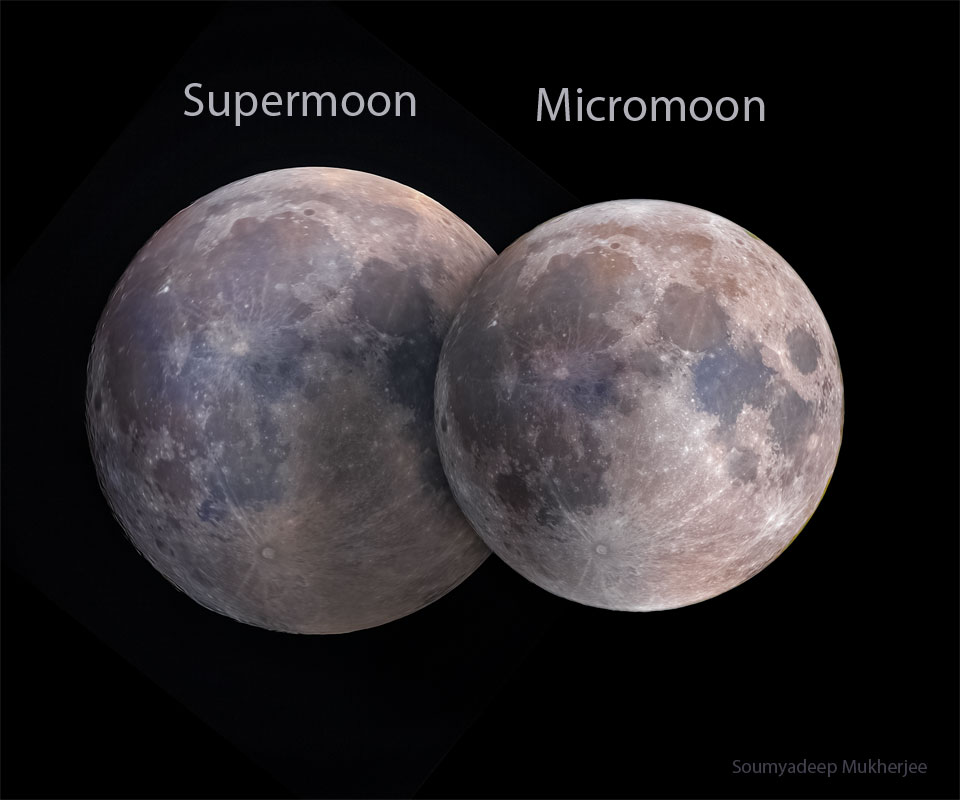
Pictorially speaking, the contrast you might have seen in photos is the classic tango between two lunar moods. A supermoon—where the full moon appears near its largest, especially when it orbits close to Earth—often steals the spotlight. A typical comparison, like the kind captured and shared from Kolkata, India, pairs a luminous, bulkier full moon with its micromoon cousin captured in May and again in December of 2021. The difference is as much about distance as it is about light: one moon bathing in near-perigee glow, the other at the far edge of its orbit, a moon that seems to retreat just enough to remind us we’re looking at a big, celestial rock performing a slow, patient orbital waltz.
🔵 Blue Moon Explained: Timing, Not Color
If you’re hoping for a moonlit plot twist, there’s a steady cadence to the calendar. The next micromoon nudges the night sky next month, and the next blue moon appears at the tail end of 2028. But the crown jewel—our blue micromoon that’s so micro it could pass for a lunar whisper—won’t reappear in our skies until 2053. That’s a long wait for a moon worth whispering about.
🗓️ When We’ll See the Next Blue Micromoon Again
So, tonight, step outside with a mug of something warm, or lean back on a blanket, and watch the moon perform its quiet, understated act. It’s not just a moon; it’s a reminder that the cosmos has moods as varied as ours—sometimes a little dimmer, a little farther, and wonderfully, a little bluer in its timing.
Image via NASA https://ift.tt/4ksJGqX
🔗 Quick Links
• Micromoon and apogee basics |
• Blue moon definition (timing, not color) |
• Supermoon vs micromoon comparison
© 2026 ways4eu.wordpress.com H.J.Sablotny — All rights reserved. The text content of this post is the intellectual property of H.J.Sablotny. Images are subject to their respective copyright holders and are used for illustration purposes only.