Ways4eu WordPress.com Blog
SPA View of ways4eu.wordpress.com
Vanilla Ice’s Flexible Ethics Plan: Play for Anybody, Including Putins and Irans
By JohnTheWordWhirlwind
on Thu Jun 04 2026
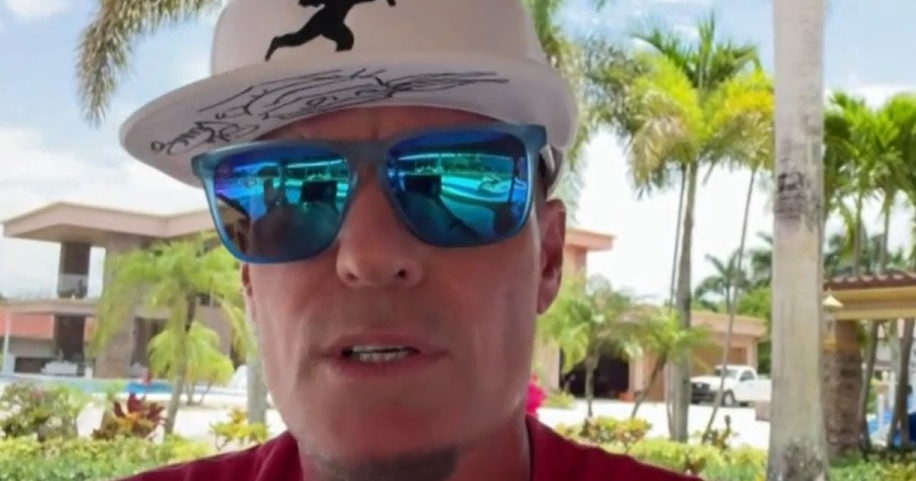
When several performers pulled out of the Freedom 250 concert series in Washington, D.C., Vanilla Ice took the opposite route: he doubled down. In comments that instantly sharpened the controversy, he said he would “play for anybody,” even invoking Vladimir Putin and Iran as examples. The remark was clearly meant to frame himself as an entertainer above politics, but it also exposed the uncomfortable logic of pure professional detachment.
What might have passed as a throwaway celebrity soundbite instead became the defining line of the story. Once an artist says the audience, the sponsor, and the political context do not really matter, the public is left to decide whether that sounds admirably neutral or alarmingly indifferent.
Quick Links
- Why the Freedom 250 lineup became controversial
- Vanilla Ice’s “anybody is fine” position
- Can entertainment really be separate from politics?
- Why the backlash was predictable
- What this says about celebrity and accountability
Why the Freedom 250 Lineup Became Controversial
The dispute was never only about one performer. It began when multiple artists backed out after the event’s political associations came under closer scrutiny. Organisers described Freedom 250 as a patriotic and nonpartisan celebration tied to the upcoming 250th anniversary of American independence, while critics pointed to its links to the Trump-era commemorative project and questioned whether participants had been fully informed.
That tension matters because public events do not exist in a vacuum. A concert staged on such a symbolic national platform is never just about amplifiers, ticketing, and stage lights. It is also about endorsement, perception, and the meaning attached to participation.
Vanilla Ice’s “Anybody Is Fine” Position
Vanilla Ice, whose real name is Robert Van Winkle, responded with unusual bluntness. His argument was simple: he is an entertainer, not a political philosopher, and he does not believe performers should overthink who books them. In his own framing, a show is a show, fans are fans, and the rest is noise.
That posture has a certain stripped-down consistency. It rejects ideological filtering and treats performance as a service industry. But once he extended that principle to figures and regimes widely associated with repression, the statement stopped sounding apolitical and started sounding like a declaration that ethics are secondary to access, fees, and visibility.
Can Entertainment Ever Be Separate from Politics?
The central claim behind Vanilla Ice’s defense is familiar: art and politics should remain separate. In theory, that sounds liberating. Artists should perform, audiences should enjoy, and politics should stay outside the venue doors. In practice, however, the separation rarely holds. Venues, sponsors, organisers, audiences, and media framing all shape what a performance represents.
That is especially true when the event itself is wrapped in patriotic symbolism and political dispute. In that context, claiming neutrality does not remove politics from the stage; it simply changes the language used to justify stepping onto it.
Why the Backlash Was Predictable
Once other artists publicly withdrew, the debate inevitably shifted from scheduling to conscience. Anyone who remained on the bill would be read not only as a performer but as someone willing to ignore the concerns that caused others to leave. Vanilla Ice may see that as admirable independence. Critics see it as a calculated shrug.
The backlash was also intensified by tone. Saying one would perform for Democrats, Republicans, Putin, or Iran alike may have been intended as a proof of impartiality, but it landed more like a demonstration of moral elasticity. Public audiences tend to tolerate ambiguity far more than they tolerate indifference stated out loud.
What This Says About Celebrity and Accountability
The episode reveals something larger than one aging pop figure’s media quote. It highlights the modern expectation that celebrities must answer not only for what they create but also for the contexts in which they appear. Whether that expectation is fair can be debated, but it is now built into public life.
Vanilla Ice’s comments therefore became a kind of accidental manifesto: the entertainer as contractor, detached from ideology, available to whoever is willing to book the show. Some people will hear that as refreshingly honest. Others will hear it as proof that celebrity culture often confuses neutrality with the absence of responsibility.
In the end, the controversy is not really about whether an artist can perform at a politically charged event. Of course they can. The real question is what they reveal about themselves when they insist that the identity of the host, the symbolism of the occasion, and the ethical implications of participation do not matter. That is where the story stops being about nostalgia rap and starts becoming a small case study in public accountability.
Original media source via /r/MusicNews · Reddit source
Copyright Notice: The image and referenced Reddit content remain the property of their respective creators and rights holders. They are used here solely for commentary, discussion, and informational purposes. Please visit the original source links for attribution and additional information.
© 2026 ways4eu.wordpress.com – H.J. Sablotny. All rights reserved. The text content of this article is the intellectual property of H.J. Sablotny and may not be reproduced, distributed, or republished without permission. Images remain the property of their respective copyright holders and are used for illustrative and commentary purposes only.