Ways4eu WordPress.com Blog
SPA View of ways4eu.wordpress.com
Tc 1, Buckyballs, and the Upside-Down Question Mark in a Planetary Nebula
By JohnTheWordWhirlwind
on Fri Jun 05 2026
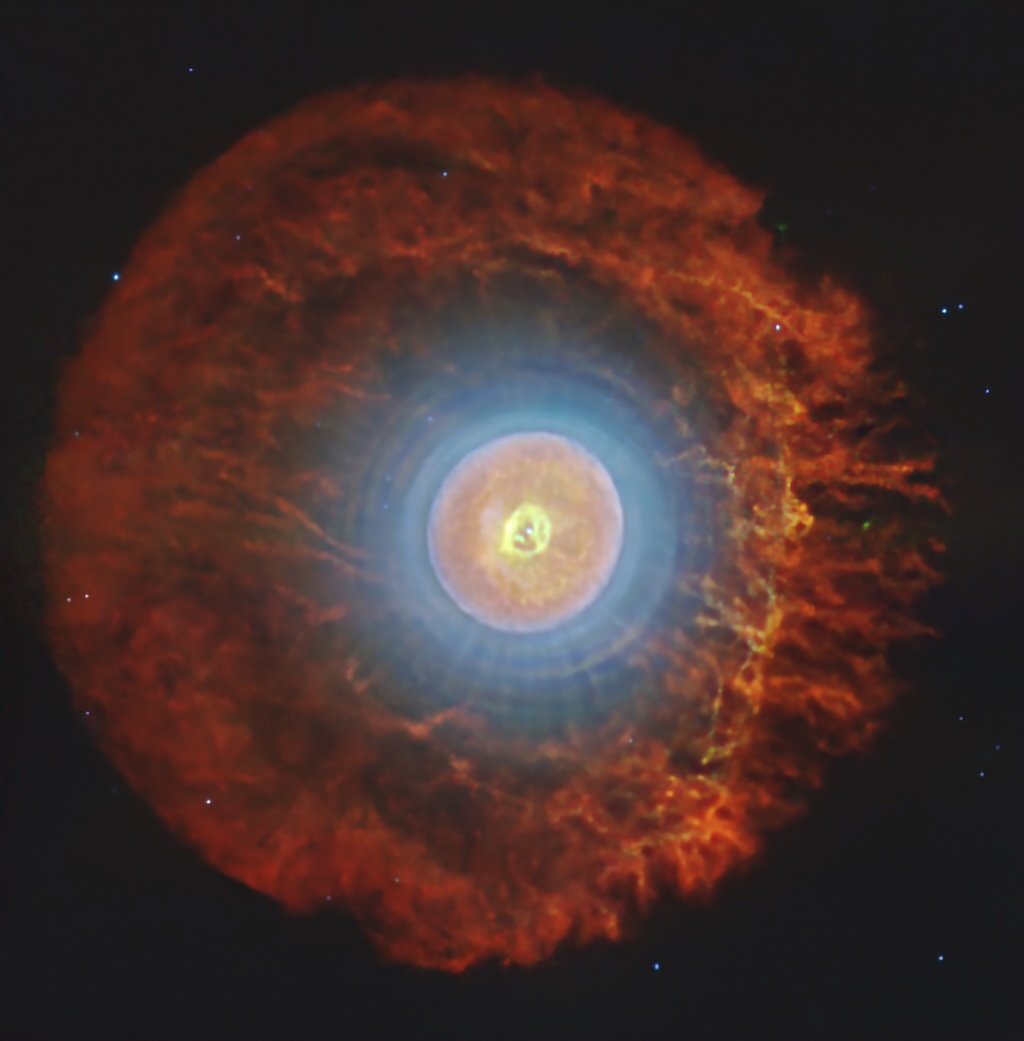
Tc 1 is the kind of object that rewards a second look. What first appears to be a beautiful planetary nebula turns into a remarkably precise chemical and structural puzzle once the James Webb Space Telescope starts resolving where material actually sits. In this case, the headline is not just beauty but the presence of Buckminsterfullerene, or C60, the famous carbon molecule often nicknamed the buckyball.
Quick Links:Original NASA APOD source | Tc 1 | Buckminsterfullerene | Planetary nebula astrochemistry
Why Tc 1 Matters
Tc 1 became especially notable when astronomers identified buckyballs there, making it one of the most memorable examples of complex carbon chemistry in space. These molecules, shaped like tiny soccer-ball carbon cages, are chemically stable enough to survive in environments shaped by radiation, winds, and cooling gas. That already makes Tc 1 an important meeting point between stellar evolution and astrochemistry.
The Thin Shell of Carbon
What makes the newer observations especially compelling is that the C60 material does not appear randomly distributed. Instead, it seems to occupy a thin shell around the central star. That spatial arrangement matters because it helps astronomers think more carefully about where carbon molecules form, how long they survive, and how ultraviolet radiation, gas density, and temperature gradients shape a nebula from the inside out. In other words, Tc 1 is not just photogenic; it is geometrically informative.
The Curious Question Mark
Another reason the nebula stands out is the delicate structure near the center that resembles an upside-down question mark. Whether that shape reflects a real flow pattern, an asymmetry in how the star expelled its outer layers, or a line-of-sight effect, it gives the image a rare interpretive tension. It reminds us that even with high-resolution data, nebular structure is still something scientists must reconstruct from light, chemistry, and geometry rather than simply read off at a glance.
A Strong Case for Cosmic Carbon
Tc 1 also speaks to a broader scientific fascination with how carbon behaves beyond Earth. Molecules like C60 connect laboratory chemistry, interstellar dust studies, and the fate of matter around dying stars. That makes this nebula more than a decorative object in the sky. It becomes a case study in how the universe builds stable complexity under extreme conditions, and why carbon keeps reappearing as one of the most versatile ingredients in cosmic chemistry.
Copyright Notice: The image and referenced content remain the property of their respective creators and rights holders. They are used here solely for commentary, discussion, and informational purposes. Please visit the original source links for attribution and additional information.
© 2026 ways4eu.wordpress.com H.J.Sablotny — All rights reserved. The text content of this post is the intellectual property of H.J.Sablotny. Images are subject to their respective copyright holders and are used for illustration purposes only.