Ways4eu WordPress.com Blog
SPA View of ways4eu.wordpress.com
The Oregon State Capitol: Marble, Monuments, and the Occasional Legislative Oomph
By iftttauthorways4eu
on Sat Jun 06 2026
Quick Links
- An Oregon landmark in Salem
- How the current capitol took shape
- Art Deco civic design
- Grounds, symbols, and state identity
- Why the capitol still matters
An Oregon Landmark in Salem
If you’ve ever strolled through Salem with a peppermint suspect in mind—by which I mean a very strong sense that history likes to strut in marble—you’ve likely met the Oregon State Capitol. This is the building where the state’s lawmakers convene, the governor’s office paces, and a certain sense of architectural swagger keeps the pigeons honest.
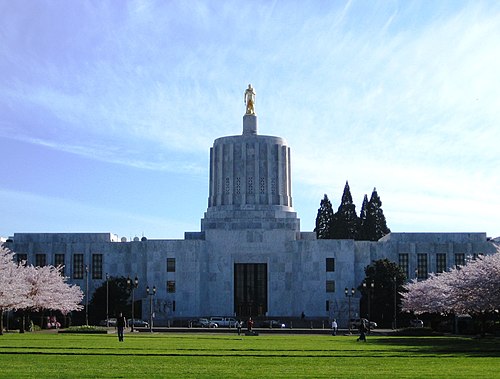
First, the basics with a wink: the Oregon State Capitol sits in the state capital, Salem, and is the proud home to the legislature, the governor’s staff, and a crew of officials who have probably learned the art of balancing budgets with the finesse of a tightrope walker in a windstorm. Construction spanned from 1936 to 1938, with a spritz of expansion in 1977 that doubled the building’s floor space. The current structure is the third in Salem to house Oregon’s government, each earlier one meeting its fiery demise in the kind of dramatic blaze that makes for great folklore and even better safety drills.
How the Current Capitol Took Shape
Design connoisseurs will note the collaboration behind the Capitol’s look. New York architects Trowbridge & Livingston—assisted by Francis Keally—dreamed up an Art Deco stripped classical design that says, “We mean business, but we do so with tasteful geometry.” The result is a building that wears its dignity like a well-tailored suit, with the kind of clean lines that make you forget you might be lining up to ask for a budget extension.
Funding and scale came with practical seriousness: the Public Works Administration helped finance construction, a reminder that many great civic projects in that era were a partnership between public spirit and public funds. The central portion cost about $2.5 million at the time—a figure that would probably startle even the most generous state budget forecaster today, but it’s the kind of number that sounds almost quaint when you consider what gets built on a shoestring and a promise.
Art Deco Civic Design
But let’s talk about the parts that make this place feel alive. The wings, added in 1977, doubled the floor space and gave the Capitol a more expansive breeziness—like the building took a deep breath and decided it needed room to stretch its marble ambitions. And marble there is, in abundance: the interior and exterior are draped in it, glinting with enough polish to make a marble enthusiast weep into a very dignified nap.
Grounds, Symbols, and State Identity
If you’re the kind of person who adores a good plaque and a well-placed statue, you’ll be delighted by the grounds. The grounds contain artwork, fountains, and flora that nod to Oregon’s natural character. The state tree—the Douglas fir—stands tall in symbolic fashion, while the state flower, the Oregon grape, adds a splash of botanical pride that’s more subtle than a mascot but just as endearing. It’s the sort of greenery that says, “We’re serious about governance and also really committed to not tripping in the rose bushes during a photo op.”
The Oregon State Capitol earned a spot on the National Register of Historic Places on June 29, 1988, a nod from history that says, “Yes, this is where the public conversation happens, and yes, the marble probably has opinions about budget amendments.” It’s a recognition that feels earned not by pageantry alone but by the building’s endurance and its role as a stage for civic life.
Why the Capitol Still Matters
If you’re planning a visit, here are a few light-hearted tips to keep the experience delightfully substantive:
– Do a self-guided tour of the central rotunda. The geometry alone is a scavenger hunt for anyone who appreciates architectural symmetry.
– Peek at the wings without sprinting—there’s plenty of space for you, your curiosity, and a discreet snack break.
– Stop by the grounds to appreciate the Douglas fir and Oregon grape in their natural sartorial splendor. It’s the state doing a quick fashion show in living sculpture.
In the end, the Oregon State Capitol isn’t just a building; it’s a well-balanced stage where history, art, and governance share the same air. It’s where committees convene, where history committees convene—quite literally—and where marble, memory, and metropolitan ambition walk side by side, sometimes with a brisk Oregon breeze giving them a nudge.
So the next time you’re in Salem, give the Capitol a nod, perhaps a hello to the grand stairs, and take a moment to appreciate the careful choreography of stone, space, and statecraft. It’s not just a place to legislate; it’s a place to feel the weight of a community’s past, the pulse of its present, and, if you listen closely, a few good-natured jokes about budgets that always seem to need a little extra polish.
Wikipedia source · Wikipedia article of the day
Copyright Notice: The image and referenced Reddit content remain the property of their respective creators and rights holders. They are used here solely for commentary, discussion, and informational purposes. Please visit the original source links for attribution and additional information.
© 2026 ways4eu.wordpress.com – H.J. Sablotny. All rights reserved. The text content of this article is the intellectual property of H.J. Sablotny and may not be reproduced, distributed, or republished without permission. Images remain the property of their respective copyright holders and are used for illustrative and commentary purposes only.