Ways4eu WordPress.com Blog
SPA View of ways4eu.wordpress.com
The Siege of Hennebont: Joanna of Montfort, Breton War, and a Stubborn Town Under Pressure
By iftttauthorways4eu
on Wed Jun 24 2026
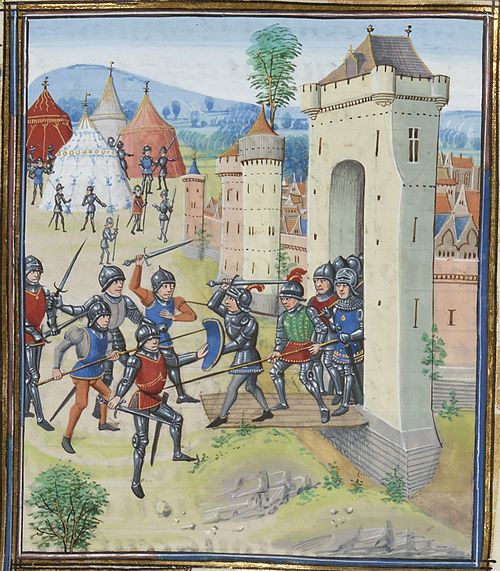
Wikipedia article of the day is Siege of Hennebont. Check it out: Article-Link
Quick Links:Original article | Siege of Hennebont | Breton Civil War | Joanna of Montfort
Summary: The siege of Hennebont took place between late May and late June 1342 when the forces of Charles of Blois conducted an unsuccessful siege of the fortified port of Hennebont, commanded by Joanna of Montfort. The conflict was a part of the Breton Civil War, complicated by the pre-existing Hundred Years’ War between France and England. Philip VI of France provided Charles, his nephew, with an army; this overran eastern Brittany and moved on Hennebont. On arrival part of the army attacked some of the town’s defenders who were formed up outside its gate, but the French were pushed back in a disorderly retreat. The Montfortists pursued, inflicting many casualties and burning the French camp. Two days later, the French launched a series of better-planned assaults, but all were repulsed. The main French force moved on, leaving a detachment to attempt to starve the town into surrender. In late June, after a small English force had reinforced the town by sea, this too left.
The Siege That Forgot Its Schedule
If there’s one thing medieval warfare teaches you, it’s that no siege goes on a neat calendar. It’s more like a dramatic social media event that forgot to post updates. Case in point: the Siege of Hennebont, a late spring saga in which the town of Hennebont politely refused to surrender to Charles of Blois and his army, despite what one might call interested encouragement from the powers that be in France and Brittany.
Setting the scene, as if you needed a reminder: Brittany wasn’t just a scenic corner of the map; it was a hot gossip sheet wrapped in chain mail. The Breton Civil War raged on, tangled up with the even louder Hundred Years’ War, which involved more kings and nephews than a royal family reunion gone wrong. On the one side stood Charles of Blois, nephew to King Philip VI of France, itching to add siege expert to his resume. On the other stood Joanna of Montfort, ruling Hennebont with the calm decisiveness of a person who has learned to sleep with a helmet on a chair beside the bed.
Chaos at the Gates
Enter the siege, stage left: late May to late June 1342. The French army, fresh from the royal give-it-a-go spirit, rolled into eastern Brittany and then marched on Hennebont. The plan, presumably, was noble, straightforward, and utterly unsurprising for a medieval military operation: surround the place, force a surrender, and avert, or at least delay, the awkward business of actual fighting. But as any student of history can tell you, plans and reality frequently take separate carriages to the same destination.
The first act opened with a splash of chaos. Part of the French force tried a direct assault on defenders formed up outside the gate. It didn’t go to plan: the defenders held, the French were pushed back, and the retreat was more disorderly than a sock drawer on laundry day. The Montfortist side gave chase, and what followed was a spectacularly effective pursuit with a side of burning tents because nothing says we’re serious like torch-wearing troops accidentally setting their own camp on fire while fleeing.
Assaults, Detachments, and Stubborn Defenders
Two days later, the stage was reset for another round of planned mayhem. The French launched a series of better-organized assaults. Translation: they actually brought a coherent plan to the battlefield, which is sometimes the main difference between a siege and a group project with unclear roles. Yet every attempt was repulsed. The defenders, it seems, were not in the mood for a breakout party and kept the gate firmly closed, as if their only password was nope, try again tomorrow.
The main French force, clearly having a day job in bureaucratic strategy, moved on, leaving behind a detachment tasked with starving the town into submission. Starvation sieges are grim tournament-style affairs: siege engines become calendars, and rations get measured in bravado and stale bread. It’s not exactly a healthy diet plan, but it does have the virtue of being stubbornly effective when you’re staring down an obstinate fortress and a town that clearly isn’t surrendering to social pressure.
English Relief and the Long Exit
Then came reinforcements of an entirely different flavor. A small English force slipped in by sea to bolster the town’s resilience. If you’re counting plot twists, that’s a neat one: English help appears just as the French are discovering that siege warfare is less clear victory and more maintain the morale of the remaining household vessels. The English arrival briefly tips the balance back toward a stalemate that nobody really wanted to admit was a stalemate, because stalemates aren’t dramatic enough for the history books.
By late June, the English ships faded out, like a chorus leaving the stage at curtain call, and the French forces, having failed to compress the town into submission, also released their grip on the siege’s momentum. The result? A stubborn Hennebont that endured a siege rather than embrace a surrender, and a campaign that reminded everyone involved that Brittany has a talent for prolonging drama with a brass band accompaniment of marching and marching.
Why Hennebont Still Matters
What did this episode actually achieve? It showcased the resilience of Joanna of Montfort, who held a fortified port with a combination of grit, leadership, and whatever tricks a commander can muster when the gates are your living room and the enemy is on the other side trying to borrow your table. It highlighted the messy complexity of the Breton Civil War, which was running in parallel with the larger, louder Hundred Years’ War – two conflicts, two calendars, and a lot of oxymorons about swift victories.
If you’re looking for a moral to pull from the Siege of Hennebont, it’s not a tidy one. It’s less how to win a siege in a single afternoon and more how to endure a siege with enough stubbornness to outlast your opponents’ supply lines and your own patience. It’s a reminder that medieval warfare wasn’t always cinematic lightning; sometimes it was a long, stubborn standoff with a few heroic moments, a few chaotic retreats, and enough fire to toast not just tents but the reputations of those who overcomplicated the plan in the first place.
And so the siege settles into history as a story of perseverance, a dash of international intrigue, and the occasional glow of torched campfires that burned a little longer than intended. If you were charting the careers of kings and their nephews in the 14th century, Hennebont would be that memorable footnote you’d tell friends with a wink: sometimes the best-laid sieges are the ones that end with neither surrender nor spectacular victory, but with a stubborn town, a stubborn commander, and a stubborn timetable that never quite kept up with reality.
Copyright Notice: The image and referenced content remain the property of their respective creators and rights holders. They are used here solely for commentary, discussion, and informational purposes. Please visit the original source links for attribution and additional information.
© 2026 ways4eu.wordpress.com H.J.Sablotny – All rights reserved. The text content of this post is the intellectual property of H.J.Sablotny. Images are subject to their respective copyright holders and are used for illustration purposes only.