Ways4eu WordPress.com Blog
SPA View of ways4eu.wordpress.com
When the Skies Dyed Velvet: Venus, Jupiter, and the Great Evening Conjunction
By Kinda Cool
on Thu Jun 25 2026
Quick Links:NASA image | Venus | Jupiter | Planetary conjunction | Maharashtra
When the Skies Dyed Velvet: Venus, Jupiter, and the Great Evening Conjunction
A Pair Worth Looking Up For
If you’ve glanced upward lately between the last glow of sunset and the first blink of stars, you’ve probably caught a pair that looks suspiciously coordinated: Venus and Jupiter, dazzling in the western sky as the evening star and the giant of the heavens. The recent close conjunction of these two brightest planets has been impossible to miss, a celestial wink that turned ordinary dusks into a grand, cosmic finale.
How the Twilight Colors Changed
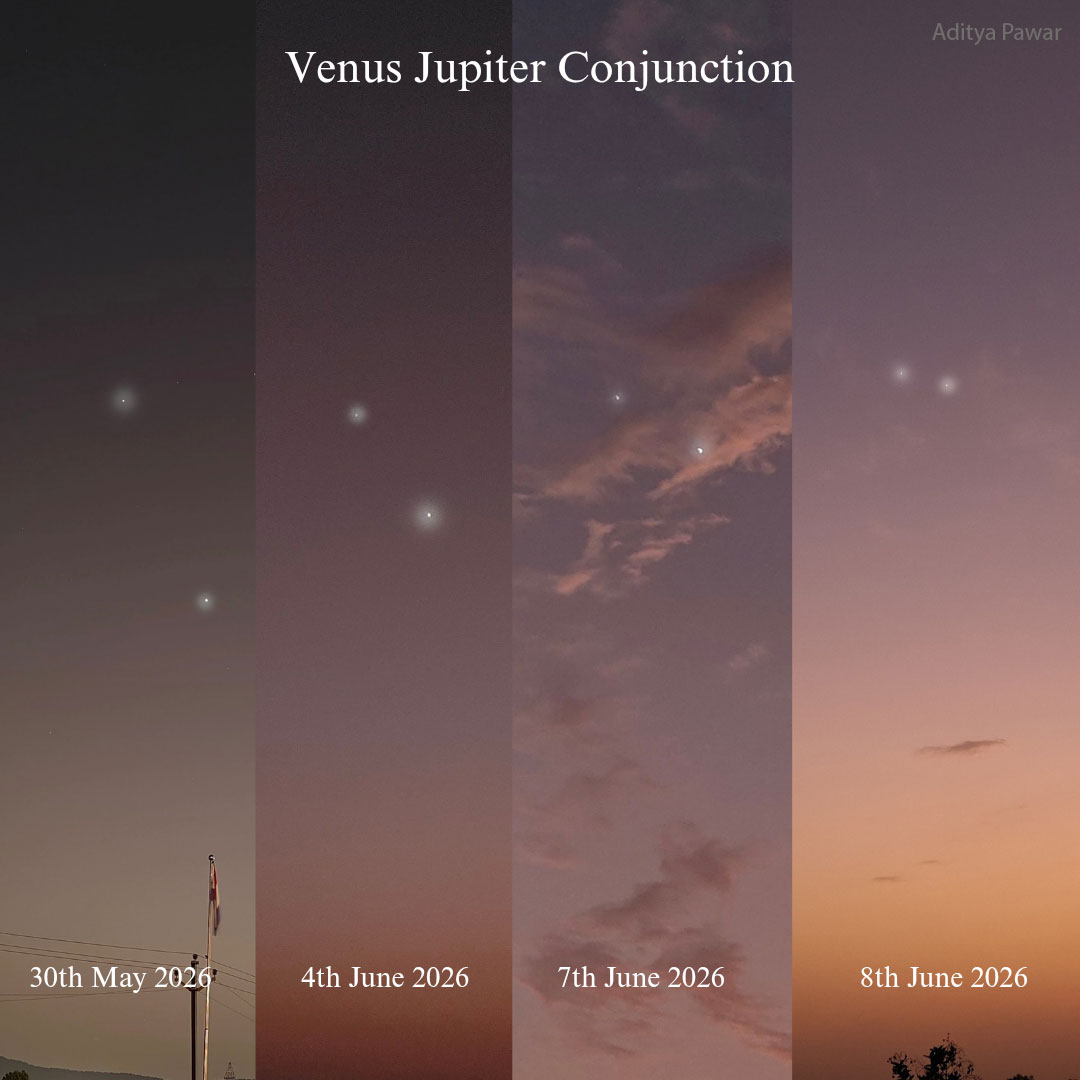
From May 30 to June 8, the show unfolded like a daily comic strip, each panel a fresh snapshot of the same scene, yet with a new hue. These particular panels—captured southward from Maharashtra, India—arranged themselves left to right, a procession of colors and exposures that tell a quiet, planet-powered story of dusk. Near the western horizon, the sky’s palette shifted with the sun’s last sigh, and the photographs reflected those changing conditions—an evolving blend of twilight blues, warm ambers, and the subtle violet that only appears when daylight clings stubbornly to the air.
June 9 and the Moment of Closest Approach
Then came the moment of true closeness: June 9. The two celestial heavyweights aligned in the heavens as if in a polite celestial handshake, appearing to be only about three times the width of a full Moon apart. It’s a neat trick of perspective, because while they looked that close to our eyes, the planets were, in reality, separated by well over 600 million kilometers in their orbits around the Sun. Space, as always, is generous with its scale—and with its drama.
What Happens Next in the Western Sky
What happens next in this ongoing drama is as predictable as it is poetic. Jupiter, the great gas giant, is gradually sinking back toward the sunset glare, easing into the golden farewell that marks the end of a night’s close encounter. Venus, never one to miss a spotlight, will continue to move farther from the Sun in the western sky. She’s not just content to be seen; she’s determined to excel in her role as the brilliant evening star—shining with a clarity that makes even the most casual stargazer pause, sink a breath, and smile at the cosmos.
How to Catch the Tail End of the Show
If you missed the brightest show in town, there’s still time to catch the tail end of this celestial duet. Look to the southwestern horizon after sunset for Venus’s steady radiance, with Jupiter hanging back in the shimmering afterglow. The pair won’t look identical forever, but their dance offers a daily reminder that the heavens have a sense of timing, humor, and grand scale—though sometimes the punchline is simply the sight of two worlds sharing a moment in the fading light.
A Dusk Reminder from the Cosmos
In the coming days, the sky will do what it does best: remind us that the universe is both immense and intimate. We’re treated to a display that feels almost choreographed, a reminder that even amid our ordinary evenings, the cosmos writes its own small, brilliant stories—stories that invite us to look up, to wonder, and to whisper, “Yes, that’s exactly as wondrous as it seems.” After all, not every night offers a meeting of giants, a soft glow on the western edge of the world, and a reminder that we’re part of something much larger—and beautifully luminous.
Image via NASA https://ift.tt/jyraPLl
Copyright Notice: The image and referenced content remain the property of their respective creators and rights holders. They are used here solely for commentary, discussion, and informational purposes. Please visit the original source links for attribution and additional information.
© 2026 ways4eu.wordpress.com – Herbert Johann Sablotny. All rights reserved. The text content of this article is the intellectual property of Herbert Johann Sablotny and may not be reproduced, distributed, or republished without permission. Images remain the property of their respective copyright holders and are used for illustrative and commentary purposes only.