Ways4eu WordPress.com Blog
SPA View of ways4eu.wordpress.com
Swarm Quest: Hubble Meets the Galaxy-Gang in MACS0329-0211
By Kinda Cool
on Fri Jun 26 2026
Quick Links:NASA image | Hubble Space Telescope | MACS0329-0211 | Galaxy cluster | Gravitational lensing
Swarm Quest: Hubble Meets the Galaxy-Gang in MACS0329-0211
A Dense Crowd in Deep Space
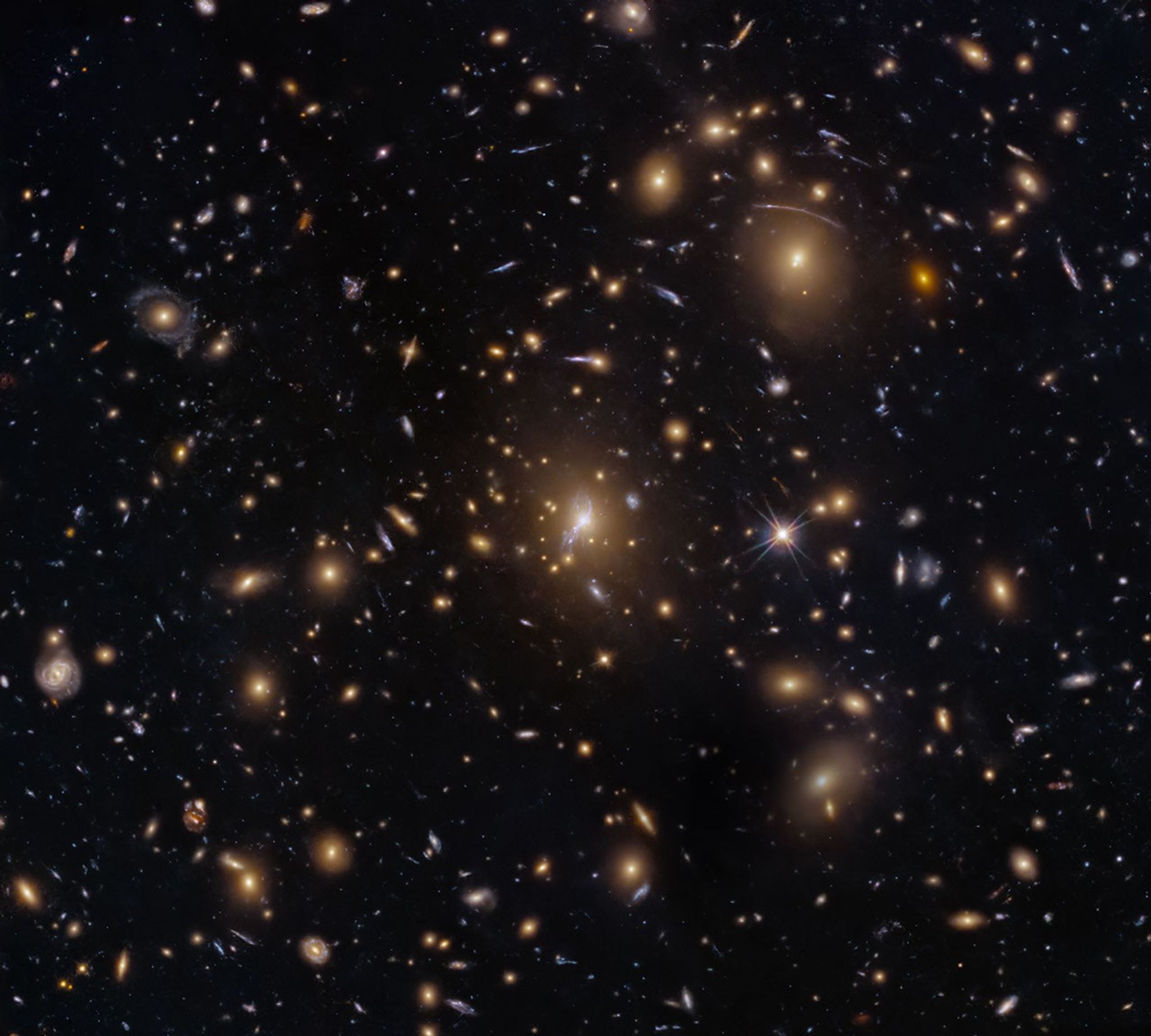
If you’ve ever wondered what happens when you tilt a telescope toward the cosmos and tell it to “show me the party,” the Hubble Space Telescope just delivered the RSVP. This NASA image captures the galaxy clusterMACS0329-0211, and boy, does it bring the house (and the universal neighborhood) to life.
Why Clusters Matter
First impressions: MACS0329-0211 looks like a cosmic crowd scene. Thousands of galaxies murmur in the frame, each one a brilliant, star-studded character with its own backstory, its own gravity-well soap opera, and probably three different opinions about the color of the universe. Hubble isn’t just snapping photos here; it’s eavesdropping on a billion-year-long gossip session conducted by light that has traveled across the furthest corners of space-time.
The Lens Effect in Action
What you’re seeing is a cluster, which is basically a traffic jam of galaxies held together by gravity stronger than any internet comment section. These galaxies are dancing a slow waltz around a common center of mass, tugging on each other with gravity so persistent that even the most stubborn spiral arms can’t decide whether to stay in one lane or drift into another. And in the foreground and background, lensed galaxies get a cameo appearance as if they’re paparazzi trying to photograph the cluster from multiple angles—courtesy of spacetime doing its best impression of a funhouse mirror.
Reading Color in the Data
Now, the science-y stuff, but make it snackable: clusters like MACS0329-0211 aren’t just pretty; they’re laboratories. They let scientists study how matter, especially dark matter, clumps together and shapes the light that travels toward us. Gravitational lensing—where gravity bends light like a cosmic funhouse mirror—makes some galaxies look stretched and smeared. It’s not a glitch; it’s a feature that helps researchers map the unseen scaffolding of the universe.
A City of Galaxies
If you zoom in (metaphorically, because the real zoom is in the data, not your eyes), you’ll notice a blend of colors that tell a story about the galaxies’ ages and compositions. The bluer knots usually indicate younger, hotter stars, while the redder glows whisper about older stellar populations and plenty of cosmic time behind them. It’s like reading a family album where every picture has subtitles written in starlight.
Quick Takeaways from MACS0329-0211
And yes, the image is a reminder that the cosmos isn’t a serene white cloth of sameness. It’s a bustling, diverse city of galaxies—some curling into elegant spirals, others marching along as elliptical commuters, all weaving through the dark matter boulevards that hold the whole district together.
Why This Hubble View Stays with You
For the curious, here’s a quick takeaway you can wow your friends with at the next stargazing meetup:
– MACS0329-0211 is a galaxy cluster a long way away, whose gravity acts like a cosmic magnet.
– The Hubble image reveals a swarm of galaxies in and around the cluster, plus gravitational lensing effects that warp light into unusual shapes.
– This is not just a postcard from space; it’s data that helps scientists untangle the distribution of matter, including the mysterious dark matter, in the universe.
Beauty and Gravity Together
If you’re feeling inspired to visit the cosmos from your couch, this Hubble snapshot is a gentle reminder that the universe throws the most entertaining parties in the deepest, darkest corners. It’s a crowded dance floor out there, and MACS0329-0211 is playing host to a swarm you’d happily crash—if you could, which, thankfully, you can do in spirit (and in a good science article).
Bottom line: Hubble’s view of MACS0329-0211 is a dazzling blend of beauty and physics, a reminder that the universe loves a good crowd scene as much as we do—and that sometimes the best way to understand the cosmos is to watch how galaxies, like actors, waltz together under the grand spotlight of gravity.
Image via NASA https://ift.tt/2FqTZvd
Image via NASA https://ift.tt/2FqTZvd
Copyright Notice: The image and referenced content remain the property of their respective creators and rights holders. They are used here solely for commentary, discussion, and informational purposes. Please visit the original source links for attribution and additional information.
© 2026 ways4eu.wordpress.com – Herbert Johann Sablotny. All rights reserved. The text content of this article is the intellectual property of Herbert Johann Sablotny and may not be reproduced, distributed, or republished without permission. Images remain the property of their respective copyright holders and are used for illustrative and commentary purposes only.