Ways4eu WordPress.com Blog
SPA View of ways4eu.wordpress.com
Could the Little Mermaid Turn into Stardust Instead of Seafoam?
By Kinda Cool
on Fri Jul 03 2026
Quick Links:NASA image | Mermaid Nebula | G296.5+10.0 remnant | Pulsar basics | Nebula colors
Could the Little Mermaid Turn into Stardust Instead of Seafoam?
If Ariel ever traded dandelion wishes for cosmic dreams, she’d probably tell you to look up. Because in the night sky, a fairy tale unfolds not on a shore, but among the stars. The Mermaid Nebula, also known as the Betta Fish Nebula, is part of the G296.5+10.0 Supernova Remnant, and it reads like a page from a celestial fable. It’s a place where sea legends morph into stellar leftovers, where the drama of a life lived fast and bright leaves behind something that still glitters in the dark.
Blue Oxygen, Red Hydrogen, and a Stellar Finale
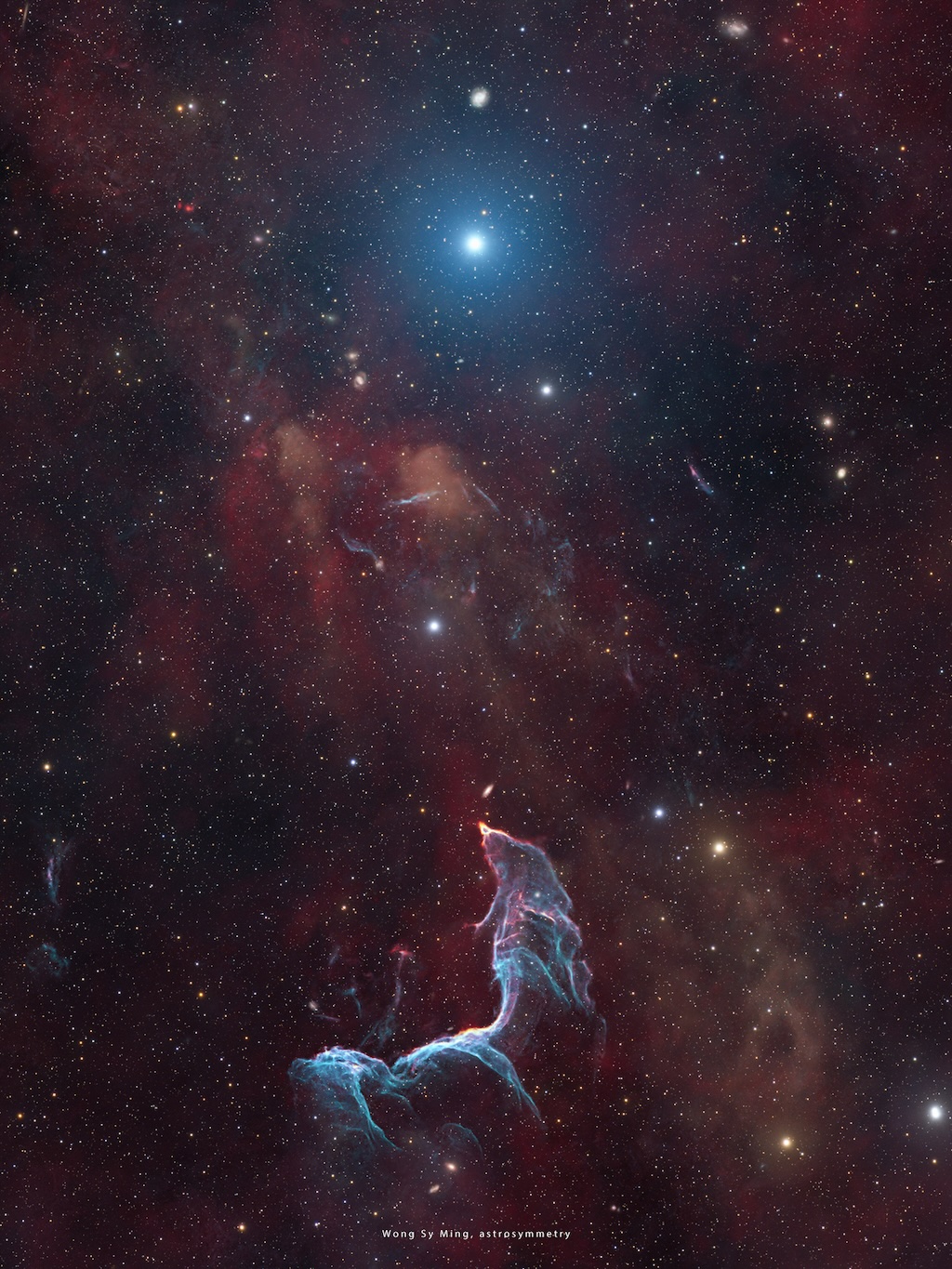
The image you’re gazing at isn’t a simple watercolor. The blue hues are the signature of doubly ionized oxygen (OIII) sparking in the nebula’s gas, while the deep red telltale glow comes from hydrogen gas sighing in the vacuum. It’s a chemical opera performed in colors that our eyes are not quite trained to name, but our curiosity recognizes instantly. The Mermaid Nebula is estimated to lie a few thousand light-years away and to be about 10,000 years old, a fresh postscript in an ancient story.
What caused this luminous tableau? A massive star ended its life in a spectacular supernova, scattering matter into the surrounding space and leaving behind what astronomers call a pulsar. Not your average neighborhood star, the pulsar is a peculiar, young neutron star that spins at about twice every second. It’s a stubborn beacon in X-rays, but thus far it hasn’t announced itself in the visible spectrum, so the pulsar itself isn’t directly visible in this image.
From Fairytale Sea to Cosmic Sea
If you’re looking for a modern myth to accompany this scene, think of the Little Mermaid trading her shoreline cradle for a cosmic sea. In this nebula, the “sea” isn’t water, but a swirling broth of ionized gas shimmering with the breath of a dying star. And the “stardust” she might become is already here, drifted through the remnant’s debris and light-years of time, ready to seed new worlds with the elements forged in those final, brilliant moments of stellar life. In other words: yes, the mermaid could turn into stardust, someone, somewhere, scattered in a sparkling galaxy far, far away.
Why This Image Lingers
The feature image is a window into a story that’s both ancient and forever new: gas clouds braided with light, the oxygen glow punctuated by hydrogen’s red whisper, and a youthful pulsar spinning on with a stubborn, stubborn rhythm. The bright stars that appear in the frame aren’t part of this nebula’s family tree; they’re foreground dancers, light-years from the remnant but sharing the same celestial stage. The pulsar’s presence is undeniable in high-energy X-ray eyes, but in optical light, it remains a shy, elusive character.
This nebula is a postcard from a universe that loves dramatic finales: a supernova explodes, the blast reshapes the surrounding gas, and what remains is a luminous necklace of color and a pulsar that continues to twist time on its own two-second waltz. It’s a reminder that in space, narratives aren’t tidy: they’re layered, blue oxygen, red hydrogen, and a silent, spinning remnant that challenges our sense of where a story begins and ends.
So, next time you glimpse the Mermaid Nebula, imagine that somewhere beyond the blue and red, a tiny star’s final act sprinkled stardust across the cosmos. The Little Mermaid might have traded a sea for stars, but the sea-and-star saga lives on, in the color of the light, in the memory of the explosion, and in the timeless poetry of a universe that never stops telling stories.
MediaLink via NASA
Copyright Notice: The image and referenced content remain the property of their respective creators and rights holders. They are used here solely for commentary, discussion, and informational purposes. Please visit the original source links for attribution and additional information.
© 2026 ways4eu.wordpress.com – H.J. Sablotny. All rights reserved. The text content of this article is the intellectual property of H.J. Sablotny and may not be reproduced, distributed, or republished without permission. Images remain the property of their respective copyright holders and are used for illustrative and commentary purposes only.