Ways4eu WordPress.com Blog
SPA View of ways4eu.wordpress.com
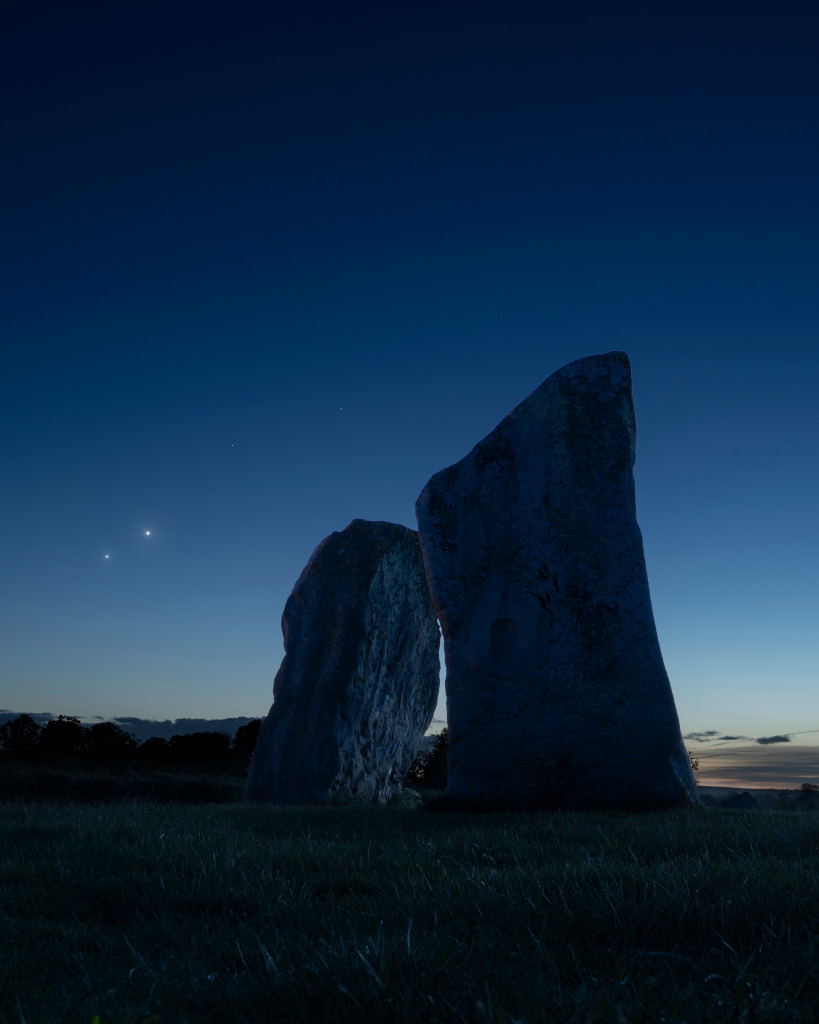
A Cosmic Kiss at Avebury: Venus, Jupiter, and a Neolithic Backdrop
By Kinda Cool
on Sat Jul 04 2026
Quick Links:NASA image | Venus-Jupiter conjunction | Avebury stone circle | Naked-eye conjunctions | Orbital timing
A Cosmic Kiss at Avebury: Venus, Jupiter, and a Neolithic Backdrop
If you look up after sunset this month, you won’t need fancy gear to witness one of the sky’s quiet, splendorous duets. Venus and Jupiter are staging a twilight cameo so accessible that even casual stargazers can catch the show without binoculars or a telescope. As the Sun dips below the horizon and the sky deepens into a velvet navy, these two celestial beacons emerge from the western edge of the twilight, slowly edging into view as night settles in.
When Two Bright Planets Share the Stage
June brought a particularly close embrace between the two brightest planets. On June 9, Venus and Jupiter stood less than 2 degrees apart in our sky, a cosmic kiss visible to the naked eye. It’s a reminder of how dynamic our solar system can be: the inner, brighter Venus orbits the Sun faster and slowly catches up to the outer giant, Jupiter, sliding past it along the ecliptic roughly every 13 months. But not every conjunction offers a front-row seat. Only about once every three years does the alignment occur far enough from the Sun that it remains easily visible in the glow of Earth’s twilight.
Avebury Beneath the Planets
That rare, near-sun-safe alignment found its natural stage at Avebury, United Kingdom. The date captured, the moment etched into memory, was more than just a planetary pass; it was a meeting set against a landscape that has stood since long before the ancients started recording the motions of the heavens. The two celestial beacons shone close in the sky, and adjacent to them, the scene below mirrored the wonder above: two large standing stones at a cove within a 4,000-year-old stone circle at Avebury.
Avebury isn’t merely the grand elder of England’s prehistoric sites; it’s a living, breathing testament to human curiosity and civilization’s early relationship with the sky. Larger than Stonehenge, the Avebury henge and stone circle complex draws visitors not just for its scale, but for its aura, the sense that, here, people once gathered to read the heavens, trade stories, and perhaps even lay out ritual maps to the seasons.
Why the Scene Feels Timeless
The juxtaposition of a modern planetary alignment with a site of such ancient significance offers a striking reminder: we’ve always looked up, and we’ve always wondered what’s out there beyond the edge of the horizon.
When you pair a naked-eye planetary conjunction with Avebury’s monumental stones, you’re witnessing a convergence of time scales, cosmic and human, colliding in one evening sky. The planets’ glow, a simple, accessible brightness, is cast against a landscape that has endured for millennia, inviting contemplation about how small we are in the grand arc of the cosmos, and how timeless our curiosity remains.
For those planning to chase the next celestial duet, here’s a quick, practical takeaway:
Look west after sunset. Venus will be the brighter, closer beacon, with Jupiter glimmering alongside it as the sky grows darker.
The best viewing occurs when the Sun is well below the horizon but the sky isn’t fully dark yet, giving you that window where both planets pop without glare.
No equipment? No problem. The spectacle is designed for naked-eye visibility, inviting a simple, restful moment of wonder.
If you find yourself near Avebury in the coming weeks, you can stand where ancients once stood and imagine their awe as they tracked the heavens, while knowing that, for a moment, the sky still offers a few simple, stunning expressions of order.
MediaLink via NASA
Copyright Notice: The image and referenced content remain the property of their respective creators and rights holders. They are used here solely for commentary, discussion, and informational purposes. Please visit the original source links for attribution and additional information.
© 2026 ways4eu.wordpress.com – H.J. Sablotny. All rights reserved. The text content of this article is the intellectual property of H.J. Sablotny and may not be reproduced, distributed, or republished without permission. Images remain the property of their respective copyright holders and are used for illustrative and commentary purposes only.