Ways4eu WordPress.com Blog
SPA View of ways4eu.wordpress.com
The Black Eye Galaxy: A Dusty Diva with a Wild Interior
By Kinda Cool
on Sat Jul 04 2026
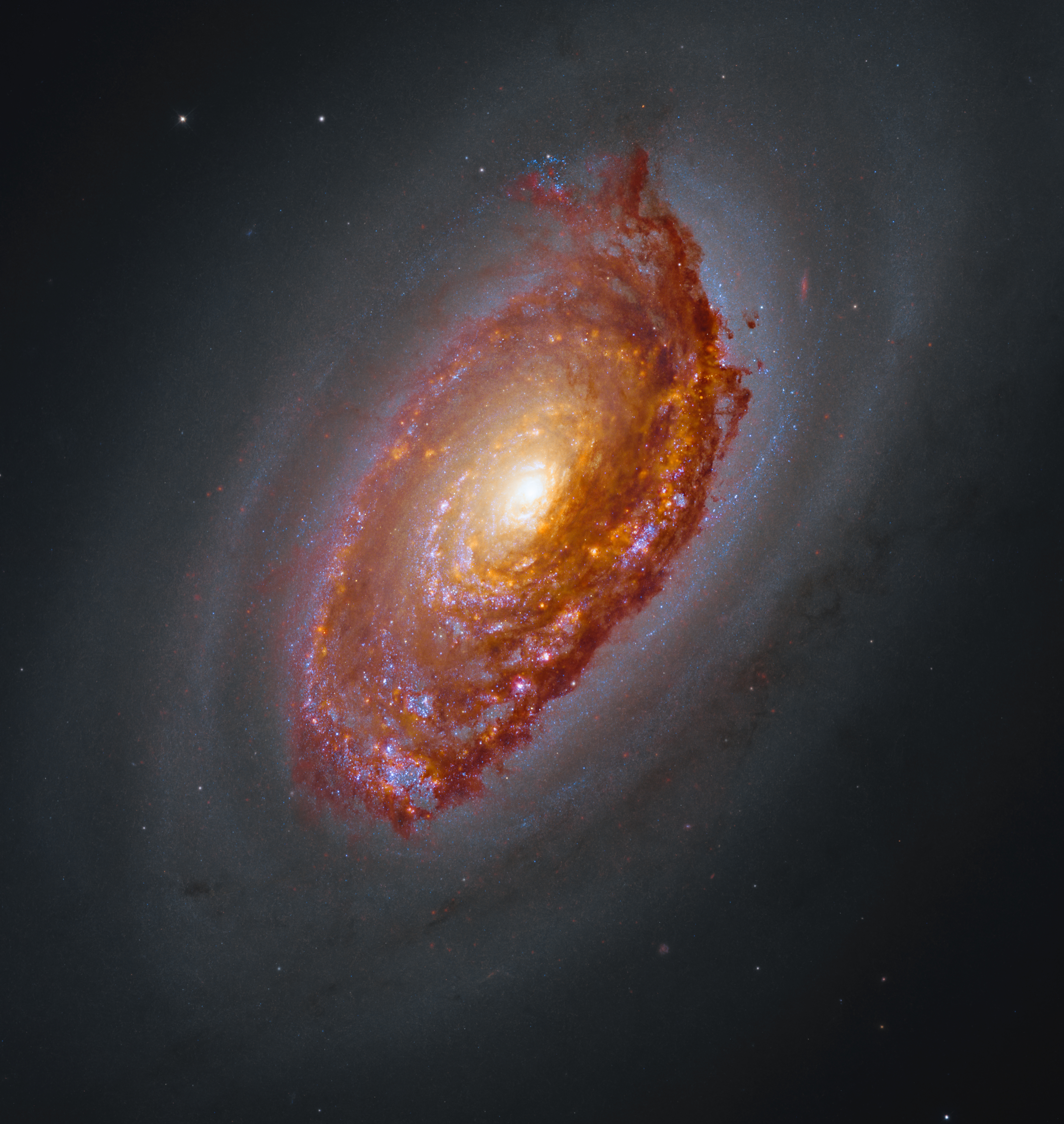
Quick Links:NASA image | Messier 64 | Dark dust lane | Spiral galaxy motion | Amateur observing
The Black Eye Galaxy: A Dusty Diva with a Wild Interior
If you’ve ever wondered what happens when a galaxy stumbles into a fashionable dust scarf, be prepared to meet Messier 64—the Black Eye Galaxy. Easily identified by the spectacular band of dark dust that partially obscures its bright core, this celestial diva has a personality as striking as its appearance. It looks like it’s winking at you from across the cosmos, or maybe it’s just overwhelmed by glamour and a dash of cosmic mischief.
A Dust Lane with Star Power
Let’s talk about what makes the Black Eye Galaxy so memorable. First up: that dust belt. Picture a mid-century camera strap slung diagonally across a luminous, star-studded chest. That’s the dark, velvety lane of dust that cuts across M64’s face, giving it that signature “eye” that instantly conjures both mystery and a dramatic close-up. The dust isn’t shy—it’s bold, it’s moody, and it loves to steal the spotlight from the core, which is the luminous, bright center you’ll see in most galaxy pictures. It’s like a stellar eye shadow smokey enough to make even the Andromeda blush.
But the real showstopper here isn’t just the fashion accessory; it’s the internal motion. The Black Eye Galaxy is characterized by its bizarre internal motion, a quirky internal turbulence that makes astronomers tilt their heads, squint, and mutter things like “What are you up to, little spiral?” In simpler terms, the gas inside the galaxy doesn’t march in neat, orderly steps. Instead, it swirls, collides, and sometimes even does a little cosmic tango. This isn’t chaos for chaos’s sake; it’s a sign of the galaxy having had a dramatic past—perhaps a close encounter with a neighbor, perhaps a gobbled some gas and dust, or perhaps it’s just showing off its internal choreography to anyone who will listen.
Why the Inner Motion Matters
If you’re imagining a calm, orderly spiral with perfect spiral arms, forget it. The Black Eye Galaxy wears its tumult like a badge of eccentricity. Its star formation can be as boisterous as a party guest who arrived two hours late but stayed for the after-dance. The dust band adds a sensory layer, blocking some starlight while letting others shine through in a way that makes the whole face look perpetually surprised. It’s as if the galaxy woke up, checked its reflection, and decided to keep one dramatic eyebrow raised for emphasis.
What does this mean for amateur stargazers and night-sky enthusiasts? It means you don’t need a planetarium-grade telescope to appreciate the vibe. With a decent telescope or even strong binoculars, you can catch that distinctive dark lane and the bright core doing its own dramatic duet. It’s not just about size or brightness; it’s about storytelling. The Black Eye Galaxy invites us to ponder its history, to imagine the interstellar conversations happening in those chaotic gas streams, and to marvel at how such a compact object can carry so much momentum and mystery.
A Favorite for Curious Stargazers
For would-be space romantics, the takeaway is simple: beauty isn’t only in symmetry. The Black Eye Galaxy proves that a little dust, a lot of motion, and a bold core can create a look that’s equal parts glamour and enigma. So next time you spot a photograph of M64, give it a wink back. The dust band will do the dramatic eyebrow raise; the core will flash a knowing smile; and the galaxy’s internal motion will keep you guessing what cosmic flirtation is brewing just beyond the bright center.
When Beauty Refuses Symmetry
In the vast theater of the universe, the Black Eye Galaxy isn’t just another actor with a pretty face. It’s a character with a narrative: a dusty silhouette, a core that glows with confidence, and internal motions that keep the plot twisting. It’s a reminder that in space, as in life, a striking band of darkness can highlight the brightest of hearts—and perhaps, the most entertaining of inner storms.
Image via NASA https://ift.tt/dpnMt6y
Copyright Notice: The image and referenced content remain the property of their respective creators and rights holders. They are used here solely for commentary, discussion, and informational purposes. Please visit the original source links for attribution and additional information.
© 2026 ways4eu.wordpress.com – H.J. Sablotny. All rights reserved. The text content of this article is the intellectual property of H.J. Sablotny and may not be reproduced, distributed, or republished without permission. Images remain the property of their respective copyright holders and are used for illustrative and commentary purposes only.