Ways4eu WordPress.com Blog
SPA View of ways4eu.wordpress.com
The Liberty Bell: A Loud, Crackling Tale of Liberty and Loud Unwanted Noise
By Kinda Cool
on Tue Jul 14 2026
Quick Links:Wikipedia article | Liberty Bell | Independence Hall | Philadelphia history | American independence symbols
The Liberty Bell: A Loud, Crackling Tale of Liberty and Loud Unwanted Noise
Wikipedia article of the day is Liberty Bell. Check it out: Article-Link
Picture this: a bell so famous that it gets asked about more often than your cousin’s loud karaoke night. The Liberty Bell is an iconic symbol of American independence, and it didn’t even need a cape or tights to become a legend. It sits in Philadelphia, a city that loves its history almost as much as its cheesesteaks, and it’s been ringing (or trying to ring) with style since 1752.
Where it all began, in a steeple, in a place called Independence Hall. The bell was commissioned by the Pennsylvania Provincial Assembly from a London firm named Lester and Pack. Yes, before there were emojis, there were bellmakers and brass notes that could make a crowd feel like they’d just won something huge. The inscription on the bell proclaims, “Proclaim LIBERTY Throughout all the Land unto all the Inhabitants Thereof.” It’s the sort of line that looks great on a souvenir mug and sounds even better when struck in a crowded room—though the crowd’s reaction is typically more “ooh” than “aha.”
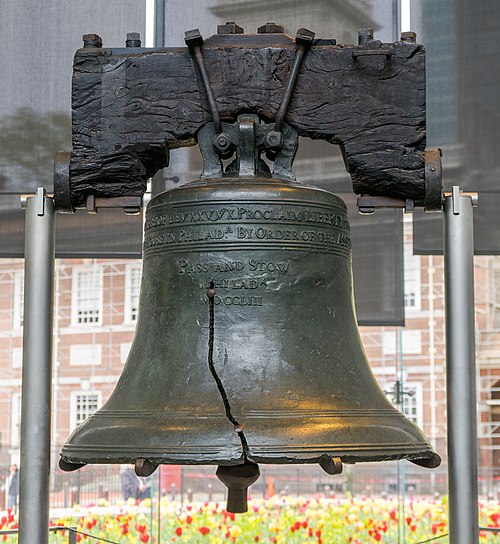
When the bell arrived in Philadelphia, it cracked during its first ring. Talk about an entrance that’s a little too dramatic. Local workmen John Pass and John Stow took on the tough gig of recasting the bell, and their surnames somehow ended up on the bell’s surface, like a stubborn reminder that even bells need a good mark of authorship. The recasting didn’t just fix the crack; it gave the bell a little extra personality. If the bell had a Twitter bio, it would probably read: “Cast with care, cracked with history, still ringing with purpose.”
Over the years, the Liberty Bell has become closely associated with the Declaration of Independence. It’s likely that the bell was among those in Philadelphia to ring on July 8, 1776, when the Declaration was first read to the public. Sadly, no contemporary account survives to confirm this moment with photographic evidence or a reliable selfie, but the legend persists like a catchy tune you can’t quite shake. The Bell’s fame rests not just on a calendar date but on the idea that liberty deserves to be sounded aloud—often with a little wobble and a lot of character.
The great crack that gives the Liberty Bell its unmistakable look appeared sometime in the first half of the 19th century. A popular tale claims it cracked while ringing after the death of Chief Justice John Marshall in 1835. Whether that exact origin story is true or not, the crack has become a defining feature, transforming a practical piece of metal into a symbol of resilience. It’s the kind of flaw that makes you love the object more, not less, because it reminds you that history is messy, loud, and deeply imperfect in the best possible way.
Today, you’ll find the bell across the street from the Liberty Bell Center, a short stroll from the action where visitors gather to tell stories, snap photos, and pretend they’re the first person to hear a bell that’s heard history louder than most speeches. The site sits near Independence Hall, a reminder that freedom isn’t a one-time event but a long-running project that requires a good dose of curiosity, patience, and occasional ear protection for the louder moments.
If you’re planning a visit, approach with a sense of humor and a decent map. The Liberty Bell isn’t a rollercoaster—it doesn’t zoom or loop-de-loop—but it does offer a powerful reminder: liberty is something that rings out when we choose to listen, learn, and stand up for what matters. And if you happen to catch a crackle or two in the air, take it as a friendly nudge from history: liberty is loud, imperfect, and proudly American, with a story that continues to echo through the streets of Philadelphia.
So here’s to the bell that started as a sculpture of sound and ended up being a chorus of resilience. It’s a reminder that sometimes the most enduring symbols aren’t flawless; they’re cracked in all the right places, and they still know how to make a crowd pause, smile, and think big thoughts about freedom.
Copyright Notice: The image and referenced source material remain the property of their respective creators and rights holders. They are used here solely for commentary, discussion, and informational purposes. Please visit the original source links for attribution and additional information.
© 2026 ways4eu.wordpress.com – Herbert Johann Sablotny. All rights reserved. The text content of this article is the intellectual property of Herbert Johann Sablotny. Images remain subject to their respective copyright holders and are used here for commentary, discussion, and informational purposes only.