Ways4eu WordPress.com Blog
SPA View of ways4eu.wordpress.com
The Cosmic Vacuum Cleaner You Didn’t Invite: A Light-Blocking Guide to Black Holes
By iftttauthorways4eu
on Mon Jul 20 2026
Quick Links:Wikipedia article | event horizon | Cygnus X-1 | Sagittarius A* | general relativity
The Cosmic Vacuum Cleaner You Didn’t Invite: A Light-Blocking Guide to Black Holes
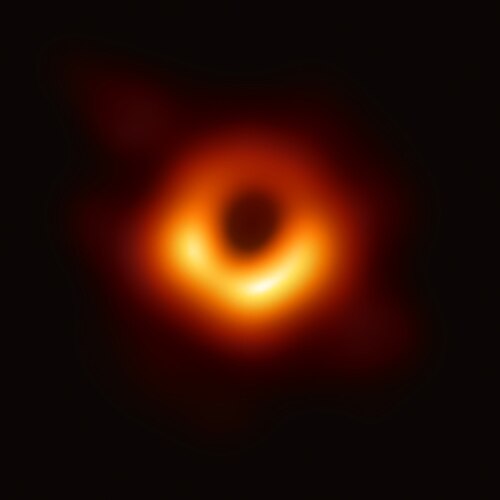
Wikipedia article of the day on July 17, 2026: Black hole. Article-Link. A black hole is an astronomical body so compact that even light cannot escape, with stellar collapse, event horizons, Cygnus X-1, and Sagittarius A* all part of the story.
Let’s talk about black holes—the universe’s most dedicated heavy breathers. These cosmic vacuums are so relentlessly compact that their gravity swallows anything that wanders too close, including light. If you’ve ever wondered where all the light went after Halloween, it’s probably auditioning for a role in a black hole’s dramatic exit scene.
First, a quick origin story that reads almost like a sci‑fi sitcom: massive stars reach the end of their life cycles, and—boom—their cores collapse under their own gravity. It’s the ultimate snack-time collapse, a star so full of mass and mystery that it forgets about everything else, including the necessity to be visible. The result? A gravitational field so intense that nothing, not even light, can escape once it crosses the event horizon—the point of no return. If you’re hoping for a dramatic finale, well, this is as dramatic as it gets: the exterior sees nothing special happen at the crossing, but inside? The party’s over and the lighting budget is gone.
In the realm of general relativity, this event horizon is the scenic boundary of the black hole. Stepping over it isn’t like stepping through a portal to a new universe; locally, you wouldn’t notice a thing. No alarms, no sirens, just the inexorable pull of gravity increasing as you approach the center of the hole. It’s a bit of cosmic misdirection: the “trap” is real, but there’s no local x‑ray or clock that suddenly goes haywire to tell you you’ve crossed a threshold. You’d just be very, very pulled in—like a cosmic tug-of-war with a suspect rope that never loosens.
The concept of objects with gravity so intense that light can’t escape isn’t exactly fresh news. Scientists toyed with the idea long before the term “black hole” existed, orbiting around the notion with equal parts curiosity and caution. The mathematical backbone wasn’t laid down overnight, either. In 1916, the first solution of general relativity that would characterize a black hole emerged, offering a blueprint for what a trapped region could look like in spacetime. It wasn’t an aquarium brochure; it was a doorway to understanding one of the universe’s most enigmatic finales.
Detecting these enigmatic bodies is a bit like detective work without fingerprints. You don’t see the black hole directly, because light can’t escape its grasp. Instead, astronomers infer their presence through the glow—and the chaos—around them. Matter orbiting too close—spiraling, heating up, emitting X-rays as it tries to decide whether to stay for the party or bolt for the cosmic exit—provides clues. The black hole doesn’t need to be shouting; its influence on nearby matter does all the talking.
The first widely accepted black hole is a name that still sounds like a sci‑fi character: Cygnus X-1. Identified in 1971, this stellar heavyweight quickly became the poster child for black holes, a beacon (in more ways than one) that helped astronomers recognize these objects in binary star systems. If Cygnus X‑1 had a dating profile, it would read: “Massive, compact, and slightly mysterious. Sets the standard for gravity with a side of X-ray emission.”
Since then, the catalog has grown—though not exactly in the way a bakery grows its dough. Astronomers have identified numerous stellar black hole candidates in binary systems, where a normal star and a black hole do a gravitational dance. And there’s Sagittarius A*, the supermassive heart of our Milky Way. This compact radio source sits at the center of the galaxy and is valued at roughly 4.3 million solar masses—big enough to make even the most confident star feel underdressed in its presence. It’s the galactic heavyweight champion, quietly choreographing orbits and giving planet hunters something awe-inspiring to contemplate over their morning coffee.
What does all this mean for us mere mortals with a daytime radio show about the heavens? Black holes are not nibbling at the fabric of space in a way that directly affects our daily lives (no plans for a black-hole traffic jam on the way to work). But their existence reshapes our understanding of gravity, time, and the fate of stars. They’re natural laboratories where physics happens at extremes we can only simulate on Earth with particle accelerators and careful math. They remind us that the universe loves a good plot twist: nothingness turned into a gravitational powerhouse that reshapes galaxies and, occasionally, our sense of scale.
If you’re writing fiction or just daydreaming about what lies beyond the event horizon, remember this: a black hole isn’t just a monster in the cosmos; it’s a reminder that nature writes its own rules, often with more flair than a blockbuster finale. And if you happen to glimpse a distant X-ray glow or notice stars orbiting in ways that don’t quite fit a simple explanation, you might be catching a hint of one of these cosmic vacuum cleaners doing what it does best—snapping up light, and leaving us with a humbling, awe-struck sense of the universe’s grand theater.
Copyright Notice: The image and referenced source material remain the property of their respective creators and rights holders. They are used here solely for commentary, discussion, and informational purposes. Please visit the original source links for attribution and additional information.
© 2026 ways4eu.wordpress.com – Herbert Johann Sablotny. All rights reserved. The text content of this article is the intellectual property of Herbert Johann Sablotny. Images remain subject to their respective copyright holders and are used here for commentary, discussion, and informational purposes only.