Ways4eu WordPress.com Blog
SPA View of ways4eu.wordpress.com
Venus Takes a Village Stage: A Moonlit Pas de Deux in the Western Sky
By Kinda Cool
on Wed Jul 22 2026
Quick Links
- A twilight duet in the west
- The British Columbia daylight occultation
- Why the telescope view felt theatrical
- Why Venus keeps drawing us back
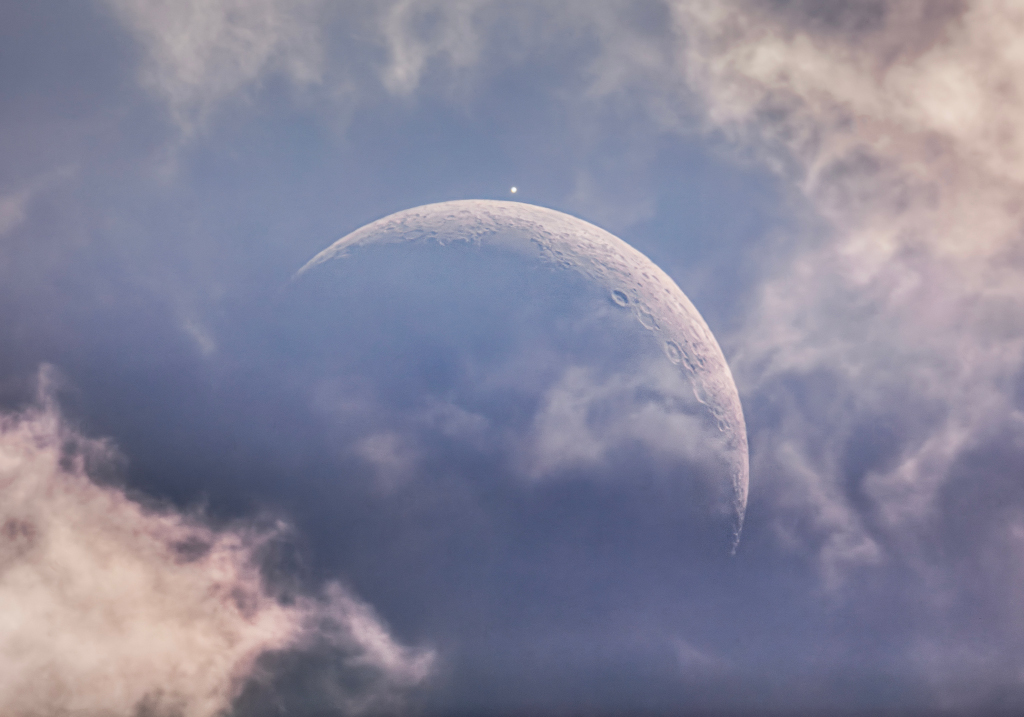
NASA’s Venus-and-Moon rendezvous on June 17, 2026 turned the western sky into a small theatrical event, with a young crescent Moon, bright Venus as evening star, and even a local occultation for lucky observers.
A twilight duet in the west
Venus has swaggered onto the celestial stage once more, transforming our western skies into a glittering theater where the evening star shares the spotlight with the Moon, wandering planets, and a chorus of bright stars. On June 17, the sky behaved like a romantic comedy written by the cosmos: the celestial beacon rose after sunset, winking from just a shadowed curtain of dusk, barely and gorgeously close to a young, slender crescent Moon.
If you found yourself gazing westward, you likely felt the magic in the air—the kind of moment where a planet wears a halo of twilight and the Moon, ever the dramatic foil, leans in for a close encounter. In some locales, the Moon didn’t just pass by Venus; it flirted with a little occultation, a celestial wink that briefly covered Venus as if drawing back the curtains on a planetary duet. The dance was subtle, precise, and a reminder that even in the age of smartphones and instant astronomy, the sky still preserves its surprises for those who look up with patience and curiosity.
The British Columbia daylight occultation
One particularly delightful vignette unfolded far from the crowded city lights. From a backyard observatory in southern British Columbia, Canada, the scene played out in daylight—a daylight occultation, no less. Imagine peering through a telescope as the Sun’s bright glare looms, and there, in the daylight, a lunar limb tangentially brushes Venus’ disk. The juxtaposition is striking: a daytime delicacy of astronomy, where the Moon’s edge can carve a fleeting silhouette against the planet that spends its evenings guiding sailors and dreamers alike. It’s not every day you see a planetary rendezvous lined up with the Sun’s glare, but that’s what made this moment so memorably cinematic.
Why the telescope view felt theatrical
The telescope’s lens treated observers to a stunning, if briefly dramatic, snapshot: Venus undergoing a quiet hour-long disappearance behind the Moon’s radiant silhouette, before reasserting itself as the evening star once more. The view was suffused with drama—dramatically cloudy skies that lent the whole event a moody, almost theatrical atmosphere. It wasn’t just a science moment; it was a reminder of how dynamic and unpredictable the sky can be when you’ve got a good set of optics, a bit of luck, and the patience to wait for the light to reveal what the darkness had concealed.
For watchers who relish a good skywatching anecdote, this Venus-and-Moon performance offered a tidy argument for keeping a veteran pair of binoculars or a modest telescope within reach. The Moon’s bright edge, the subtle glow of Venus, and the unpredictable patterns of drifting cloud cover—the whole scene stitched together into a memorable meteorological-astronomical tableau. And while the stars above may be constant, the choreography of the planets is ours to enjoy, time and again, if we simply lift our eyes.
Why Venus keeps drawing us back
If you missed the June 17 spectacle, fear not. Venus remains a steadfast character in the western skies, lingering near the horizon after sunset, parading with the Moon and a cast of wandering planets. Keep an eye on the glow of Venus as dusk settles, and you may yet glimpse another planetary chorus line, or perhaps a different kind of lunar cameo, depending on your latitude and luck with the weather. The celestial stage is in perpetual rehearsal, and the show goes on every clear evening.
As the curtain falls on this particular lunar-planetary interlude, take a moment to thank the sky for its quiet drama. Venus may be the permanent lead, but the Moon, the Sun’s shadow, the other wandering planets, and the bright stars—each in their own right—provide the supporting roles that make the Western sky a nightly performance worth attending. Until the next act, keep your eyes peeled, your optics steady, and your sense of wonder polished. The heavens love an audience, and they never disappoint.
© 2026 ways4eu.wordpress.com H.J.Sablotny — All rights reserved. The text content of this post is the intellectual property of H.J.Sablotny. Images are subject to their respective copyright holders and are used for illustration purposes only.